Initiatives, such as INSPIRE and the US DHS Geospatial Data Model, are working to develop a rich set of standards that will create harmonized models and themes for the spatial information infrastructure.
Assembling a collection of very prominent researchers in the field, the Handbook of Spatial Statistics presents a comprehensive treatment of both classical and state-of-the-art aspects of this maturing area.
As debates over how relative risk can be used to shape landscape-scale environmental management intensify, Regional-Scale Risk Assessment demonstrates the capabilities of RRM using nine case studies in the Pacific Northwest, Pennsylvania, Brazil, and Tasmania.
Implement Your Own Applications Using Online GISAn in-depth study detailing the online applications of geographic information systems (GIS), Online GIS and Spatial Metadata, Second Edition outlines how GIS data are published, organized, accessed, searched, maintained, purchased, and processed over the web.
The new edition of this well-established introductory cartography textbook is updated to respond to the demand for critical engagement with new technologies, the passion for inclusive design, and for preparing students to build competence in fundamental skills.
Although lunar exploration began in the 1960s, the moon and other planets have many long-standing, unanswered questions about planetary environments, origin, formation and evolution, magnetization of crustal rocks, internal structure, and possible life.
A thorough, critical, and up-to-date look at precision farming around the worldIn most developing countries, farming is the best safety net against hunger and keeping production costs under control without sacrificing crop yield is essential for survival.
The increase in private property value, growth of underground and multilevel development, and the emergence of 3D technologies in planning and GIS drives the need to record 3D situations in cadastral registration.
Environmental Soil-Landscape Modeling: Geographic Information Technologies and Pedometrics presents the latest methodological developments in soil-landscape modeling.
Since the launch of the first of the Advanced Very High Resolution Radiometers (AVHRRs) in 1978, the data from these instruments has used for a wide range of non-meteorological applications.
With recent innovations in the arena of remote sensing and geographic information systems, the use of geoinformatics in applied geomorphology is receiving more attention than ever.
Containing method descriptions and step-by-step procedures, the Spatial Epidemiological Approaches in Disease Mapping and Analysis equips readers with skills to prepare health-related data in the proper format, process these data using relevant functions and software, and display the results as mapped or statistical summaries.
The focal main objective of the book is to constitute a meaningful linkage among research problems, geoinformation methods and corresponding applications.
Integrating Information with GI Technology examines the components necessary for building infrastructure to support the panoly of Geographic Information (GI) research and services.
Building information modelling (BIM) uses a combination of technologies and resources to capture, manage, analyse, and display a digital representation of the physical and functional characteristics of a facility.
This book comprises the contributions of the African Association of Remote Sensing of the Environment (AARSE) international conference which is conducted biennially across Africa, alternately with the AfricaGIS conference.
This book comprises the contributions of the African Association of Remote Sensing of the Environment (AARSE) international conference which is conducted biennially across Africa, alternately with the AfricaGIS conference.
Python is used in a wide range of geoscientific applications, such as in processing images for remote sensing, in generating and processing digital elevation models, and in analyzing time series.
Python is used in a wide range of geoscientific applications, such as in processing images for remote sensing, in generating and processing digital elevation models, and in analyzing time series.
First Published in 1953, Geography from the Air is the first book in English to explain and illustrate fully the use of air photographs in the study of geography.
Handbook of Spatial Epidemiology explains how to model epidemiological problems and improve inference about disease etiology from a geographical perspective.
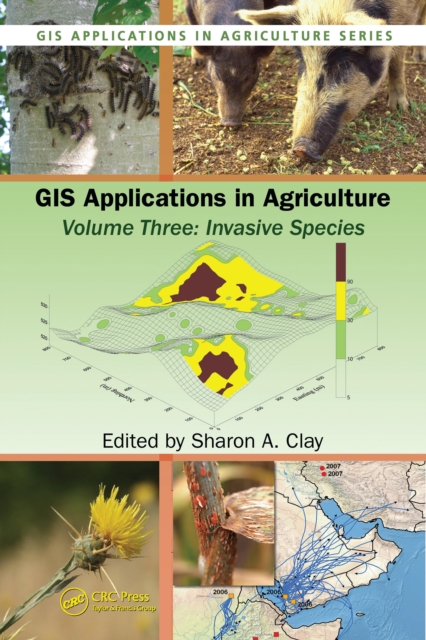
While many "e;alien"e; plant and animal species are purposefully introduced into new areas as ornamentals, livestock, crops, and even pets, these species can escape into other areas and threaten agricultural and native ecosystems causing economic and environmental harm, or harm to human health.
Kriging can be used to determine optimal unbiased predictions for regionalized variables and has been shown to be a powerful tool in slope reliability analysis for reliability-based design.
Providing a solid foundation for twenty-first-century scientists and engineers, Data Analysis and Statistics for Geography, Environmental Science, and Engineering guides readers in learning quantitative methodology, including how to implement data analysis methods using open-source software.
This book includes a complete background on geophysical methods of exploration, practices, and case histories for a better understanding of the subject of geophysics and its applicability in diverse fields of exploration.
Although there are already some books published on Big Data, most of them only cover basic concepts and society impacts and ignore the internal implementation details-making them unsuitable to R&D people.
Filling the need for a comprehensive book that covers both theory and application, Remote Sensing of Land Use and Land Cover: Principles and Applications provides a synopsis of how remote sensing can be used for land-cover characterization, mapping, and monitoring from the local to the global scale.
This second edition focuses on Tropical Dry Forests (TDF) in the Americas and provides a comprehensive overview of new studies conducted in the last decade, giving new insights into the most endangered ecosystem in the tropics.
The world is ever changing, and a comprehensive understanding of the world will not be achieved without theoretical and methodological advances to decode complex dynamics in human and environmental systems.
Although the dynamic aspect of the world is widely recognized, information systems have lagged in their ability to represent these dynamics and provide support for users and analysts, especially those who work with dynamic geographic domains.
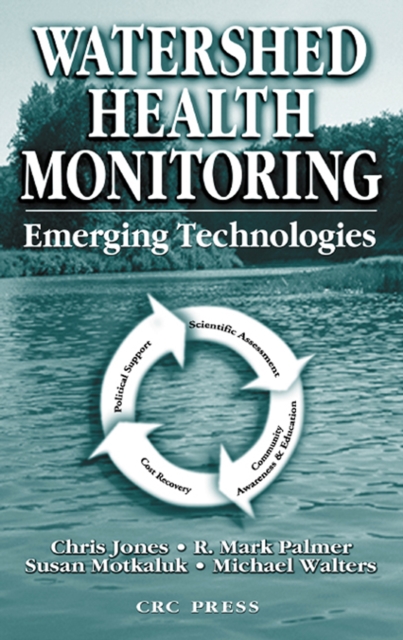
Watershed Health Monitoring: Emerging Technologies is a concise reference that defines the concept of watershed health and explains that monitoring the health of watersheds is a critical precursor to adaptive resource management on a watershed basis.