Rapid population growth, demand for increased food resources and other political,economic and social stresses have all contributed to building up pressure fordevelopment of marginal regions in both developed and developing countries.
Nebraska is the first comprehensive examination of the patterns of Nebraska's resources, population, economy, climate, and landscape to be published in many years.
This book presents nine case studies which illustrate an approach to the interface between human ecology, political economy, and adaptive decision making, demonstrating the power of analyzing socionatural regions from a human systems ecology perspective.
This systematic study of the geography of Arizona emphasizes the relationship between the human population and the environment-the patterns of human activities and their effects on the landscape.
Nebraska is the first comprehensive examination of the patterns of Nebraska's resources, population, economy, climate, and landscape to be published in many years.
Although one of the smallest of the fifty states, in many ways Maryland is the United States in miniature, bringing together and exemplifying the diverse elements of the country.
Although Appalachia has long been recognized as one of the most distinctive subregions in North America and has been studied widely as an "e;underdeveloped problem area,"e; this book is the first to provide a comparative and analytical geographical perspective on the entire Appalachian region rather than on portions of it.
Rapid population growth, demand for increased food resources and other political,economic and social stresses have all contributed to building up pressure fordevelopment of marginal regions in both developed and developing countries.
This book presents nine case studies which illustrate an approach to the interface between human ecology, political economy, and adaptive decision making, demonstrating the power of analyzing socionatural regions from a human systems ecology perspective.
Health geography makes critical contributions to contemporary and emerging interdisciplinary agendas of nature-based health and health-enabling places.
Health geography makes critical contributions to contemporary and emerging interdisciplinary agendas of nature-based health and health-enabling places.
This book examines the role of (post)colonial ports in creating and shaping the ecotonal, cultural, historical, material, environmental, socio-political, and economic contexts in formerly colonized regions, spanning the Caribbean, Africa, North America, Europe, and the Pacific.
A definitive natural history of the Wye Valley covering the geology, geomorphology, conservation and ecological history of this diverse area of outstanding natural beauty.
Britains Structure and Scenery deals with the physical background, the stage on which the drama of life is played and which provides the fundamental environment for plants, newnaturalists.
Reviewing the history and causes of climatic change and evaluating regional models, this New Naturalist volume offers an important analysis of climatic variations.
This book examines the role of (post)colonial ports in creating and shaping the ecotonal, cultural, historical, material, environmental, socio-political, and economic contexts in formerly colonized regions, spanning the Caribbean, Africa, North America, Europe, and the Pacific.
While sharing some characteristics with other middle-income countries, South Africa is a country with a unique economic history and distinctive economic features.
While sharing some characteristics with other middle-income countries, South Africa is a country with a unique economic history and distinctive economic features.
Geography in America at the Dawn of the 21st Century surveys American geographers' current research in their specialty areas and tracks trends and innovations in the many subfields of geography.
From farm to fork, the conventional food chain is under enormous pressure to respond to a whole series of new challenges - food scares in rich countries, food security concerns in poor countries, and a burgeoning problem of obesity in all countries.
'Grow first, clean up later' environmental strategies in the developing economies of East Asia - China, Korea, and Taiwan in Northeast Asia and Indonesia, Malaysia, the Phillippines, Singapore, Thailand and Vietnam in Southeast Asia - pose a critical regional and global sustainability challenge in this area of continuing rapid urban-based industrial growth.
In this synthetic, interdisciplinary work, Neil Brenner develops a new interpretation of the transformation of statehood under contemporary globalizing capitalism.
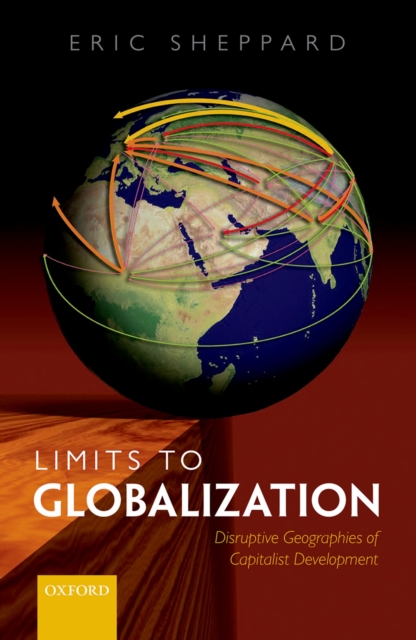
This book summarizes how globalizing capitalism-the economic system now presumed to dominate the global economy-can be understood from a geographical perspective.
This book provides a theoretical and empirical examination of the links between environmental change, land grabbing, and migration, drawing on research conducted in Senegal and Cambodia.