This book illustrates a geospatial technology approach to data mining techniques, data analysis, modelling, risk assessment and visualization and management strategies in many elements of natural and societal hazards.
This groundbreaking book by the eminent Peking University professor Hong Zicheng covers the literary scene in China during the 1949-1999 period, primarily focusing on fiction, poetry, drama, and prose writing.
This books offers a comprehensive overview of the possible effects of disasters or crisis situations on civil protections which have been challenged and tested during these scenarios.
This book provides an in-depth exploration of the dynamic intersections between economic geography and tourism, highlighting how spatial, economic, and social processes shape tourism development—and how tourism, in turn, transforms economic spaces.
The debate over whether religious or secular identities provide the most viable model for a wider national identity has been a continuous feature of Indian politics from the late nineteenth century to the present day.
Taking the Goki-Shichido (Five Home Provinces and Seven Circuits of Ancient Japan) as a theoretical framework, this book examines shrinking Japan from a regional variation perspective by municipality along the ancient Sannyodo, which comprises eight provinces and four prefectures today.
This volume addresses livelihood vulnerabilities due to climate change-induced socio-environmental stresses among different communities in various geographical locations in India, and discusses how the people and communities can become resilient to these stresses.
This book discusses how rural built heritage preservation and development in the Chinese ethnic area in Tongren, China has been strongly addressed by the labeling, planning, project-making, follow-up management characterized by different patterns of stakeholders.
This volume addresses livelihood vulnerabilities due to climate change-induced socio-environmental stresses among different communities in various geographical locations in India, and discusses how the people and communities can become resilient to these stresses.
The book provides a multi-stage assessment of the changing housing opportunities of migrant workers in the three stages of Beijing's urban village development (emergence, erasure and preservation).
This SpringerBrief describes the development and use of a synthetic indicator to assess different degrees of sustainability adoption by economic sector and businesses size.
Examining the science of stream restoration, Rebecca Lave argues that the neoliberal emphasis on the privatization and commercialization of knowledge has fundamentally changed the way that science is funded, organized, and viewed in the United States.
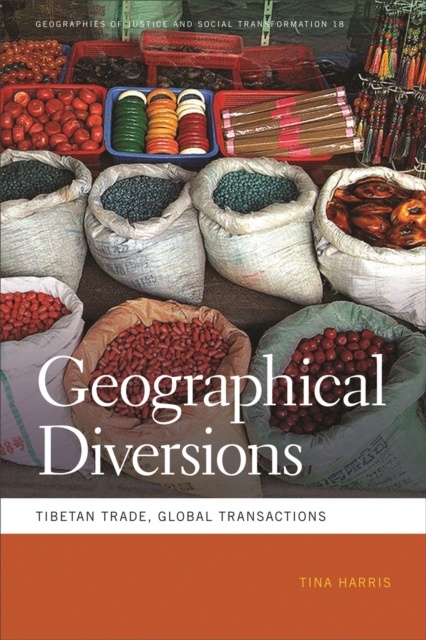
Working at the intersections of cultural anthropology, human geography, and material culture, Tina Harris explores the social and economic transformations taking place along one trade route that winds its way across China, Nepal, Tibet, and India.
This book illuminates how the profound challenges faced by contemporary societies over the past few decades, encompassing climate change and other environmental risks, global health threats, warfare, and mass migration, manifest themselves in European cities.
Taking the Goki-Shichido (Five Home Provinces and Seven Circuits of Ancient Japan) as a theoretical framework, this book examines shrinking Japan from a regional variation perspective by municipality along the ancient Sannyodo, which comprises eight provinces and four prefectures today.
Through a compelling story about the conflict over a notorious Mexican-period land grant in northern New Mexico, David Correia examines how law and property are constituted through violence and social struggle.
Spatial Futures invites readers to imagine power and freedom through the lens of the 'Black Outdoors', a transdisciplinary spatial concept that operates beyond the planetary, stratigraphic confines of the 'Anthropocene'.
This book explores the enduring significance of sacred landscapes in an increasingly globalized world, with a particular focus on the Christian sacred landscape and its connection to pilgrimage and rituals.
This book argues that the social story of vaccination has commonly been told through the lens of vaccine hesitancy and the myriad challenges that this broad issue poses for public health and the mitigation of preventable harms.
This book provides an in-depth exploration of the dynamic intersections between economic geography and tourism, highlighting how spatial, economic, and social processes shape tourism development—and how tourism, in turn, transforms economic spaces.
This book examines Spanish English bilingual patterns in a small town and rural Northeast Georgia community of Hispanics recently immigrated from Mexico and other areas of Latin America.
This book illustrates a geospatial technology approach to data mining techniques, data analysis, modelling, risk assessment and visualization and management strategies in many elements of natural and societal hazards.
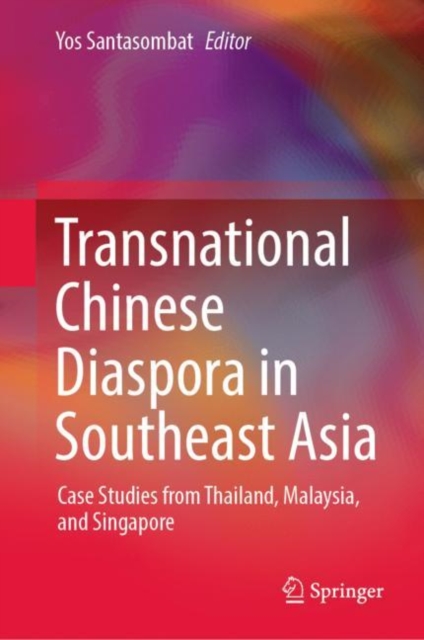
This book examines contemporary Chinese transnational mobile practices with special focuses on the ethnographic exploration of the lives, experiences, views, and narratives of the Chinese mobile subjects in three ASEAN countries: Malaysia, Singapore and Thailand, and their interactions with the ethnic Chinese communities in these countries.