This book explores interdisciplinary university teaching in both theory and practice, drawing on the experience and expertise of educators from across the social sciences and humanities.
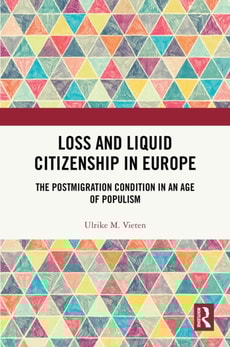
Loss and Liquid Citizenship in Europe offers a means of understanding how experiences of loss intersect with discourses of migration and citizenship, to affect feelings of belonging with respect to host communities and newcomers.
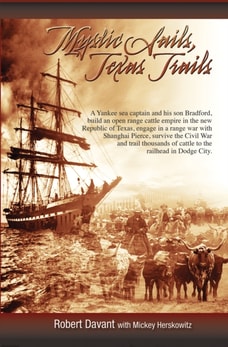
This four-generation saga, written with Mickey Herskowitz, begins with Richard Grimes, who became a sea captain at the astonishing age of 21, and made the first of his fortunes carrying passengers from Mystic Seaport, Connecticut, to the West Indies.
This four-generation saga, written with Mickey Herskowitz, begins with Richard Grimes, who became a sea captain at the astonishing age of 21, and made the first of his fortunes carrying passengers from Mystic Seaport, Connecticut, to the West Indies.
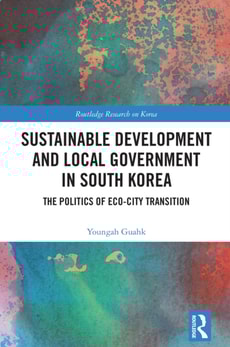
This book addresses one of the key issues of our time, the process of sustainable transition in modern, industrial societies, by looking at the dynamics associated with this objective at the decentralised local level in South Korea.
This book addresses one of the key issues of our time, the process of sustainable transition in modern, industrial societies, by looking at the dynamics associated with this objective at the decentralised local level in South Korea.
This book explores the pervasive anticipation of catastrophe in contemporary society, examining how temporal expectations shape personal and collective experiences and influence our perspectives and responses.
Loss and Liquid Citizenship in Europe offers a means of understanding how experiences of loss intersect with discourses of migration and citizenship, to affect feelings of belonging with respect to host communities and newcomers.
This book explores interdisciplinary university teaching in both theory and practice, drawing on the experience and expertise of educators from across the social sciences and humanities.
GlobalSoilMap: Basis of the global spatial soil information system contains contributions that were presented at the 1st GlobalSoilMap conference, held 7-9 October 2013 in Orl's, France.
How America's high standard of living came to be and why future growth is under threatIn the century after the Civil War, an economic revolution improved the American standard of living in ways previously unimaginable.
This updated edition of Thomas Nelson's popular Complete Book of Bible Maps and Charts has everything you need to visualize the events, places, and people in the Old and New Testaments.
This book contains the first comprehensive history using extensive primary sources to trace the 1977 earthquake disaster response by the Ceausescu communist regime, contextualizing its contribution to the public risk that remains in Romania's capital Bucharest.
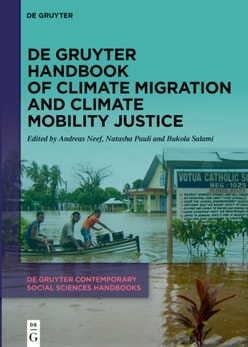
This book will provide a space for new and emergent research in environmental migration, particularly in the context of a world beginning to emerge from the grip of a debilitating public health crisis that kept many firmly rooted in place while displacing others internationally.
This booklet is to elaborate the difference between a healthy economy, where people do business in efficient and ethical ways verses an economy where it wastes money, time and human resources in order to create larger and larger business and income for few billionaires meanwhile, majority of people live in poverty.
This book describes observed features of urban climate and its long-term variations as well as the relationship of climate to heat stroke in Japan, based on observational data and statistical analyses.
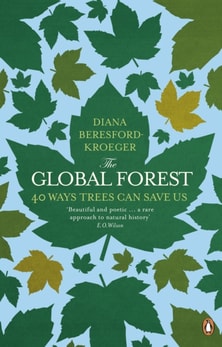
A world expert on how trees chemically affect our environment, Diana Beresford-Kroeger has woven together ecology, ancient myth, horticulture, spirituality, science and alternative medicine in The Global Forest to capture their enormous significance to us - and our future.
Presenting an updated overview of transformational entrepreneurship, this book explores how critical concepts can be contextualised for different regions and countries, underlining the fact that no one system fits all.