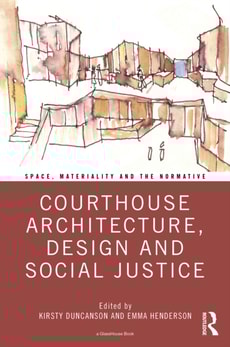
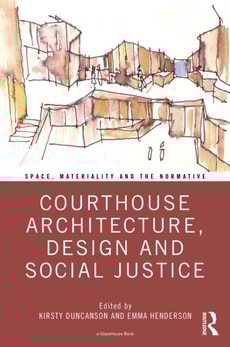
This collection interrogates relationships between court architecture and social justice, from consultation and design to the impact of material (and immaterial) forms on court users, through the lenses of architecture, law, socio-legal studies, criminology, anthropology, and a former senior federal judge.
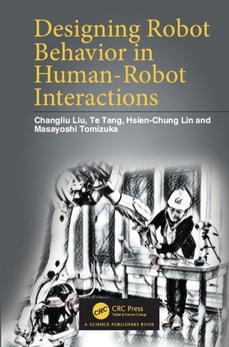
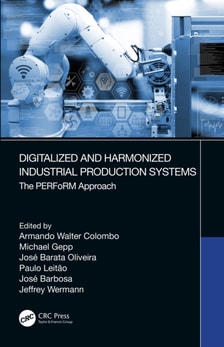
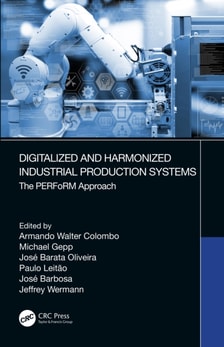
In this book, we have set up a unified analytical framework for various human-robot systems, which involve peer-peer interactions (either space-sharing or time-sharing) or hierarchical interactions.
Originally published in 1986, The High Middle Ages begins in the late twelfth century and ends, not with the arrival of the Tudor monarchs in 1485, but with the destruction of the wealth and power of the Church in the 1530s.
This book explores the impact of finance on urban spaces as well as cities' role in the social constitution and dissemination of financial logistics and techniques.
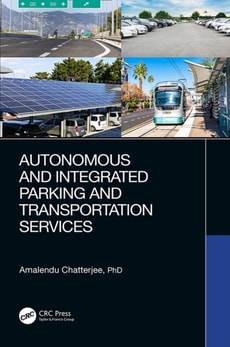
In this book, the author outlines a Robust Web Parking, Truck and Transportation Portal (RWPTTP) for integrating parking and transportation services - a revolutionary approach in contrast to incremental change for managing traffic congestion.
This collection interrogates relationships between court architecture and social justice, from consultation and design to the impact of material (and immaterial) forms on court users, through the lenses of architecture, law, socio-legal studies, criminology, anthropology, and a former senior federal judge.
The New Urban Agenda (NUA), adopted in 2016 at the United Nations Conference on Housing and Sustainable Urban Development (Habitat III) in Quito, Ecuador, represents a globally shared understanding of the vital link between urbanization and a sustainable future.
The New Urban Agenda (NUA), adopted in 2016 at the United Nations Conference on Housing and Sustainable Urban Development (Habitat III) in Quito, Ecuador, represents a globally shared understanding of the vital link between urbanization and a sustainable future.
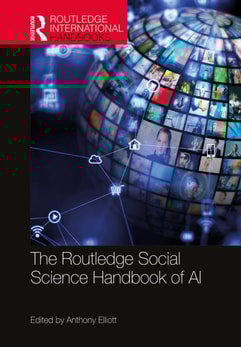
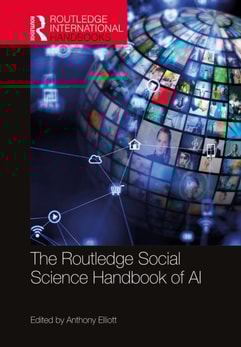
The Routledge Social Science Handbook of AI is a landmark volume providing students and teachers with a comprehensive and accessible guide to the major topics and trends of research in the social sciences of artificial intelligence (AI), as well as surveying how the digital revolution - from supercomputers and social media to advanced automation and robotics - is transforming society, culture, politics and economy.
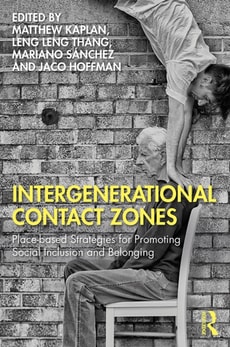
In Intergenerational Contact Zones, Kaplan, Thang, Sanchez, and Hoffman introduce novel ways of thinking, planning, and designing intergenerationally enriched environments.
The Routledge Social Science Handbook of AI is a landmark volume providing students and teachers with a comprehensive and accessible guide to the major topics and trends of research in the social sciences of artificial intelligence (AI), as well as surveying how the digital revolution - from supercomputers and social media to advanced automation and robotics - is transforming society, culture, politics and economy.
In Intergenerational Contact Zones, Kaplan, Thang, Sanchez, and Hoffman introduce novel ways of thinking, planning, and designing intergenerationally enriched environments.
Transportation Network Companies and Taxis: The Case of Seattle is a modern economic case history and thorough analysis of the devastating impact of the transportation network company (TNC) industry (Uber and Lyft) on the taxicab industry in Seattle, Washington, beginning in 2014.
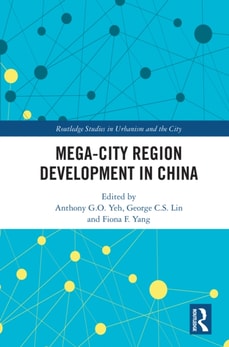
This book sheds light on the mega-city region development in China as a new form of urbanization which plays a crucial role in the economic development of the country.
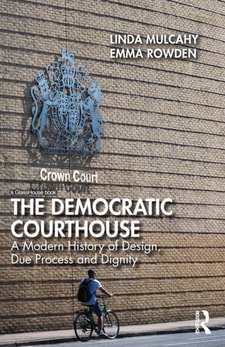
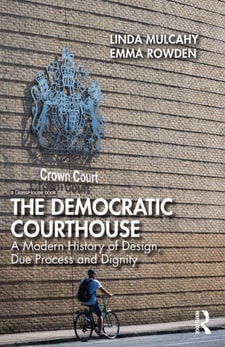
The Democratic Courthouse examines how changing understandings of the relationship between government and the governed came to be reflected in the buildings designed to house the modern legal system from the 1970s to the present day in England and Wales.
On the one side, Industrial competitiveness today means shorter product lifecycles, increased product variety, and shorter times to market and customized tangible products and services.
This book sheds light on the mega-city region development in China as a new form of urbanization which plays a crucial role in the economic development of the country.
The Democratic Courthouse examines how changing understandings of the relationship between government and the governed came to be reflected in the buildings designed to house the modern legal system from the 1970s to the present day in England and Wales.
On the one side, Industrial competitiveness today means shorter product lifecycles, increased product variety, and shorter times to market and customized tangible products and services.
Transportation Network Companies and Taxis: The Case of Seattle is a modern economic case history and thorough analysis of the devastating impact of the transportation network company (TNC) industry (Uber and Lyft) on the taxicab industry in Seattle, Washington, beginning in 2014.