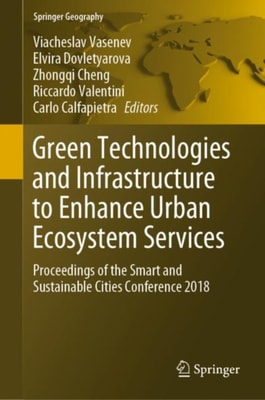
These proceedings of the Smart and Sustainable Cities Conference (SSC) in Moscow from May 23 to 26, 2018 addresses important questions regarding the global trend of urbanization.
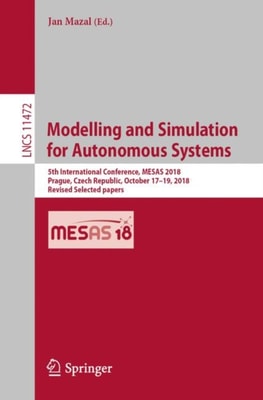
This book constitutes the thoroughly refereed post-workshop proceedings of the 5th International Workshop on Modelling and Simulation for Autonomous Systems, MESAS 2018, held in Prague, Czech Republic, in October 2018.
This essential book offers suggestions for how cities and spaces can be planned and designed to reduce the impact of stress, provide opportunities for recovery, and promote the resilience of individuals in urban communities.
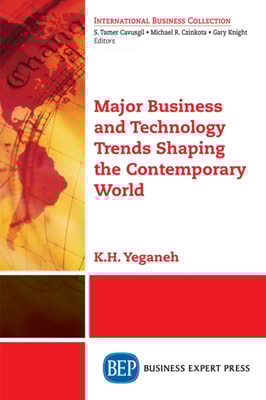
This book builds upon a wide variety of academic and professional resources to offer an in-depth analysis of the nature, causes, and consequences of major business and technology trends of our time.
This tool kit presents an integrated approach to inclusive urban development and was prepared for ADB staff and their partners to engage in inclusive urban development programming and implementation as an integral component of ADB's lending programs.
Urban populations are projected to increase from 54% to 66% of the global population by 2050, with close to 90% of the increase concentrated in Asia and Africa.
This publication seeks to explain the nature of settlements termed "e;urban villages"e; as set within the context of growing levels of urbanization in contemporary Pacific towns and cities.
A wide-ranging cultural history centered around the concepts of real estate, the family home, and the American dream, and how they evolved over the years, Home Ownership in America: A Socio-Cultural History of Housing in the United States traces narratives around home ownership from the 1920s to today.
Precision agriculture is a next-generation farming management concept that optimizes resource use, productivity, quality, profitability, and sustainability by observing and responding to crop variability.
This two-volume set LNCS 12212 and 12213 constitutes the refereed proceedings of the Second International Conference on HCI in Mobility, Transport, and Automotive Systems, MobiTAS 2020, held as part of the 22nd International Conference on Human-Computer Interaction, HCII 2020, in Copenhagen, Denmark, in July, 2020.
Now in its second volume, Regreening the Built Environment provides an overview of physical and social environmental challenges that the planet is facing and presents solutions that restore ecological processes, reclaim open space, foster social equity, and facilitate a green economy.
This book includes the results from the 5th International Conference on Deep Learning, Artificial Intelligence and Robotics (ICDLAIR), held in National Institute of Technology, Kurukshetra, on December 07-09, 2023, which brought together visionaries, researchers, and industry leaders at the forefront of technological innovation.
Grounded in contemporary landscape architecture theory and practice, Cybernetics and the Constructed Environment blends examples from art, design, and engineering with concepts from cybernetics and posthumanism, offering a transdisciplinary examination of the ramifications of cybernetics on the constructed environment.
This book includes peer-reviewed articles from the 8th International Conference on Sustainable Urban Development (ICSUD 2022), held at the Vietnamese-German University (VGU) in Vietnam.
Extreme weather events, droughts, floods, shifts in precipitation and temperature patterns, melting glaciers, sea-level rise, water salinization, and more generally, changes in the water cycle remind us that the climate crisis is mostly a water crisis.
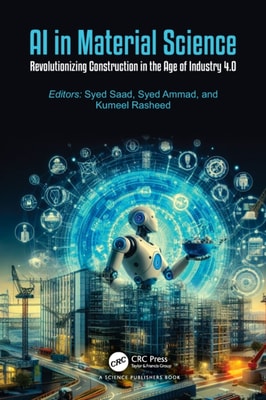
Smart manufacturing environments are revolutionizing the industrial sector by integrating advanced technologies, such as the Internet of Things (IoT), artificial intelligence (AI), and robotics, to achieve higher levels of efficiency, productivity, and safety.
Applied Urban Design combines 'why' we design and 'who' we design for, with 'how' we design, by providing the reader with a comprehensive and accessible bespoke framework for both understanding and practicing urban design in a contextually responsive manner from appraisal to design delivery.
A pointed argument that cities-not nation-states-can and must take the lead in fighting climate changeClimate change is the most urgent challenge we face in an interdependent world where independent nations have grown increasingly unable to cooperate effectively on sustainability.
Designed Forests: A Cultural History explores the unique kinship that exists between forests and spatial design; the forest's influence on architectural culture and practice; and the potentials and pitfalls of "e;forest thinking"e; for more sustainable and ethical ways of doing architecture today.
Lack of transparency and accountability in the planning practice allow for misuse and abuse of the planning system to serve the interests of the more powerful and influential groups, including those entrusted with the powers of planning.
Artificial Intelligence: An Introduction to Big Ideas and their Development, Second Edition guides readers through the history and development of artificial intelligence (AI), from its early mathematical beginnings through to the exciting possibilities of its potential future applications.
This book is devoted to mechatronic, chemical, bacteriological, biological, and hybrid systems, utilizing cooperative, networked, swarm, self-organizing, evolutionary and bio-inspired design principles and targeting underwater, ground, air, and space applications.
This book explains, using the example of endovascular intervention, the development of in vitro simulators for biomedical applications based on the scientific context in the robotics area and the explanation of the medical procedure to be simulated.
Present-day computers lack well-defined functions to accept various kinds of sensual information such as vision, hearing, and smelling (binding problem).
The primary aim of this volume is to provide researchers and engineers from both academic and industry with up-to-date coverage of new results in the field of robotic welding, intelligent systems and automation.
This book discusses computer vision, a noncontact as well as a nondestructive technique involving the development of theoretical and algorithmic tools for automatic visual understanding and recognition which finds huge applications in agricultural productions.