Building Communities: The Co-Operative Way, first published in 1988, sets the flourishing of housing co-operatives throughout the 1980s in a theoretical and historical framework that suggests that tenant control is the best way out of the still-problematic issue of housing policy.
Building Communities: The Co-Operative Way, first published in 1988, sets the flourishing of housing co-operatives throughout the 1980s in a theoretical and historical framework that suggests that tenant control is the best way out of the still-problematic issue of housing policy.
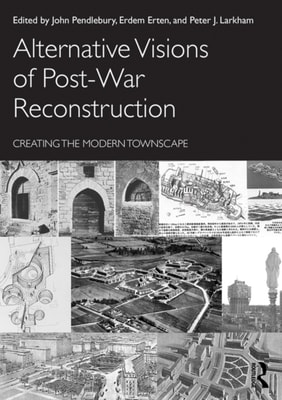
The history of post Second World War reconstruction has recently become an important field of research around the world; Alternative Visions of Post-War Reconstruction is a provocative work that questions the orthodoxies of twentieth century design history.
The history of post Second World War reconstruction has recently become an important field of research around the world; Alternative Visions of Post-War Reconstruction is a provocative work that questions the orthodoxies of twentieth century design history.
A new taxonomy of placemaking is needed; concerns have been expressed about the professionalization of placemaking through the proliferation of standards, zoning codes, and restrictive covenants.
A new taxonomy of placemaking is needed; concerns have been expressed about the professionalization of placemaking through the proliferation of standards, zoning codes, and restrictive covenants.
With more than half the world's population now living in urban areas, urbanisation is undoubtedly one of the most important phenomena of the 21st century.
With more than half the world's population now living in urban areas, urbanisation is undoubtedly one of the most important phenomena of the 21st century.
Arts and Community Change: Exploring Cultural Development Policies, Practices and Dilemmas addresses the growing number of communities adopting arts and culture-based development methods to influence social change.
Arts and Community Change: Exploring Cultural Development Policies, Practices and Dilemmas addresses the growing number of communities adopting arts and culture-based development methods to influence social change.
Effective community development means that many different stakeholders have to work together: governments, development organizations and NGOs, and most importantly, the people they serve.
Effective community development means that many different stakeholders have to work together: governments, development organizations and NGOs, and most importantly, the people they serve.
Conflict, Improvisation, Governance presents a carefully crafted and edited collection of first hand accounts of diverse public sector and non-profit urban practitioners facing the practical challenges of "e;doing democracy"e; in the global/local context of the interconnected major European city of Amsterdam and its region.
Conflict, Improvisation, Governance presents a carefully crafted and edited collection of first hand accounts of diverse public sector and non-profit urban practitioners facing the practical challenges of "e;doing democracy"e; in the global/local context of the interconnected major European city of Amsterdam and its region.
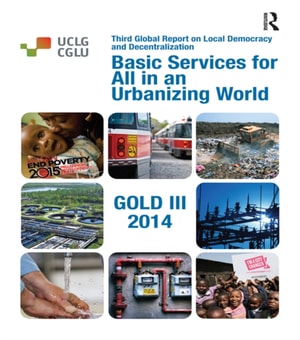
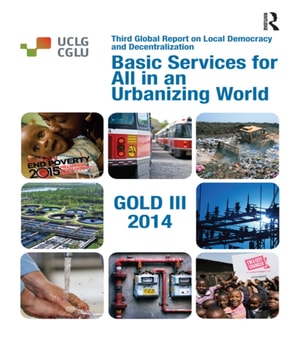
UCLG's Third Global Report on Local Democracy and Decentralization (GOLD III) examines basic service provision and the current state-of-play of the local governance of basic services around the world.
UCLG's Third Global Report on Local Democracy and Decentralization (GOLD III) examines basic service provision and the current state-of-play of the local governance of basic services around the world.
First published in 1990, this title presents the personal reflections of renowned community architect Rod Hackney, who served for many years as President of both the Royal Institute of British Architects and the International Union of Architects.
First published in 1990, this title presents the personal reflections of renowned community architect Rod Hackney, who served for many years as President of both the Royal Institute of British Architects and the International Union of Architects.
This book concludes a trilogy that began with Intelligent Cities: Innovation, Knowledge Systems and digital spaces (Routledge 2002) and Intelligent Cities and Globalisation of Innovation Networks (Routledge 2008).
This book concludes a trilogy that began with Intelligent Cities: Innovation, Knowledge Systems and digital spaces (Routledge 2002) and Intelligent Cities and Globalisation of Innovation Networks (Routledge 2008).
The question of what to do with radioactive waste has dogged political administrations of nuclear-powered electricity-producing nations since the inception of the technology in the 1950s.
Actors and institutions in localities and regions across the world are seeking prosperity and well-being amidst tumultuous and disruptive shifts and transitions generated by: an increasingly globalised, knowledge-intensive capitalism; global financial instability, volatility and crisis; concerns about economic, social and ecological sustainability, climate change and resource shortages; new multi-actor and multi-level systems of government and governance and a re-ordering of the international political economy; state austerity and retrenchment; and, new and reformed approaches to intervention, policy and institutions for local and regional development.
Actors and institutions in localities and regions across the world are seeking prosperity and well-being amidst tumultuous and disruptive shifts and transitions generated by: an increasingly globalised, knowledge-intensive capitalism; global financial instability, volatility and crisis; concerns about economic, social and ecological sustainability, climate change and resource shortages; new multi-actor and multi-level systems of government and governance and a re-ordering of the international political economy; state austerity and retrenchment; and, new and reformed approaches to intervention, policy and institutions for local and regional development.
In the decades following World War Two, and in part in response to the Cold War, governments across Western Europe set out ambitious programmes for social welfare and the redistribution of wealth that aimed to improve the everyday lives of their citizens.
In the decades following World War Two, and in part in response to the Cold War, governments across Western Europe set out ambitious programmes for social welfare and the redistribution of wealth that aimed to improve the everyday lives of their citizens.
Deeper City is the first major application of new thinking on 'deeper complexity', applied to grand challenges such as runaway urbanization, climate change and rising inequality.