This book provides a comprehensive overview of the patterns of biodiversity in various neotropical ecosystems, as well as a discussion on their historical biogeographies and underlying diversification processes.
This book offers an extensive study of indigenous communities in the Andaman and Nicobar Islands, India, and their methods of forest conservation, along with an exploration of the impact of forestry operations in the islands and the wide scale damage they have incurred on both the land and the people.
This book identifies all valid species belonging to the superfamily Mactroidea living in American waters, distributed across fourteen biogeographical provinces.
This book offers a collection of papers presented at the First International Conference"e; Information Technologies in the Research of Biodiversity"e; that was held from 11-14 September 2018 in Irkutsk (Russia).
This book aims to cover the multitude of corporate approaches towards mainstreaming biodiversity conservation and ecological management in policies and action plans, and explores the roles of these efforts in achieving national and global targets for the Sustainable Development Goals (SDGs).
This book presents the outcomes of the 2017 national workshop and international conference organized by CEENR of ISEC, Bengaluru and Assam University Silchar.
The Southern Oceans including Antarctic regions are peculiar and very sensitive water biotopes, where animal life and species interrelations are only poorly investigated.
This book delivers stimulating input for a broad range of researchers, from geographers and ecologists to psychologists interested in spatial perception and physicists researching in complex systems.
With one volume each year, this series keeps scientists and advanced students informed of the latest developments and results in all areas of the plant sciences.
This book focuses in detail on all ecologically important aspects of the Kongsfjorden system such as the marine and atmospheric environment including long-term monitoring, Ecophysiology of individual species, structure and function of the ecosystem, ecological processes and biological communities.
This book provides basic information on the botanical diversity in the Czech Republic and relates the patterns in flora and vegetation to environmental factors, biogeographical history and human impact.
This pioneering book focuses on Neotropical endophytic fungi, providing a comprehensive overview of their diversity, ecology, and biotechnological applications in medicine, agriculture, and industry.
This book will present information on Pantanal vegetation including an updated checklist of flora, useful plants, ecological aspects and some topics never published for this region, such as lichens.
This book includes description of main morphological characteristics of 435 species (including varieties and subspecies) belonging to 57 families and 233 genera of endemic and endangered plants of Hulun Buir Rangeland in China.
With one volume each year, this series keeps scientists and advanced students informed of the latest developments and results in all areas of the plant sciences.
Based on graph theory studies this book seeks to understand how tropical species interact with each other and how these interactions are affected by perturbations in some of the most species-rich habitats on earth.
This book examines the long-term fate of invasive species by detailing examples of invaders from different zoological and botanical taxa from various places around the world.
This book, as a part of a series of CERES publications, provides a multi-regional and cross-sectoral analysis of food and water security, especially in the era of climate risks, biodiversity loss, pressure on scarce resources, especially land and water, increasing global population, and changing dietary preferences.
This book presents valuable and recent lessons learned regarding the links between natural resources management, from a Socio-Ecological perspective, and the biodiversity conservation in Mexico.
This book provides essential information on 12 cockroach assemblages with more than a thousand specimens analyzed and investigates the Jurassic site in Bakhar, Mongolia, as one of the most diverse fossil insect sites worldwide.
This book highlights the importance of non-wood forest products (NWFPs) and their crucial role in sustaining the livelihood of rural and indigenous communities in Asia.
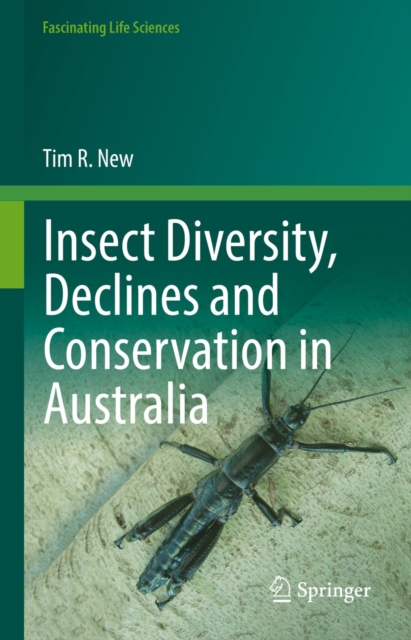
Problems of insect enumeration and assessment of needs are addressed in the contexts of rapid and substantial losses and changes to all key Australian terrestrial and freshwater environments and promoting awarenesss of the importance of insects.
This book integrates a variety of issues such as regional settings of productivity and nutrient cycling; plankton of coastal and shelf systems; plankton, climate change and human-induced changes; harmful algae and their impacts; and gelatinous zooplankton.
The book is based on results from the Russian expedition in the region of the Antarctic Peninsula and Powell Basin in the northern part of the Weddell Sea, as well as on the review of earlier research in the region.
The book provides a comprehensive account of a tropical lake, Alchichica, considering that tropical limnology is by far less known and well-understood than temperate.
This book provides comprehensive information on the rapidly developing field of urban horticulture for sustainable use of land resources and creating a better environment.