Explains how satellite remote sensing informs and helps deliver successful conservation management through case studies, which highlight practitioner experience.
Explains how satellite remote sensing informs and helps deliver successful conservation management through case studies, which highlight practitioner experience.
The Conservation of Violence explores the governance of protected forests in Zimbabwe, highlighting the structural and operational mechanism through which violent tactics are produced, employed, and sustained to promote nature conservation.
Explores equilibrium and non-equilibrium in undisturbed and disturbed ecological systems, examining how human activities affect the balance/imbalance of nature.
Explores equilibrium and non-equilibrium in undisturbed and disturbed ecological systems, examining how human activities affect the balance/imbalance of nature.
Eco-toxicology, an offshoot of toxicology, is a multidisciplinary science that integrates toxicology and ecology by drawing knowledge and procedures from both fields.
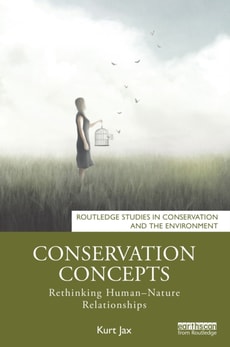
This book provides a review of the multitude of conservation concepts, both from a scientific, philosophical, and social science perspective, asking how we want to shape our relationships with nature as humans, and providing guidance on which conservation approaches can help us to do this.
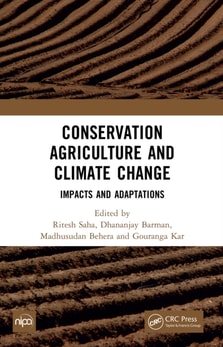
Conventional tillage and burning crop residues has degraded the soil resource base and intensified soil degradation with concomitant decrease in crop production capacity.
Conventional tillage and burning crop residues has degraded the soil resource base and intensified soil degradation with concomitant decrease in crop production capacity.
This is the first textbook to adopt an integrated perspective of climate change in Australia, drawing on research from the latest Intergovernmental Panel on Climate Change (2021, 2022) Sixth Assessment Reports to make it the most up-to-date resource available.