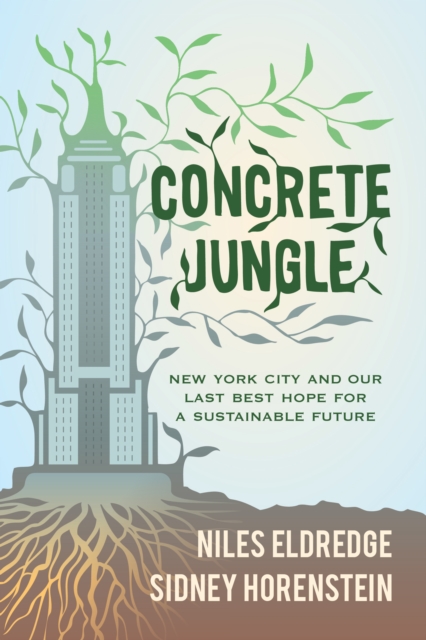
If they are to survive, cities need healthy chunks of the world's ecosystems to persist; yet cities, like parasites, grow and prosper by local destruction of these very ecosystems.
The Ecological Importance of High-Severity Fires, presents information on the current paradigm shift in the way people think about wildfire and ecosystems.
Advances in Marine Biology has been providing in-depth and up-to-date reviews on all aspects of marine biology since 1963--over 40 years of outstanding coverage!
This book gives a comprehensive guide on the fundamental concepts, applications, algorithms, protocols, new trends and challenges, and research results in the area of Green Information and Communications Systems.
In Abundant Earth, Eileen Crist not only documents the rising tide of biodiversity loss, but also lays out the drivers of this wholesale destruction and how we can push past them.
Dependent on a shrinking supply of bamboo, hunted mercilessly for its pelt, and hostage to profiteering schemes once in captivity, the panda is on the brink of extinction.
Can the stories of bananas, whales, sea birds, and otters teach us to reconsider the seaport as a place of ecological violence, tied to oil, capital, and trade?
The rapid growth of the American environmental movement in recent decades obscures the fact that long before the first Earth Day and the passage of the Endangered Species Act, naturalists and concerned citizens recognized-and worried about-the problem of human-caused extinction.
Stream Ecology: Structure and Function of Running Waters is designed to serve as a textbook for advanced undergraduate and graduate students, and as a reference source for specialists in stream ecology and related fields.
The novelty of the book is a strong focus on perception, perspectives and prediction by scientists with profound insight into the ecology of ecosystems or into human demands and activity.
The conservation of marine benthic biodiversity is a recognised goal of a number of national and international programs such as the United Nations Convention on Biodiversity (CBD).
This book highlights current concepts of Social Urbanism, the contemporary set of multiple and interdisciplinary urban studies that have emerged mainly from the complex realities of Latin American cities.
An essential guide to sustainable development for students and practitionersSustainability is a global imperative and a scientific challenge like no other.
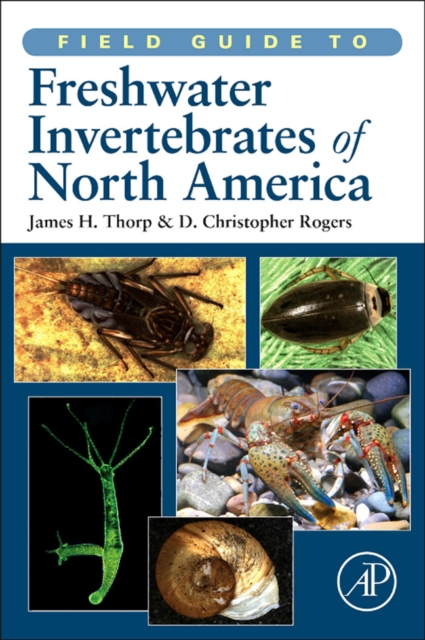
The Field Guide to Freshwater Invertebrates of North America focuses on freshwater invertebrates that can be identified using at most an inexpensive magnifying glass.
There is a gap between the ecology of health and the concepts supported by international initiatives such as EcoHealth, One Health or Planetary Health; a gap which this book aims to fill.
There is a gap between the ecology of health and the concepts supported by international initiatives such as EcoHealth, One Health or Planetary Health; a gap which this book aims to fill.
Interest in the use of biomass for non-food applications has grown strongly in recent years, mainly as a consequence of its potential as a prime renewable energy resource.
Air Quality and Ecological Impacts reviews the characterization of air quality as it pertains to specific emission sources and their environmental effect.
This edited volume examines how to develop a planning and design process with green infrastructure that creates technical answers to the social and ecological function of the city's climate change adaptations demands.
A thorough revision and update of the first edition, this Second Edition is designed to create an awareness of the rapidly developing field of allelopathy.
This book examines the differences and similarities in the earth system components - the ocean, atmosphere, and the land - between western portions of the northern and southern Western Hemispheres, past, present, and projected.
A follow-up to the highly successful first edition, this book reviews the manifold ways that scale influences the interpretation of ecological variation.
Australia is home to many distinctive species of birds, and Aboriginal peoples have developed close alliances with them over the millennia of their custodianship of this country.
The proposed book aims to understand the mechanism of survival of microorganisms in response to chemical stress in various ecological niches that suffer direct human intervention, more so the agricultural, domestic and hospital settings.
From the Reviews of Previous Volumes"e;In reviewing this volume as a whole, one is struck by the quality and scholarship of the various chapters and the obviously efficient editing.
This book offers comprehensive insights into the latest developments in biodiversity, sustainability, and agri-food supply chains, fostering an informed approach to policymaking decisions in the agriculture and agri-food industry within the global economy.
This book offers comprehensive insights into the latest developments in biodiversity, sustainability, and agri-food supply chains, fostering an informed approach to policymaking decisions in the agriculture and agri-food industry within the global economy.
Until recently, the prevailing view of marine life at high latitudes has been that organisms enter a general resting state during the dark Polar Night and that the system only awakens with the return of the sun.
Recognizing the increased interest in forest management world wide, this book addresses the current knowledge gap by defining sustainable forest management, clarifying methods by which ecological knowledge can be applied and how traditional silvicultural methods can be improved.
Utopianism, alongside its more prevalent dystopian opposite together with ecological study has become a magnet for interdisciplinary research and is used extensively to examine the most influential global medium of all time.
The book addresses the interdisciplinary and multiscale theme of the design of sustainable, inclusive and creative urban green spaces in relation to the socio-ecological transition and in line with the systemic vision promoted by the 2030 Agenda, the 17 Sustainable Development Goals (SDGs) and the principles outlined by the New European Bauhaus (European Commission, 2021).