Ecoprecarity: Vulnerable Lives in Literature and Culture presents an examination of ecoprecarity - the precarious lives that humans lead in the process and event of ecological disaster, and the increasing precarious state of the environment itself as a result of human interventions - in contemporary literary-cultural texts.
Ecoprecarity: Vulnerable Lives in Literature and Culture presents an examination of ecoprecarity - the precarious lives that humans lead in the process and event of ecological disaster, and the increasing precarious state of the environment itself as a result of human interventions - in contemporary literary-cultural texts.
This book examines global environmental governance and how legal, institutional, and conceptual reform can facilitate a transformation to a new 'natural-systems' form of agriculture.
This book examines global environmental governance and how legal, institutional, and conceptual reform can facilitate a transformation to a new 'natural-systems' form of agriculture.
The academic treatment of the environment and nature, since the 1980s, has been formalized in sub-disciplines like environmental history, environmental philosophy, ecocriticism, and eco-spirituality.
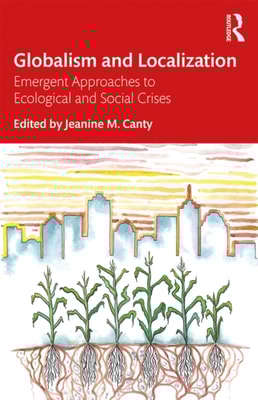
Considering the context of the present ecological and social crisis, this book takes an interdisciplinary approach to explore the relationship between globalism and localization.
The academic treatment of the environment and nature, since the 1980s, has been formalized in sub-disciplines like environmental history, environmental philosophy, ecocriticism, and eco-spirituality.
Considering the context of the present ecological and social crisis, this book takes an interdisciplinary approach to explore the relationship between globalism and localization.
The Great Lakes of the World (GLOW) is a series of international symposia organized by the Aquatic Ecosystem Health and Management Society in order to promote interaction and communication between Great Lakes scientists and communities around the world.
During recent years, environmental debate worldwide has been dominated by climate change, carbon emissions and eff orts to achieve low carbon economies.
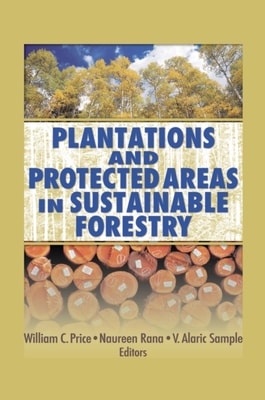
Understand the social, economic, and environmental impacts of the development of forest plantationsand the conservation involvedControversy surrounds the question of how to best protect forests of high conservation value, while meeting the growing demands for wood and wood fiber-based products.
Timely and audacious, Buddha at the Apocalypse challenges us to look directly at the devastating assumptions underlying the very mechanisms of the modern world - and offers a clarion call to awaken from a pervasive culture of destruction into a natural, sustainable, and sane peace.
With his books Landscapes of Wonder and Longing for Certainty, the American monk Bhikkhu Nyanasobhano led readers down literary trails, providing enlightening glimpses of the natural world.
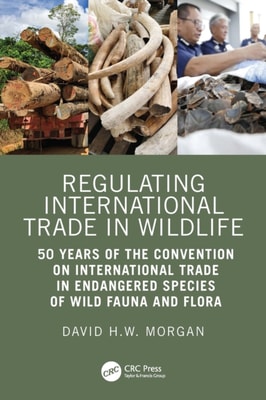
The Convention on International Trade in Endangered Species of Wild Fauna and Flora (CITES) was one of the first in a new wave of global multilateral environmental agreements (MEAs) formed after the 1972 United Nations Conference on the Human Environment.
In the same lyrical voice that met with such acclaim in Landscapes of Wonder, Bhikkhu Nyanasobhano invites us to look upon the natural world with new eyes and to find the truths of the Buddha's teachings in our immediate experience.
The City is an Ecosystem maps an interdisciplinary, community-engaged response to the great ecological crises of our time-climate change, biodiversity loss, and social inequality-which pose particular challenges for cities, where more than half the world's population currently live.
Music and the Performing Arts in the Anthropocene offers a series of thought-provoking chapters about music and the performing arts viewed from current Anthropocene-aware perspectives.
When scientists discovered transgenes in local Mexican corn varieties in 2001, their findings intensified a debate about not only the import of genetically modified (GM) maize into Mexico but also the fate of the peasantry under neoliberal globalization.
Our beaches are eroding, sinking, washing out right under our houses, hotels, bridges; vacation dreamlands become nightmare scenes of futile revetments, fills, groins, what have you-all thrown up in a frantic defense against the natural system.
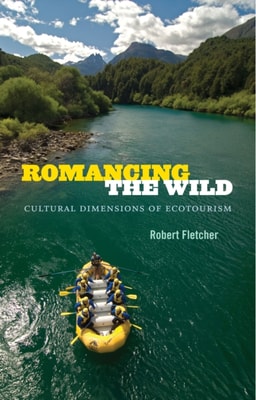
The worldwide development of ecotourism-including adventures such as mountain climbing and whitewater rafting, as well as more pedestrian pursuits such as birdwatching-has been extensively studied, but until now little attention has been paid to why vacationers choose to take part in what are often physically and emotionally strenuous endeavors.
In Animate Planet Kath Weston shows how new intimacies between humans, animals, and their surroundings are emerging as people attempt to understand how the high-tech ecologically damaged world they have made is remaking them, one synthetic chemical, radioactive isotope, and megastorm at a time.
Fifty years after the publication of Eric Wolf's celebrated Peasant Wars of the Twentieth Century, and forty years after the publication of his path-breaking Europe and the People Without History, this book offers a much-needed critical assessment and update of Wolf's contribution to the study of the peasantry and its relationship to capitalism, the state, and imperialism.
Adventures and misadventures exploring nature on a patch of "e;worthless"e; abandoned farmland Winner of the South Carolina Outdoor Press Association's excellence in craft for the best outdoor book award.
A survey of the innovative scholarship emerging at the intersections of rhetoric, and fieldwork A variety of research areas within rhetorical studies-including everyday and public rhetorics, space and place-based work, material and ecological approaches, environmental communication, technical communication, and critical and participatory action research, among others-have increasingly called for ethnographic fieldwork that grounds the study of rhetoric within the contexts of its use and circulation.
The authors offer a fun-to-read perspective on natural history, ecology as a field of study, and the current environmental issues that face our communities and the world.
Explores 19th-century, modern, postmodern, and millennial texts as they portray the changing ecological face of America Lee Rozelle probes the metaphor of environmental catastrophe in American literature of the last 150 years.
In The Ecology of Modernism, Joshua Schuster examines the relationships of key modernist writers, poets, and musicians to nature, industrial development, and pollution.