The Invertebrate World of Australia's Subtropical Rainforests is a comprehensive review of Australia's Gondwanan rainforest invertebrate fauna, covering its taxonomy, distribution, biogeography, fossil history, plant community and insect-plant relationships.
The Handbook of New Zealand Mammals is the only definitive reference on all the land-breeding mammals recorded in the New Zealand region (including the New Zealand sector of Antarctica).
Australian Deserts: Ecology and Landscapes is about the vast sweep of the Outback, a land of expanses making up three-quarters of the continent - the heart of Australia.
The Pilbara region in Australia's arid northwest is rich in flora that is suited to extreme temperatures and boom and bust cycles of moisture availability.
Sustainability challenges blur the boundaries between academic disciplines, between research, policy and practice, and between states, markets and society.
Mountain Ash draws together exciting new findings on the effects of fire and on post-fire ecological dynamics following the 2009 wildfires in the Mountain Ash forests of the Central Highlands of Victoria.
Mountain Ash draws together exciting new findings on the effects of fire and on post-fire ecological dynamics following the 2009 wildfires in the Mountain Ash forests of the Central Highlands of Victoria.
Biogeography, the study of the distribution of life on Earth, has undergone more conceptual changes, revolutions and turf wars than any other scientific field.
Biogeography, the study of the distribution of life on Earth, has undergone more conceptual changes, revolutions and turf wars than any other scientific field.
An increasing number of Australians want to be assured that the food and fibre being produced on this continent have been grown and harvested in an ecologically sustainable way.
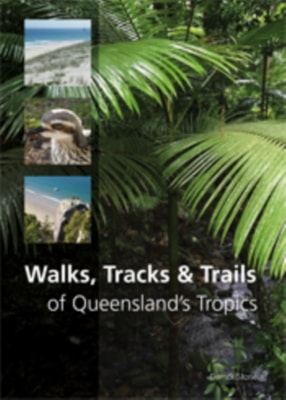
Queensland's tropics provide numerous environments for enjoyable walking: lush rainforests, cloud-shrouded mountains, extinct volcanoes, savanna woodlands, and magnificent beaches on the coast and Great Barrier Reef islands.
Queensland’s tropics provide numerous environments for enjoyable walking: lush rainforests, cloud-shrouded mountains, extinct volcanoes, savanna woodlands, and magnificent beaches on the coast and Great Barrier Reef islands.
The publication of Reintroduction Biology of Australian and New Zealand Fauna nearly 20 years ago introduced the new science of 'reintroduction biology'.
The publication of Reintroduction Biology of Australian and New Zealand Fauna nearly 20 years ago introduced the new science of ‘reintroduction biology’.
The Flowering of Australia's Rainforests provides a comprehensive introduction to the pollination ecology, evolution and conservation of Australian rainforest plants, with particular emphasis on subtropical rainforests and their associated pollinators.
Plants of Subtropical Eastern Australia describes the rich flora of this biogeographically distinct region located on the east coast of Australia, covering the north coast of New South Wales and coastal South-East Queensland.
Australia's native land snails are an often-overlooked invertebrate group that forms a significant part of terrestrial biodiversity, with an estimated 2500 species present in Australia today.
Australia's Poisonous Plants, Fungi and Cyanobacteria is the first full-colour, comprehensive guide to the major natural threats to health in Australia affecting domestic and native animals and humans.