Cross-Cultural Risk Perception demonstrates the richness and wealth of theoretical insights and practical information that risk perception studies can offer to policy makers, risk experts, and interested parties.
This thought-provoking, accessible book critically examines the dominant food regime on its own terms, by seriously asking whether we can afford cheap food and by exploring what exactly cheap food affords us.
Open Source GIS: A GRASS GIS Approach was written for experienced GIS users, who want to learn GRASS, as well as for the Open Source software users who are GIS newcomers.
Mathematical Methods of Environmental Risk Modeling provides a working introduction to both the general mathematical methods and specific models used for human health risk assessment.
Public experience with risk communication differs greatly from country to country in Europe and there has been little opportunity for the transfer of experience and learning between countries.
Reflecting a new generation of conservation biologists' upper-division and graduate level conservation biology courses, as well as for individual reference, this book incorporates a number of new authors and additional chapters, covering all aspects of one of the most dynamic areas in the life sciences.
Quantified Societal Risk and Policy Making is the result of an international workshop on societal risk organized by the Dutch Ministry for Transport, Public Works and Water Management with additional financial support from the Directorate for Transportation (DG VII) of the European Union.
Coordination of land use and transport is one of the most important issues in urban planning from the viewpoint of transport infrastructure supply and amenity in urban space.
This book is based on several decades of authors' research and practical experience in the areas of industrial and commercial buildings ventilation and energy efficiency as well as in process optimization in different types of industrial facilities.
With the rapid increase in the global population and changing climatic impacts on agriculture, this book demonstrates how genome editing will be an indispensable technique to overcome ongoing and prospective agricultural challenges.
With the rapid increase in the global population and changing climatic impacts on agriculture, this book demonstrates how genome editing will be an indispensable technique to overcome ongoing and prospective agricultural challenges.
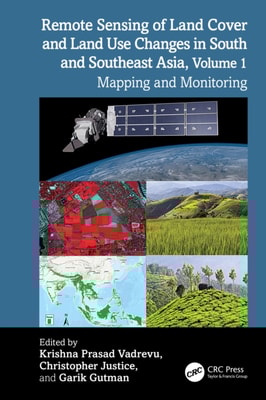
South and Southeast Asian countries are experiencing rapid land cover and land use changes (LCLUC) due to urbanization, agricultural expansion, deforestation, and infrastructure development.
This vintage book contains a comprehensive handbook on fermentation, with historical information, scientific descriptions, instructions of practical application, and many other related aspects.
This vintage book contains a fascinating study of wine in Hungary and Italy, with information on its history and origins, influence, manufacture, exportation, and many other related aspects.
This book comprises a detailed investigation of the 'Flor Sherry Process', with information on acidity, oxidation, fining and stabilizing, effect of temperature, and much more besides.
This vintage book contains a complete guide to growing grapes, with information on planting, propagation, grafting, tools, growing under glass, varieties, and all other related aspects.
This vintage book contains a complete guide to wine production, with instructions for making a variety of wines and information on different techniques, common problems, diseases and pests, and much more.
By 2050 the world will be faced with the enormous challenge of feeding 9 billion people despite being affected by climate change, rising energy costs and pressure on food growing land and other major resources.
The Sustainable Diet is a timely and practical guide to a healthy planet and a healthy you, complete with 100 nutritious and delicious recipes for breakfast, lunch and dinner.
This book investigates the range of conflicts over land and other natural resources in contemporary Zimbabwe, considering the different forms these conflicts take, and the ensuing outcomes.
This comprehensively updated third edition explores the nature and role of environmental management and offers an introduction to this rapidly expanding and changing field.
This book provides an analysis of the impact of the climate crisis on corporate law and theory in the coming decades as the world seeks to meet the target of net zero carbon emissions by 2050.
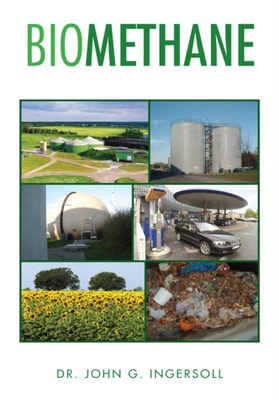
The production of biomethane, the renewable version of natural gas, from the biological conversion of organic matter at an industrial scale is fast advancing in several areas of the world.
There were many who joked when we took over Advances in Microbial Ecology at Volume 13; perhaps they should have reserved their expressions of superstition for Volume 14.
The International Committee on Microbial Ecology (ICOME) sponsors both the Interna- tional Symposium on Microbial Ecology, held in various parts of the world at three-year intervals, and the publication of Advances in Microbial Ecology.
Advances in Microbial Ecology was established by the International Committee on Microbial Ecology (ICOME) to provide a vehicle for in-depth, critical, and even provocative reviews to emphasize recent trends in the important field of microbial ecology.
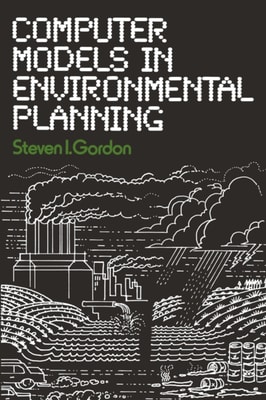
The purpose behind Computer Models in Environmental Planning is to provide a practical and applied guide to the use of these models in environmental planning and environmental impact analysis.
This third volume in Advances in Environment, Behavior, and Design fol- lows the conceptual framework adopted in the previous two volumes (see the Preface to Volume 1, 1987).
Exploring the complex arena of international planning for development has until now been uniquely the privilege of influential senior western planners.