'Systemic management' describes a holistic, objective and universally applicable form of management, providing a framework for addressing environmental challenges such as global warming, emergent diseases, deforestation, overpopulation, the extinction crisis, pollution, over-fishing, and habitat destruction.
Los usos múltiples del agua son un concepto asociado al acceso al agua por parte de las familias campesinas de las zonas rurales tanto para sus actividades humanas como productivas de subsistencia desde sistemas de abastecimiento domésticos.
From farm to fork, the conventional food chain is under enormous pressure to respond to a whole series of new challenges - food scares in rich countries, food security concerns in poor countries, and a burgeoning problem of obesity in all countries.
The work of conservation biology has grown from local studies of single species into a discipline concerned with mapping and managing biodiversity on a global scale.
Coastal zones are becoming increasingly topical (and politically sensitive) as they face relentless pressures from urban expansion, recreational development, and sea level rise due to climate change.
The relentless exploitation and unsustainable use of wildlife, whether for food, medicine or other uses, is a key concern for conservationists worldwide.
This book traces the development of the standard property rights over five kinds of natural resource - inland rivers, ocean fisheries, petroleum resources, gold and base metals and forest resources - from classical times through to the 19th century.
The United Nations Convention on the Law of the Non-Navigational Uses of International Watercourses plays a crucial role in protecting and managing international watercourses and other sources of fresh water.
The United Nations Convention on the Law of the Non-Navigational Uses of International Watercourses plays a crucial role in protecting and managing international watercourses and other sources of fresh water.
This volume investigates nuclear energy policies in Western Europe over the entire post-war period, but with special attention to the two most recent decades.
The ability to anticipate the impacts of global environmental changes on natural resources is fundamental to designing appropriate and optimised adaptation and mitigation strategies.
This book presents the latest scientific and management information on multiaged silviculture, an emerging strategy for managing forestry systems worldwide.
This book presents the latest scientific and management information on multiaged silviculture, an emerging strategy for managing forestry systems worldwide.
In order to optimally manage the environment and natural resources, it is vitally important to recognize that there is much more to consider than just the environment itself and the natural resources it provides.
The prospect of international conflict over water has long been the subject of academic and popular concern, but subnational political conflict is considerably more common, and almost certainly imposes greater economic and environmental costs.
When privatization of public services swept the developing world in the 1990s, it was part of a seemingly unstoppable tide of neoliberal reforms aimed at reducing the role of the state and reorienting economies toward market-led policymaking.
When privatization of public services swept the developing world in the 1990s, it was part of a seemingly unstoppable tide of neoliberal reforms aimed at reducing the role of the state and reorienting economies toward market-led policymaking.
This volume is an account of the scientific and social responses made to the discovery of an invasive forest insect -- the emerald ash borer or EAB (Agrilus planipennis Fairmaire, 1888) -- in North America, that was formally announced in July 2002.
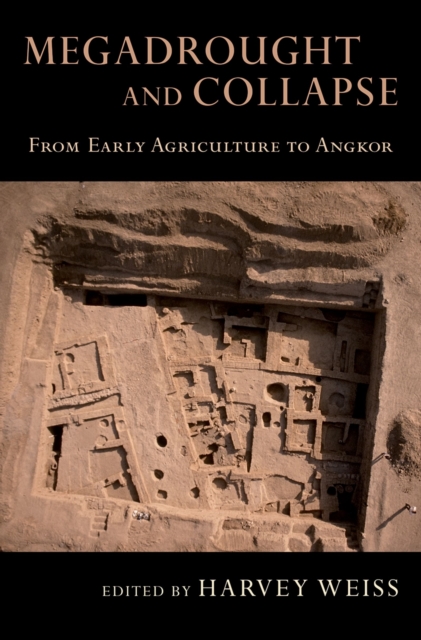
Megadrought and Collapse is the first book to treat in one volume the current paleoclimatic and archaeological evidence of megadrought events coincident with major prehistoric and historical examples of societal collapse.
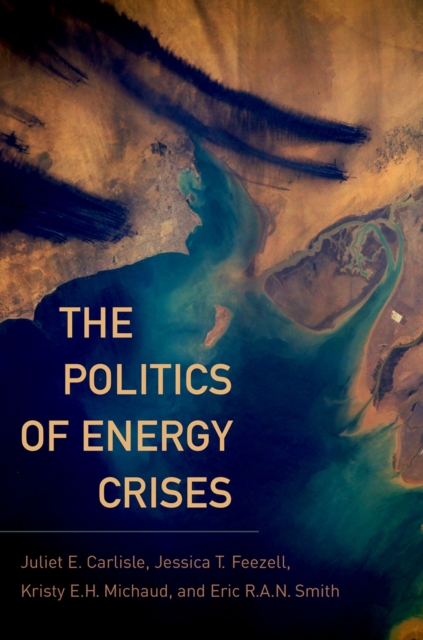
Energy crises, which amount to painful combinations of energy shortages and soaring prices, have struck the United States several times in recent decades.
There is a widespread assumption that the American food system after World War II was transformed-toward an increasingly industrialized production of crops, more processed foods, and diets higher in fat, sugar, and calories-as part of a unified system.
There is a widespread assumption that the American food system after World War II was transformed-toward an increasingly industrialized production of crops, more processed foods, and diets higher in fat, sugar, and calories-as part of a unified system.
The global drug trade and its associated violence, corruption, and human suffering create global problems that include political and military conflicts, ethnic minority human rights violations, and stresses on economic development.
Energy crises, which amount to painful combinations of energy shortages and soaring prices, have struck the United States several times in recent decades.