The aim of this book is to open a vision to sustainability and development through a holistic perspective comprising the critical blocks of energy, environment and economy.
This book discusses the Lagoa Santa Karst, which has been internationally known since the pioneering studies of the Danish naturalist Peter Lund in the early 1800s.
A participatory and integrated procedure for the planning of water resources is presented and illustrated through its application to a real-world case study: the planning of a trans-boundary, multi-purpose, regulated lake.
In the context of the world's pressing sustainability challenges this new Report to the Club of Rome presents a novel approach to navigating collaborative change in partnerships between governments, research institutions, corporations and civil society activists.
This book provides a comprehensive, up-to-date overview of the different environmental strategies adopted in the football world to foster sustainability.
This book is the first collection of state-of-the-art research projects analyzing water conflict and cooperation with an explicitly theoretical point of view.
Biomass for Renewable Energy, Fuels, and Chemicals serves as a comprehensive introduction to the subject for the student and educator, and is useful for researchers who are interested in the technical details of biomass energy production.
In the first decades of the twentieth century, fish in the Great Lakes and Puget Sound, seals in the North Pacific, and birds across North America faced a common threat: over harvesting that threatened extinction for many species.
This book is a ready reckoner of recent information regarding the impact of leachate landfills, leachate treatment, and heavy metals on a single platform.
Given the uncertainties in future food and nutrition security due to climate change compounded with an increasing global population, sustainable development is essential for the survival of much of the world's population.
Critical minerals play a vital role in the ongoing energy transition, which aims to shift global energy systems towards more sustainable and low-carbon alternatives.
Given the uncertainties in future food and nutrition security due to climate change compounded with an increasing global population, sustainable development is essential for the survival of much of the world's population.
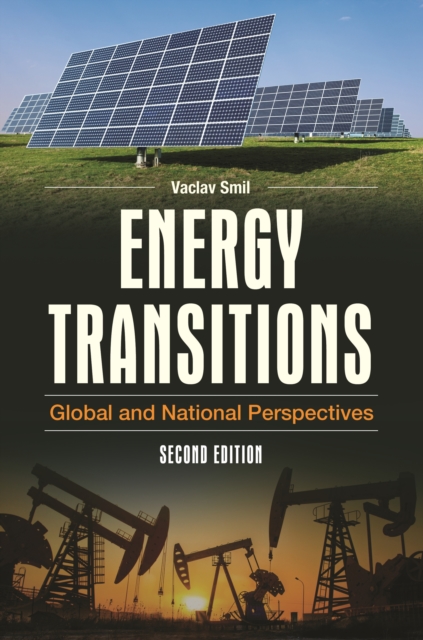
This book provides a detailed, global examination of energy transitions, supplying a long-term historical perspective, an up-to-date assessment of recent and near-term advances in energy production technology and implementation, and an explanation of why efforts to limit global warming and to shift away from fossil fuels have been gradual.
The world confronts an existential challenge in responding to climate change, resulting in an urgent need to reduce greenhouse gas emissions from all sectors of the economy.
This book provides a transdisciplinary assessment of multiple countries' legal and policy frameworks vis-a-vis the Voluntary Guidelines for Securing Sustainable Small-Scale Fisheries in the Context of Food Security and Poverty Eradication, adopted in 2014 by the Committee on Fisheries of the Food and Agriculture Organization of the United Nations.
This book presents a comprehensive view of the different theories of risk management in water, drawing on recent studies that serve to inform the way that practitioners consider their own risk practice.
The relentless bombardment and blockade on Gaza have not only drastically restricted the inflow of essential food supplies but have also led to a catastrophic humanitarian crisis with unprecedented casualties.
This book offers a practical guidance for environmental engineers and scientists charged with assessing the cause-and-effect of pollutants in receiving water systems.
This volume analyzes the global challenges of food security, land use changes, and climate change impacts on food production in order to recommend sustainable development policies, anticipate future food services and demands, and identify the economic benefits and trade-offs of meeting food security demands and achieving climate change mitigation objectives.
A unique and thorough investigation of the shift towards Europe-wide energy regulation, markets and business strategies, and the extent to which energy systems have become more liberalised over this period.
This book contains a set of papers which explore the subject matter of human and planetary health at various anglesThe year 2015 was a special year in the field of human and planetary health.
This book is about the ongoing transition of fisheries governance, from top-down command and control towards a more transparent and participatory form.
This book aims to promote the core understanding of a proper modelling of road traffic accidents by deep learning methods using traffic information and road geometry delineated from laser scanning data.
This book presents solutions to address water security in rapidly urbanizing cities, and explores the new paradigms of water security in changing contexts.
This book compiles a diverse and interdisciplinary range of scientific literature, laboratory developments, industrial implications and future prospects covering Entomophagy in 3D food printing to fight against hunger and nutritional deficiencies.
Take a balanced look at ways to ensure food security and to work to erase hunger around the worldAgriculture is the most aggressively managed ecosystem.