This volume explores concepts and theories of food literacy to understand the interdisciplinary paradigms, perspectives, and emerging discourses in and beyond formal educational contexts in the Global South, specifically South Asia.
This book presents the existing photocatalytic reactor design and the future developments and the progress needed for both solar light-driven hydrogen generation and environmental purification.
The incidence of anthropogenic fires in South America has increased lately, and fire effects on the biodiversity and ecosystem services are of great concern.
Offshore Risk Assessment was the first book to deal with quantified risk assessment (QRA) as applied specifically to offshore installations and operations.
Insects have been consumed by various cultures across the globe for centuries, yet their potential as a sustainable and nutritious food source has only recently gained widespread attention.
Biofilm Applications to Transform the Food Industry is a sweeping introduction to the world of biofilms, illuminating their potential to revolutionize the landscape of both food safety and culinary innovation.
This book discusses the challenges that have arisen due to environmental hydrocarbon wastes, their toxicity to the ecosystem, limitations, the improvement of sustainable techniques, as well as the zero-waste approach used for the management of environmental hydrocarbon wastes for resilient future.
This edited book brings together a diverse group of environmental science, sustainability, and health researchers to address the challenges posed by global mass poisoning caused by heavy metals contamination of soil and plants.
This book offers unparalleled insight into the convergence of sustainability and pharmaceutical product development, with a specific focus on optimization processes.
This two-volume set showcases the various ways in which geospatial technology can be used to achieve sustainable development goals across different sectors such as urban planning, natural resource management, agriculture, disaster management, and energy management.
This book addresses quantitative assessment of forest governance and how local-level institutions work in governing efficient ways of forest resource management so that sustainable development of forest is ensured.
Traditional foods can be defined as foods that have been consumed for several generations by a specific community in a particular locality, region or country.
In a compelling scholarly journey, this book unfolds the intricate narratives of human progress and its environmental repercussions catalyzed by the Industrial Revolution.
This book presents the definition of aeolian desertification and uncovers its processes, driving factors, and consequences, and focuses on measures to effectively combat aeolian desertification in Northeast Asia.
This book provides a detailed coverage of how the circular economy aims to change the paradigm in relation to the linear economy, by limiting the environmental impact and waste of resources, as well as increasing efficiency at all stages of the product economy.
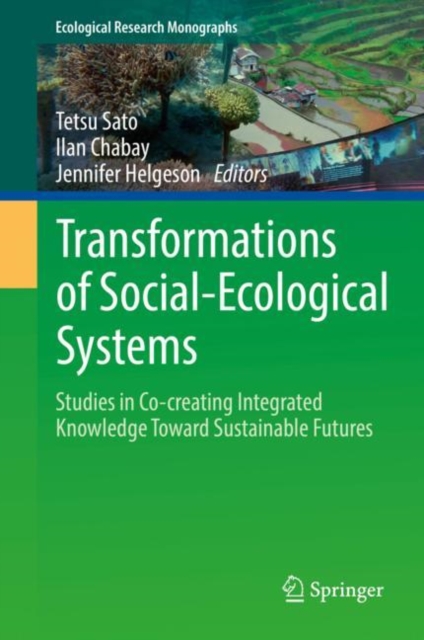
Through this book, readers will gain a comprehensive overview of transdisciplinary knowledge co-production in local contexts as an issue-driven and solution-oriented process, and will come to understand its relationship to societal transformation processes toward sustainability.
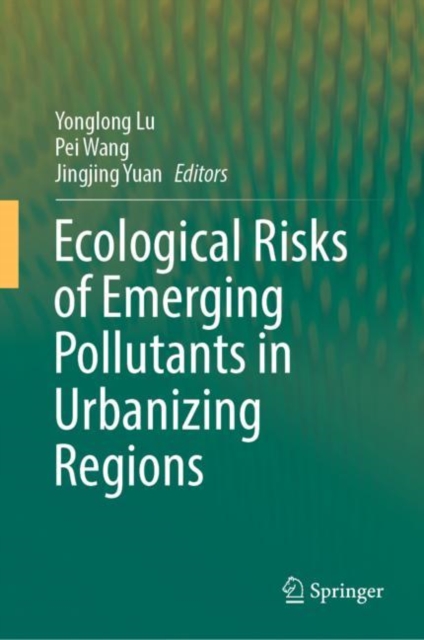
This book characterizes the major pollution patterns of emerging contaminants, such as sources, emission effluents, temporal and spatial distributions, multi-media transportation and transformation processes, exposure pathways to ecosystems and humans, and ecological risks.
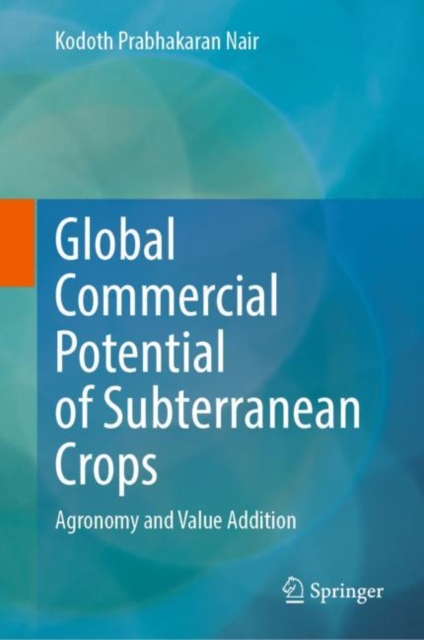
Tropical root and tuber crops form an important group of food crops for millions of people (about one-fifth of the world population), especially those living in the tropical and sub-tropical zones.
The world population is steadily increases with high rate in the past decade from 7,126 billion inhibitors in 2012 to 8,095 billion inhibitors in 2024, with 14% increase.
This book explores the interaction between climate change phenomena and the soil-plant-atmosphere continuum (SPAC), which inspects the crucial role of anthropogenic greenhouse gas emissions in modifying the net ecosystem response towards the modified environment.
This book presents the existing photocatalytic reactor design and the future developments and the progress needed for both solar light-driven hydrogen generation and environmental purification.
This book mainly focuses on the recent trends and sustainability challenges in the valorization of agro-wastes, emphasizing the role of microbial biotechnology.