A world expert on how trees chemically affect our environment, Diana Beresford-Kroeger has woven together ecology, ancient myth, horticulture, spirituality, science and alternative medicine in The Global Forest to capture their enormous significance to us - and our future.
La integración de sistemas de gestión facilita el uso eficiente de los recursos, evita la duplicidad de funciones y optimiza el trabajo, reduciendo los costes e incrementando los beneficios.
This book presents a collection of practitioner and community stories that reveal how invasive species management is a community issue that can spark community formation and collective action.
Die Widersprüche zwischen Ökonomie und Ökologie bringen unseren Planeten an den Rand einer Katastrophe, wenn wir es nicht lernen, Energie in einer Form zur Verfügung zu stellen, die schrittweise den Überschuss von Schadstoffen zu reduzieren hilft.
Las temáticas relacionadas con el agua y el ambiente están integradas y en cada reunión que congrega a expertos y académicos se obtienen nuevas formas de análisis y propuestas variadas para el planteamiento de posibles soluciones en la gestión del recurso hídrico.
A contracorriente: agua y conflicto en América Latina, es el resultado de un diálogo abierto entre académicos y activistas interesados en pensar y resistir la violencia e injusticia inherente en los conflictos de agua en América Latina.
La conservación, acceso, distribución, uso y disposición final del agua son preocupaciones constantes, especialmente en zonas rurales donde las comunidades indígenas y campesinas han implementado formas propias de gestión y manejo.
Esta obra, de una manera extraordinaria e inspiradora, nos revela las intimas conexiones entre el agua, los megaproyectos y las relaciones de poder en la costa ecuatoriana.
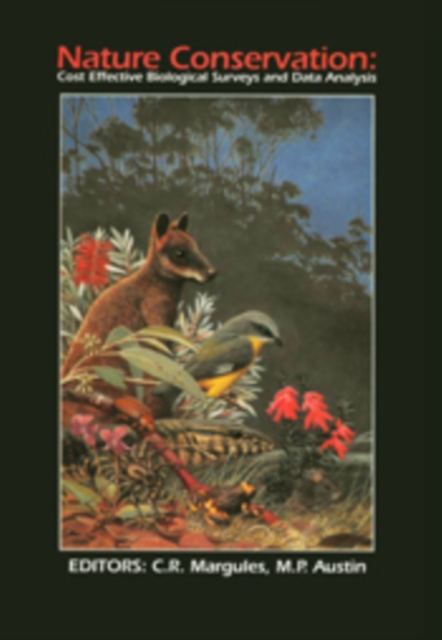
The proceedings of a Cost Effective Biological Surveys and Data Analysis workshop held at the old Quarantine Station, North Head, Sydney, in March 1988, under the auspices of the Council of Nature Conservation Ministers (CONCOM) and the Australian Environment Council (AEC).
The twelve contributors to this volume, from ten different nations, are world-renowned sociologists who examine problems of ecology and world resources as they affect the quality of social life.
For integrated water resources management both blue and green water resources in a river basin and their spatial and temporal distribution have to be considered.
For integrated water resources management both blue and green water resources in a river basin and their spatial and temporal distribution have to be considered.
Originally published in 1990, this volume addresses issues surrounding global ecological changes and sustainability of present patterns of urbanisation and industrialisation.
As debates about the effects of fossil fuels on our climate and foreign policy intensify, the question of just how much longer we can depend on this finite source of energy becomes more and more pressing.
This interdisciplinary book brings philosophers and non-philosophers to the table to address questions of water ethics, specifically in terms of how moral questions inform decision making around water security at local, national, and international scales.
Water, Energy and Food are the very basic necessities of human life and all the three of them are interconnected with each other, this connection being called the Water-Energy-Food nexus.
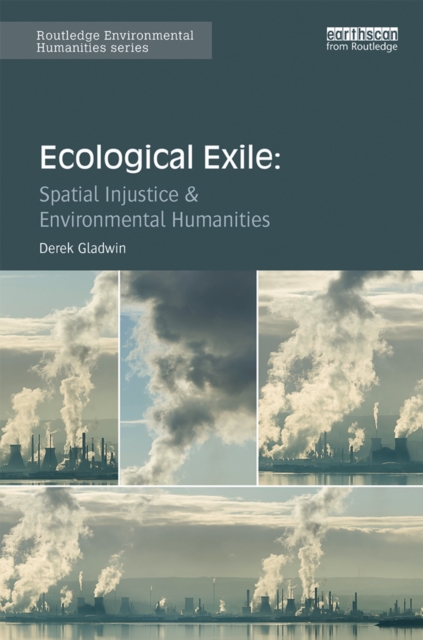
Ecological Exile explores how contemporary literature, film, and media culture confront ecological crises through perspectives of spatial justice - a facet of social justice that looks at unjust circumstances as a phenomenon of space.
This book examines the environmental footprints of recycled polyesters, highlighting the benefits and impact of recycling polyester waste and preparing it to replace virgin polyester in the raw material stage.
With such a wide range of social and economic uses, energy has become essential to global infrastructure and operations, regardless of economic or environmental cost.
With such a wide range of social and economic uses, energy has become essential to global infrastructure and operations, regardless of economic or environmental cost.
In May 2007, the National Academies Chemical Sciences Roundtable held a public workshop on the topic of Bioinspired Chemistry for Energy, where government, academic, and industry representatives discussed promising research developments in solar-generated fuels, hydrogen-processing enzymes, artificial photosynthetic systems, and biological-based fuel cells.
This book, the result of a congressionally mandated study, examines the adequacy of the regulatory framework for mining of hardrock mineralssuch as gold, silver, copper, and uraniumon over 350 million acres of federal lands in the western United States.
Natural gas in deep shale formations, which can be developed by hydraulic fracturing and associated technologies (often collectively referred to as "e;fracking"e;) is dramatically increasing production of natural gas in the United States, where significant gas deposits exist in formations that underlie many states.
The book "e;Building Climate Resilient Communities along Africa's Coasts: The Role of Mangroves"e; highlights the crucial role mangrove ecosystems play in enhancing climate resilience for coastal communities in Africa, which face rising sea levels, intensified storms, and habitat loss.
Despite the many benefits of energy, most of which are reflected in energy market prices, the production, distribution, and use of energy causes negative effects.