Solving the global climate crisis through local partnerships and experimentationGlobal climate diplomacy-from the Kyoto Protocol to the Paris Agreement-is not working.
An in-depth look at the distinctly different ways that China and India govern their cities and how this impacts their residentsUrbanization is rapidly overtaking China and India, the two most populous countries in the world.
Cross-Border Resource Management, Fourth Edition addresses theoretical and analytical issues relating to cross-border resource management, particularly in a changing world.
South East Queensland has been one of the fastest growing regions of Australia, both in terms of its rapidly growing population and an ever-expanding built environment.
This data-rich book demonstrates the value of existing national long-term ecological research in Australia for monitoring environmental change and biodiversity.
Within the Yarra River catchment area nestles the valley of Steels Creek, a small shallow basin in the lee of Kinglake plateau and the Great Dividing Range.
Within the Yarra River catchment area nestles the valley of Steels Creek, a small shallow basin in the lee of Kinglake plateau and the Great Dividing Range.
Issues including climate variability, water scarcity, animal welfare and declining biodiversity have led to increasing demands on farmers to conduct and communicate their farming practices so as to protect their 'social licence to farm'.
Issues including climate variability, water scarcity, animal welfare and declining biodiversity have led to increasing demands on farmers to conduct and communicate their farming practices so as to protect their ‘social licence to farm’.
Concern about rising crime rates, high levels of unemployment and anti-social behaviour of youth gangs within particular urban neighbourhoods has reinvigorated public and community debate into just what makes a functional neighbourhood.
Risk and Social Theory in Environmental Management marks a timely contribution, given that environmental management is no longer just about protecting pristine ecosystems and endangered species from anthropogenic harm; it is about calculating and managing the risks to human communities of rapid environmental and technological change.
Risk and Social Theory in Environmental Management marks a timely contribution, given that environmental management is no longer just about protecting pristine ecosystems and endangered species from anthropogenic harm; it is about calculating and managing the risks to human communities of rapid environmental and technological change.
There can be little doubt that there are truly colossal challenges associated with providing food, fibre and energy for an expanding world population without further accelerating already rapid rates of biodiversity loss and undermining the ecosystem processes on which we all depend.
There can be little doubt that there are truly colossal challenges associated with providing food, fibre and energy for an expanding world population without further accelerating already rapid rates of biodiversity loss and undermining the ecosystem processes on which we all depend.
Australia's Unintended Cities identifies and researches housing and housing-related urban outcomes that are unintended consequences of other policies, the structure of incentives and disincentives for the housing market, and governance arrangements for metropolitan areas and planning and service delivery.
Australia’s Unintended Cities identifies and researches housing and housing-related urban outcomes that are unintended consequences of other policies, the structure of incentives and disincentives for the housing market, and governance arrangements for metropolitan areas and planning and service delivery.
In 2005, researchers from four Australian universities and CSIRO joined forces with environmental managers from three state agencies and six regional catchment management authorities to answer the question: 'Can we detect the influence of public environmental programs on the condition of our natural resources?
In 2005, researchers from four Australian universities and CSIRO joined forces with environmental managers from three state agencies and six regional catchment management authorities to answer the question: 'Can we detect the influence of public environmental programs on the condition of our natural resources?
This data-rich book demonstrates the value of existing national long-term ecological research in Australia for monitoring environmental change and biodiversity.
Networks of land managed for conservation across different tenures have rapidly increased in number (and popularity) in Australia over the past two decades.
Networks of land managed for conservation across different tenures have rapidly increased in number (and popularity) in Australia over the past two decades.
The rapidly increasing number of threatened flora and fauna species worldwide is one of the chief problems confronting environmental professionals today.
The rapidly increasing number of threatened flora and fauna species worldwide is one of the chief problems confronting environmental professionals today.
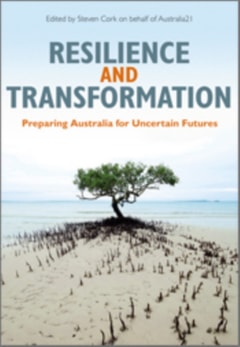
Resilience and Transformation explores what factors contribute to Australia's resilience, what trends are apparent, and what actions are required to better prepare us for the immediate and longer term future.
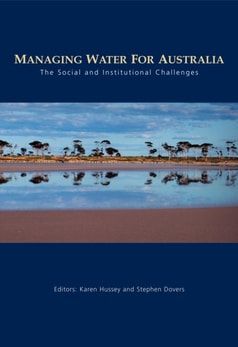
Australian water policy and management are undergoing rapid and immense change in response to drought, technological advances, climate change and demographic and economic shifts.
Community Bushfire Safety brings together in one accessible and comprehensive volume the results of the most important community safety research being undertaken within the Australian Bushfire Cooperative Research Centre (CRC).
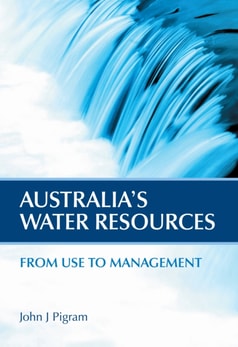
Australia’s Water Resources seeks to explore the circumstances underpinning the profound reorientation of attitudes and relationships to water that has taken place in Australia in recent decades.
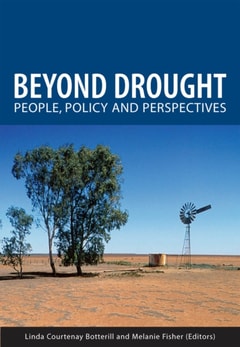
The unpredictability of Australia’s climate poses real challenges for practices that were developed based on the relative predictability of a European climate.
Community Bushfire Safety brings together in one accessible and comprehensive volume the results of the most important community safety research being undertaken within the Australian Bushfire Cooperative Research Centre (CRC).
The unpredictability of Australia's climate poses real challenges for practices that were developed based on the relative predictability of a European climate.
Australia's Water Resources seeks to explore the circumstances underpinning the profound reorientation of attitudes and relationships to water that has taken place in Australia in recent decades.
Australian water policy and management are undergoing rapid and immense change in response to drought, technological advances, climate change and demographic and economic shifts.
Resilience and Transformation explores what factors contribute to Australia’s resilience, what trends are apparent, and what actions are required to better prepare us for the immediate and longer term future.
This book explores the impact of population aging on energy use patterns in society from both a theoretical and an empirical angle, with a specific focus on Japan and Spain.
This book probes the ethical, practical, and sociopolitical implications of leveraging innovative and disruptive means to address the world's various environmental crises.
The Point Reyes National Seashore (PRNS) is not only a stunning piece of landthe first large national park created from all private lands and the first large park adjacent a large metropolitan centerbut the fight to save this fragile ecosystem in the 1960s was a key turning point in the environmental movement and helped transform the political landscape of California and the nation.
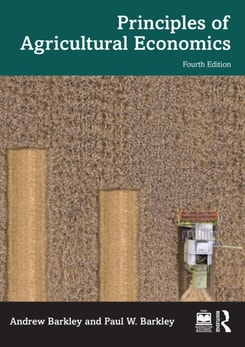
Principles of Agricultural Economics, now in its fourth edition, continues to showcase the power of economic principles to explain and predict issues and current events in the food, agricultural, and agribusiness sectors.