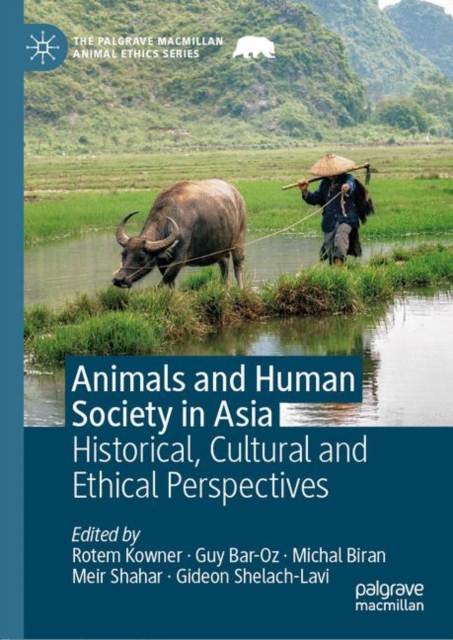
The North American Wildlife Conservation Model (NAM) is the driver of a strong anthropocentric stance, which has legalized an ongoing, annual exploitation of hundreds of millions of wild animals, who are killed in the United States through trapping, hunting and other lethal practices.
This volume contains essays that offer both historical and contemporary views of nature, as seen through a hermeneutic, deconstructive, and phenomenological lens.
This book reflects the cutting edge in ecostylistic approaches to nature, the environment and sustainability as represented in contemporary non-literary discourse.
This broad and insightful book presents current scholarship in important subfields of philosophy of science and addresses an interdisciplinary and multidisciplinary readership.
The North American Wildlife Conservation Model (NAM) is the driver of a strong anthropocentric stance, which has legalized an ongoing, annual exploitation of hundreds of millions of wild animals, who are killed in the United States through trapping, hunting and other lethal practices.
This book reflects the cutting edge in ecostylistic approaches to nature, the environment and sustainability as represented in contemporary non-literary discourse.
This volume presents eco-phenomenology's role in pandemics and post-pandemics and takes up the task of eco-phenomenology as a unified project by not focusing on naturalizing phenomenology but rather exploring the full range of possibilities - such as creative acts and self-individualization - in dealing with ecological threats.
This book raises awareness about environmental issues that result from energy production, extraction and conversion, and examines the attitudes people have about these issues.
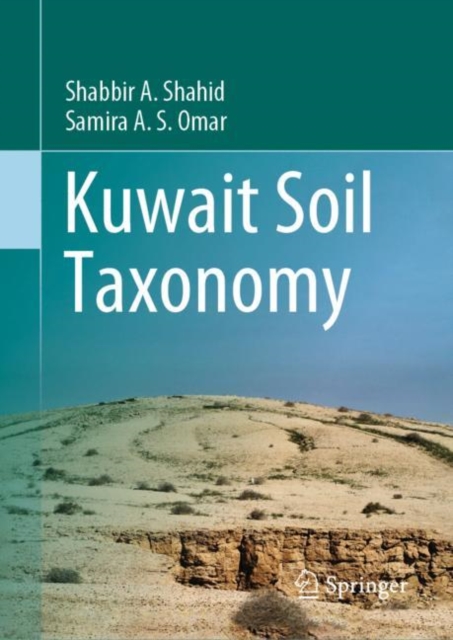
This book provides guidelines to key soil taxa in the deserts of Kuwait and guidance to associated procedures for laboratory analyses of soils, leading to land use planning on informed decisions.
This book, by an eminent scientist and philosopher, provides strong evidence for the claim that language is a general principle of Nature, rooted exclusively in physical and chemical laws.
The Anthropocene has become a field of studies in which the influence of human activity on the Earth System and nature is both the main threat and the potential solution.
In this exciting new collection, leading and emerging Lacanian scholars seek to understand what psychoanalysis brings to debates about the environment and the climate crisis.
This collection explores the arguments related to veg(etari)anism as they play out in the public sphere and across media, historical eras, and geographical areas.
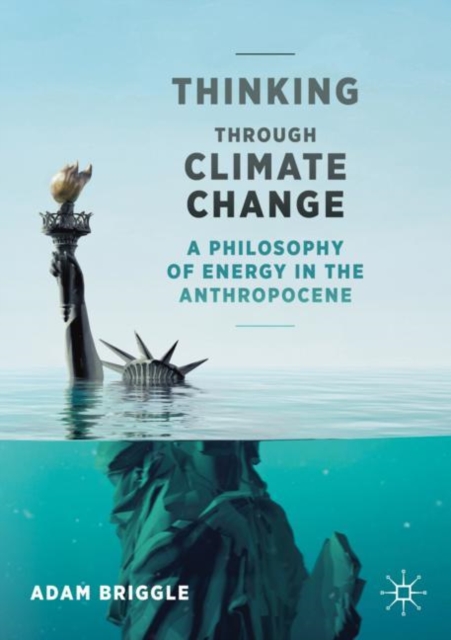
In this creative exploration of climate change and the big questions confronting our high-energy civilization, Adam Briggle connects the history of philosophy with current events to shed light on the Anthropocene (the age of humanity).
This book explores the interconnections between world politics and non-human nature to overcome the anthropocentric boundaries that characterize the field of international relations.
This book provides a survey of key process-philosophical approaches that, in conversation with selected concepts across the biological and physical sciences, help us to think about living processes, or 'lived time,' at different scales of functioning.
This book discusses the physical and mathematical foundations of modern quantum mechanics and three realistic quantum theories that John Stuart Bell called "e;theories without observers"e; because they do not merely speak about measurements but develop an objective picture of the physical world.
This volume brings together diverse Asian religious perspectives to address critical issues in the encounter between tradition and modern western evolutionary thought.
This book expands on the thought of Walter Benjamin by exploring the notion of modern mind, pointing to the mutual and ongoing feedback between mind and city-form.
In consequence of significant social, political, economic, and demographic changes several wildlife species are currently growing in numbers and recolonizing Europe.
This anthology aims to present the fundamental philosophical issues and tools required by the reflection within and upon geography and Geographic Information Systems (GIS) .
This book provides keys to decrypt current political debates on the environment in light of the theories that support them, and provides tools to better understand and manage environmental conflicts and promote environmentally friendly behaviour.
This book explores the potential of geoethics, as designed within the operational criteria of addressing the deeds and values of the human agent as part of the Earth system.
This book explores the potential of geoethics, as designed within the operational criteria of addressing the deeds and values of the human agent as part of the Earth system.
This is the first book to outline a basic philosophy of ecology using the standard categories of academic philosophy: metaphysics, axiology, epistemology, aesthetics, ethics, and political philosophy.