This book is a provocative and invigorating real-time exploration of the future of human evolution by two of the world's leading interdisciplinary ecologists - Michael Charles Tobias and Jane Gray Morrison.
This book offers the first systematic study of how elite conservation schemes and policies define once customary and vernacular forms of managing common resources as banditry-and how the 'bandits' fight back.
This anthology aims to present the fundamental philosophical issues and tools required by the reflection within and upon geography and Geographic Information Systems (GIS) .
In the 21st century, the old colonial attitude of terra nullius, meaning a vacant place free for the taking, still lurks behind the global economic expropriation of peoples' lands and bodies.
Whether he is cheering for untamed mountain sheep or braving a high-country storm that would sweep away lesser mortals, John Muir-outdoorsman, scientist, author-is forever passionate, often droll, and always inspirational.
Uncovering the rich heritage of common ownership which existed before the dominance of capitalist property relations, Giovanna Ricoveri argues that the subsistence commons of the past can be reinvented today to provide an alternative to the current destructive economic order.
"e;Advances in Ecopolitics Series"e; presents a collection of environmental alternatives worthy of consideration in light of the ongoing economic downturn which has accompanied the latest incarnation of unsustainable practices.
In this bold intervention, Cudworth and Hobden draw on recent advances in thinking about complexity theory to call for a profound re-envisioning of the study of international relations.
Speed is the essence of the modern era, but our faster, more frenetic lives often trouble us and leave us wondering how we are meant to live in today's world.
"e;Finding common ground between Christianity, Islam, and Judaism is a critical priority for the whole worldand nowhere is that common ground more evident or inspiring than on environmental issues.
Engage with the intelligence of nature to discover your unique role and deepen your spiritual path on Earth Presents practical ways to rekindle your connection with nature and open up to plant consciousness as a way to enrich your spiritual path Offers guidance on how to meet plant allies with wisdom teachings specific to you and your path Provides over 40 exercises, including shamanic journeys, as well as links to digital downloads for a shamanic drumming track and guided meditations As our lives become more absorbed in screen time rather than the great outdoors, it feels essential to open up our senses again to the riches of nature, reestablishing our connection with the heartbeat of the Earth.
Based on firsthand practical experiences of communicating with natural spirits through meditation, this eye-opening guide to healing the earth teaches how to work with elemental beings by describing each in detail while defining their roles within the web of life.
This book further develops the interventionist literature on wild animal suffering using different theoretical frameworks, including some that have never previously been used to ground our positive duties to wild animals.
The Earth's climate is changing faster than at any point in the history of modern civilisation through human-induced global warming, yet public reactions to this scientific truth remain dissonant.
The Earth's climate is changing faster than at any point in the history of modern civilisation through human-induced global warming, yet public reactions to this scientific truth remain dissonant.
'Building a society that operates within ecological constraints requires an unleashing of our political imaginations, and this book helps us do just that'-Astra Taylor, author of The Age of InsecurityHalf-Earth Socialism is a radical call to action to save the planet, including trenchant proposals to rewild half the earth to absorb carbon emissions and restore biodiversity; rapidly transition to renewable energy, paired with drastic cuts in consumption; and shift to global veganism to reduce energy and land use.
Originally published in French in 1974, radical feminist Francoise d'Eaubonne surveyed women's status around the globe and argued that the stakes of feminist struggle was not about equality but about life and death-for humans and the planet.
'Essential brain food' Conde Nast Traveler'As much a manifesto as a guide' Los Angeles Times'Read this book and save the planet' Soho House NotesTHE GUIDE TO A MORE JUST FUTURE FOR EVERYONE - FROM THE TIME100 NEXT AND FORBES 30 UNDER 30 RISING STAR.
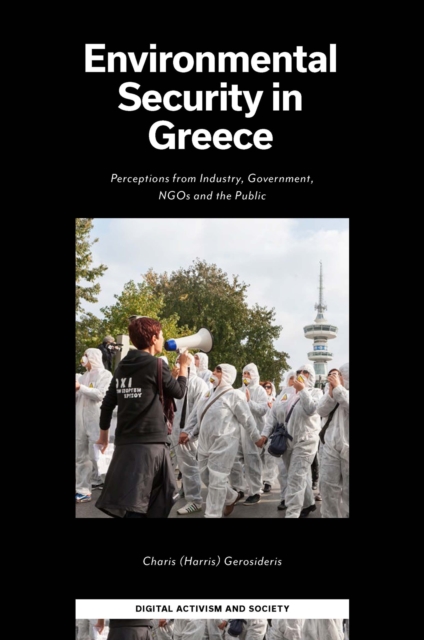
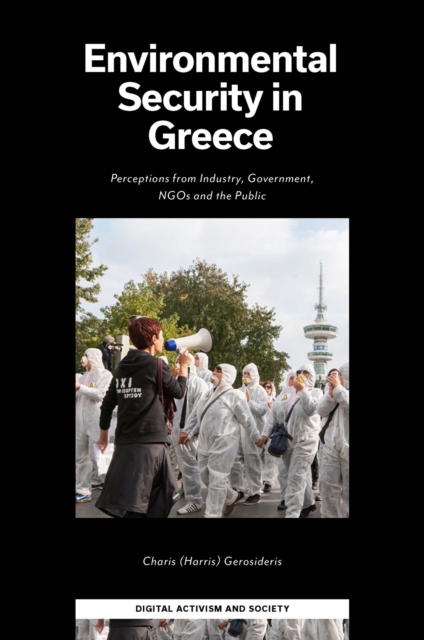
Environmental Security in Greece establishes stakeholders' perceptions of environmental security and energy security taking a Q-methodology and Digital Media Research Framework approach.
Environmental Security in Greece establishes stakeholders' perceptions of environmental security and energy security taking a Q-methodology and Digital Media Research Framework approach.
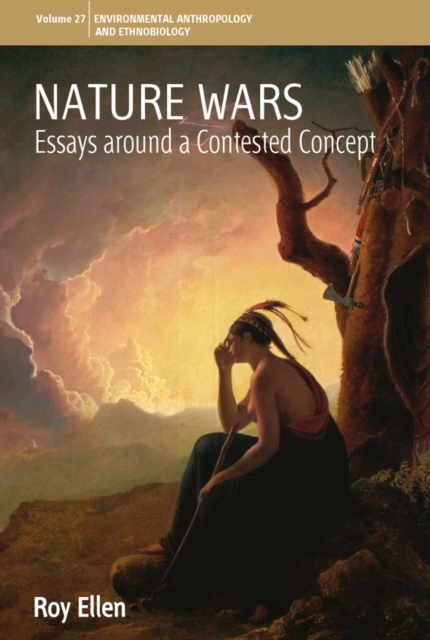
Organized around issues, debates and discussions concerning the various ways in which the concept of nature has been used, this book looks at how the term has been endlessly deconstructed and reclaimed, as reflected in anthropological, scientific, and similar writing over the last several decades.
This edited volume explores the crucial intersections between Indigenous Land-Based Knowledge (ILK), sustainability, settler colonialism, and the ongoing environmental crisis.
As we face the compounded crises of late capitalism, environmental catastrophe and technological transformation, who are the thinkers and the ideas who will allow us to understand the world we live in?