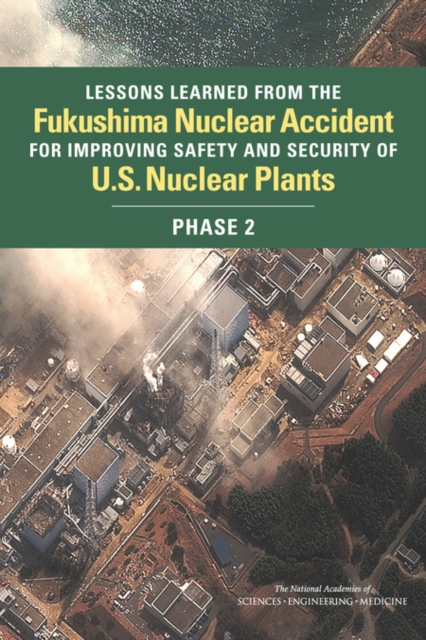
Accidents and terrorist attacks that lead to the release of radioactive materials can cause deaths, injuries, and a range of psychosocial effects in the surrounding community and team of emergency responders.
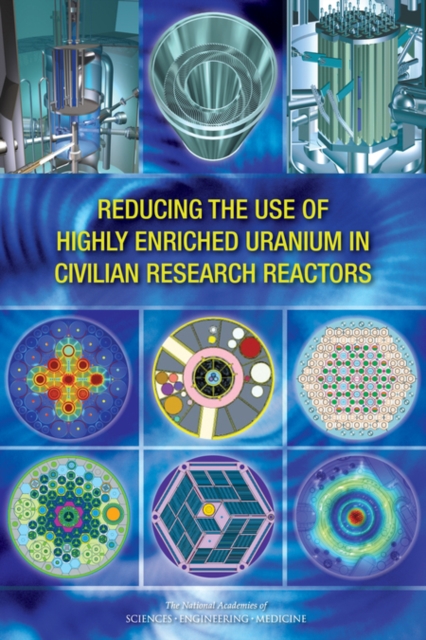
The continued presence of highly enriched uranium (HEU) in civilian installations such as research reactors poses a threat to national and international security.
The Hanford Nuclear Reservation, where about two-thirds of the nation's weapons plutonium was produced from 1944 to 1987, is the site of the largest and most complex nuclear cleanup challenge in the United States.
As part of a long-standing collaboration on nuclear nonproliferation, the National Academy of Sciences and the Russian Academy of Sciences held a joint workshop in Moscow in 2003 on the scientific aspects of an international radioactive disposal site in Russia.
Growing public concern about releases of radiation into the environment has focused attention on the measurement of exposure of people living near nuclear weapons production facilities or in areas affected by accidental releases of radiation.
The United States currently has no place to dispose of the high-level radioactive waste resulting from the production of the nuclear weapons and the operation of nuclear electronic power plants.
This book discusses the technical alternatives for cleanup of radioactive fluoride salts that were the fuel for the Molten Salt Reactor Experiment, a novel nuclear reactor design that was tested in the 1960s at the Oak Ridge National Laboratory in Tennessee.
In the decades since the atomic bombing of Hiroshima and Nagasaki, economic and political trends have opened avenues for radiation research while breakthroughs in molecular biology have shed light on radiation's effect on the human body.
The US Environmental Protection Agency Office of Radiation and Indoor Air asked the National Research Council to evaluate whether sufficient new data exist to warrant a reassessment of health risks reported in Health Effects of Exposure to Low Levels of Ionizing Radiations (BEIR V) in 1990.
This new report from the National Research Council's Nuclear and Radiation Studies Board (NRSB) and the Transportation Research Board reviews the risks and technical and societal concerns for the transport of spent nuclear fuel and high-level radioactive waste in the United States.
End Points for spent Nuclear Fuel and High-Level Radioactive Waste in Russian and the United States provides an analysis of the management of spent nuclear fuel and high-level radioactive waste in Russia and the United States, describing inventories, comparing approaches, and assessing the end-point options for storage and disposal of materials and wastes.
The production of nuclear materials for the national defense was an intense, nationwide effort that began with the Manhattan Project and continued throughout the Cold War.
Compared to other large engineering projects, geologic repositories for high-level waste present distinctive challenges because: 1) they are first-of-a-kind, complex, and long-term projects that must actively manage hazardous materials for many decades: 2) they are expected to hold these hazardous materials passively safe for many millennia after repository closure; and 3) they are widely perceived to pose serious risks.
This book is the product of a congressionally mandated study to examine the feasibility of eliminating the use of highly enriched uranium (HEU2) in reactor fuel, reactor targets, and medical isotope production facilities.
This book is the product of a congressionally mandated study to examine the feasibility of eliminating the use of highly enriched uranium (HEU2) in reactor fuel, reactor targets, and medical isotope production facilities.
Nuclear Reactions explores the nuclear consensus that emerged in postWorld War II America, characterized by widespread support for a diplomatic and military strategy based on nuclear weapons and a vision of economic growth that welcomed nuclear energy both for the generation of electricity and for other peaceful and industrial uses.
How the Regional Greenhouse Gas Initiative created a new paradigm in climate policy by requiring polluters to pay for their emissions for the first time.
The relationship between infrastructure governance and the ways we read and represent waste systems, examined through three waste tracking and participatory sensing projects.
A comprehensive assessment and analysis of the validity, trustworthiness, and effectiveness, of such environmental ratings as ENERGY STAR, LEED, and USDA Organic.
A provocative call for delegitimizing fossil fuels rather than accommodating them, accompanied by case studies from Ecuador to Appalachia and from Germany to Norway.
A proposal for a new chemicals strategy: that we work to develop safer alternatives to hazardous chemicals rather than focusing exclusively on controlling them.
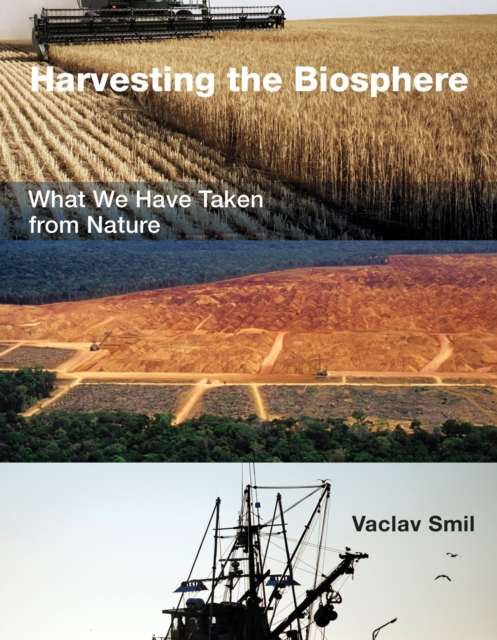
An interdisciplinary and quantitative account of human claims on the biosphere''s stores of living matter, from prehistoric hunting to modern energy production.