While the need for effective action toward a greener and socially inclusive economy has long been evident, health promotion in the context of sustainable development has faltered.
Given Half a Chance is both a snapshot of our world and a call to arms, setting out the most pressing environmental challenges that we face while making a passionate case for why we need to meet them.
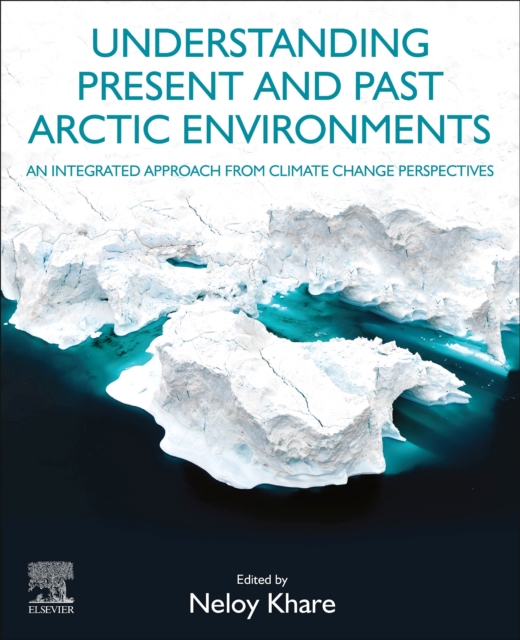
Within the contexts of the global warming crisis facing the world, climate change mitigation strategies must be developed with a deep understanding of the science behind the impact of climate change and adaptations that must be made.
Too often amongst policy makers and thought leaders an assumption is made that we must make a choice between tackling climate change and having a strong economy; tackling climate change and allowing poorer nations to develop; tackling climate change and having a secure energy system.
Air pollution damages materials, but it has changed dramatically in the past century, with a reduction in the concentration of corrosive primary pollutants in urban atmospheres.
Following the recognition that airborne particulate matter, even at quite modest concentrations, has an adverse effect on human health, there has been an intense research effort to understand the mechanisms and quantify the effects.
The Third Assessment Report of the Intergovernmental Panel on Climate Change (IPCC) has presented strong evidence that human-induced climate change is occurring and that all countries of the world will be affected and need to adapt to impacts.
"e;INFORMATIVE AND ORIGINAL"e; Guardian, 'This month's best paperbacks' We've become used to thinking of plants as things for us to use: as food, tools, resources, or just as an attractive background to our own lives.
Agricultural production is in a period of rapid transformation which has seen an increase in the use of biotechnology, synthetic chemistry, biological chemicals and biopesticides.
Understanding pollution, its behaviour and impact is becoming increasingly important, as new technologies and legislation continually lower the tolerable levels of pollutants released into the environment.
Medicines play an important role in the treatment and prevention of disease in humans and animals, but residues from these medicines can be released into the environment through a number of routes during their manufacture, use and disposal.
Borne out of the current widespread interest in the pollution of water bodies, this book explores the latest research concerning the photochemical fate of organic pollutants in surface water.
It is generally accepted within the scientific community that anthropogenic emissions of greenhouse gases are primarily responsible for a recent warming in global climate and that current trajectories of emissions may lead to potentially catastrophic changes in climate.
Examining urban environmental issues at the macro, municipal level down to the micro community and individual level, this volume features cities and metropolitan regions across the global north and south with case studies from the United States, Canada, Eastern and Western Europe to India, Central America, South America and Africa.
The book provides an analysis of impacts of climate change on water for agriculture, and the adaptation strategies in water management to deal with these impacts.
This book is the first resource to review the influence of climate change on urban and public pests such as mosquitoes, flies, ticks, and wood pests, with respect to population, distribution, disease, damage and control.
This book emphasis the role of farm level adaptation as a key in developmental pathways that are challenged by climate risks in the semi-arid tropics of Asia and Africa.
In a changing climate, livestock production is expected to exhibit dual roles of mitigation and adaptation in order to meet the challenge of food security.
The book provides an analysis of impacts of climate change on water for agriculture, and the adaptation strategies in water management to deal with these impacts.
This book emphasis the role of farm level adaptation as a key in developmental pathways that are challenged by climate risks in the semi-arid tropics of Asia and Africa.
Climate Change and Coastal Tourism includes case studies on climate change and coastal tourism that explore current threats to, and consequences of, climate change on existing tourism coastal destinations.
The focus of this book is future global climate change and its implications for agricultural systems which are the main sources of agricultural goods and services provided to society.
This book will address the current state of climate change predictions, and how climate change will affect conservation and use of crop germplasm, both ex situ and in situ.