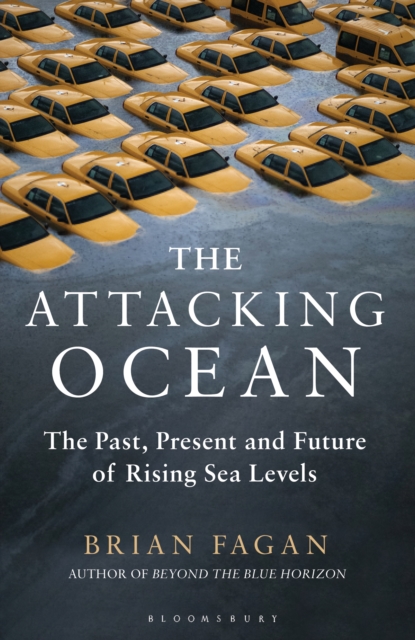
The past fifteen thousand years - the entire span of human civilization - have witnessed dramatic sea level changes, which began with rapid global warming at the end of the Ice Age, when sea levels were more than 700 feet below modern levels.
_________________'A superbly crafted, diligently compressed vision of a world spiralling towards destruction' - Observer'Kolbert mesmerises with her poetic cadence in this riveting view of the apocalypse already upon us' - Robert F.
This groundbreaking book goes beyond conventional approaches and explores how AI is revolutionizing the field of wastewater treatment, offering innovative solutions to pressing challenges.
This book examines the challenge of reform of the urban water supply sector in developing countries, based on case studies of state-owned water companies in Ghana, India, Sri Lanka and Zimbabwe.
This practical guide for primary care provides a context-specific introduction to the sustainability challenges associated with good health-care delivery and provides easy-to-implement yet impactful actions that can be taken to reduce and mitigate the impact of primary care on the living world while also looking at the impact of the changing planet on health care that people will encounter.
The extent of harmful effects of pollution on atmospheric, terrestrial and aquatic environments can be translated into extreme temperature changes, dirty air, clean water shortages, and increased incidence of toxicity that harms every life on earth.
International experts provide a comprehensive picture of the principles, concepts and methods that are applicable to problems originating from the interaction between the living/non-living environment and mankind.
Anthropogenic emissions of ammonia cause a host of environmental impacts, including loss of biodiversity, soil acidification and formation of particulate matter in the atmosphere.
Over the last 60 years, we have recognized increasingly that our world is connected, and the impacts of environmental catastrophes and economic crises in one region of our world have far-reaching and long-lasting consequences globally.
While almost every aspect of society-nature interactions can be treated as an environmental security issue, the threats to human societies originating from inadequate freshwater management constitute one of the most wi- spread and pressing problems.
Over the last three decades drought episodes have resulted in severe social problems in Mediterranean countries, receiving broad attention from the international scientific and policy communities.
Since its establishment as a policy research institute in 1990, the Institute for In- grated Development Studies (IIDS) has been engaged in promoting public awa- ness and understanding of issues of national importance by undertaking studies and research on contemporary themes.
International Documents on Environmental Liability brings together 30 official full-text documents in the field of international environmental liability into an easily accessible, practical handbook; details the work of the International Law Commission on this topic; and provides the latest versions of international liability conventions and their statuses - including the latest on: (1) 2003 UNECE Kyiv Liability Protocol; (2) 2004 EC Directive on Environmental Liability; (3) 2005 Antartica Liability Annex.
Although numerous books have been written on both monitoring and modelling of coastal oceans, there is a practical need for an introductory multi-disciplinary volume to non-specialists in this field.
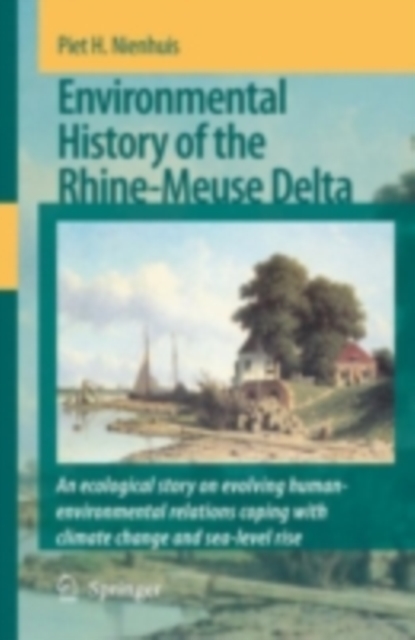
This book presents the environmental history of the Delta of the lowland rivers Rhine and Meuse, an ecological story on evolving human-environmental relations coping with climate change and sea-level rise.
This book contains a selection of papers presented at the Advanced Research Workshop on 'The Socio-economic causes and consequences of desertification in Central Asia' held in Bishkek, Kyrgyzstan, in June 2006.
International experts in the field of oil spill response, including reprsentatives from 26 NATO countries, participated in a workshop in Canada to discuss their experience in the development and application of current and emerging technologies for oil spill response in the marine environment.
Concern over the effects of noise on marine life, particularly marine mammals, has emerged as a topic of considerable interest to both professionals and laypersons alike.