Consumer capitalism arose with the second industrial revolution, the application of continuous-mass production to consumer goods during the late nineteenth and early twentieth centuries.
Consumer capitalism arose with the second industrial revolution, the application of continuous-mass production to consumer goods during the late nineteenth and early twentieth centuries.
Oil and natural gas represent more than 50 percent of the worldwide energy supply, with high energy demand driven by population growth and improving standards of living.
In The Democracy of Suffering philosopher Todd Dufresne provides a strikingly original exploration of the past, present, and future of this epoch, the Anthropocene, demonstrating how the twin crises of reason and capital have dramatically remade the essential conditions for life itself.
In The Democracy of Suffering philosopher Todd Dufresne provides a strikingly original exploration of the past, present, and future of this epoch, the Anthropocene, demonstrating how the twin crises of reason and capital have dramatically remade the essential conditions for life itself.
This important book explores how community-based interventions can bridge the gap between health services and the voluntary sector to create more sustainable, healthy communities.
This important book explores how community-based interventions can bridge the gap between health services and the voluntary sector to create more sustainable, healthy communities.
This edited volume examines how to develop a planning and design process with green infrastructure that creates technical answers to the social and ecological function of the city's climate change adaptations demands.
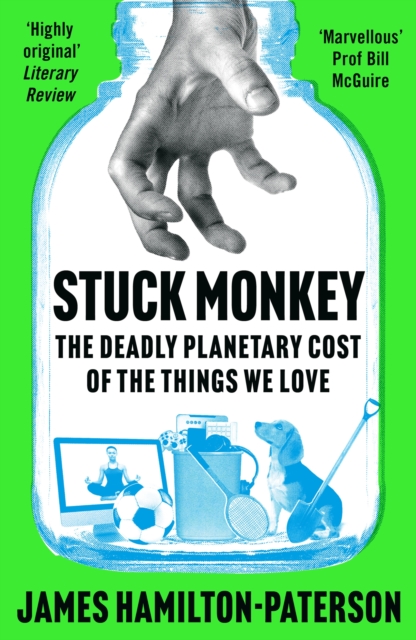
People hunting monkeys in the jungle once devised a simple yet effective trap: When the creature found a banana in a large jar with a narrow neck, it would plunge its paw in to retrieve it.
This book discusses the sources, human health hazards and risk prevention strategies associated with aeolian dust particles (fine and ultrafine) in the atmosphere.
This book presents comprehensive knowledge regarding the spatial and temporal distributions, influential factors, interactions with coexisting contaminants, migration behavior, and environmental risk posed by microplastics (MPs) in urban waterways.
This book analyses the transformation in 16th- and 17th- century English economic life that overturned the traditional restraints of the medieval economy for the commercial ethos that governs the modern world, and the resulting imbalance which opened the way to the environmental breakdown of today.
Ecocriticism explores the ways in which we imagine and portray the relationship between humans and the environment across many areas of cultural production, including Romantic poetry, wildlife documentaries, climate models, the Hollywood blockbuster The Day After Tomorrow, and novels by Margaret Atwood, Kim Scott, Barbara Kingsolver and Octavia Butler.
Ecocriticism explores the ways in which we imagine and portray the relationship between humans and the environment across many areas of cultural production, including Romantic poetry, wildlife documentaries, climate models, the Hollywood blockbuster The Day After Tomorrow, and novels by Margaret Atwood, Kim Scott, Barbara Kingsolver and Octavia Butler.
Climate Change and Sustainable Development covers the climatic and atmospheric changes, greenhouse gases and their impact on eco-system, biodiversity, water resources, agriculture and food security, human health, extreme weather and environment across two sections.
Climate Change and Sustainable Development covers the climatic and atmospheric changes, greenhouse gases and their impact on eco-system, biodiversity, water resources, agriculture and food security, human health, extreme weather and environment across two sections.
An energizing case for hope about the climate, from Rebecca Solnit (';the voice of the resistance'New York Times), climate activist Thelma Young Lutunatabua, and a chorus of voices calling on us to rise to the moment.
The Siberian World provides a window into the expansive and diverse world of Siberian society, offering valuable insights into how local populations view their environments, adapt to change, promote traditions, and maintain infrastructure.
This book offers a deeper historical context to the interplay between the physical fortunes of climate and weather and the ways in which the Tamil society experienced it in the medieval age.
The Siberian World provides a window into the expansive and diverse world of Siberian society, offering valuable insights into how local populations view their environments, adapt to change, promote traditions, and maintain infrastructure.
This book offers a deeper historical context to the interplay between the physical fortunes of climate and weather and the ways in which the Tamil society experienced it in the medieval age.
This comprehensively updated third edition explores the nature and role of environmental management and offers an introduction to this rapidly expanding and changing field.
Museums, Art and Inclusion in a Climate Emergency considers the impact of the Anthropocene on history and memory, approaches to objects and agency and the incommensurability of western and Indigenous ontologies.
Museums, Art and Inclusion in a Climate Emergency considers the impact of the Anthropocene on history and memory, approaches to objects and agency and the incommensurability of western and Indigenous ontologies.
This book introduces students to cultural anthropology with an emphasis on environmental and evolutionary approaches, focusing on how humans adapt to their environment and how the environment shapes culture.
This 5-volume set allows you to assess the health and environmental effects of chemicals by determining the routes of exposure of the chemical to sensitive organisms.
This 5-volume set allows you to assess the health and environmental effects of chemicals by determining the routes of exposure of the chemical to sensitive organisms.
This book introduces students to cultural anthropology with an emphasis on environmental and evolutionary approaches, focusing on how humans adapt to their environment and how the environment shapes culture.
Trees have played countless roles in human history - by turns hopeful symbols of freedom, pioneering space travellers, keepers of ancient history and accessories to murder.
The book highlights the importance of newly developed bioremediation technologies in industrial waste treatment to clean up the environment from pollution caused by human activities.
Since the adoption of the Kyoto Protocol to the United Nations Framework Convention on Climate Change in 1997, the negotiation of policy responses to climate change has become an area of major research.