In the current age of science and technology, our lives have become dominated by countless scientific and technological innovations without which the earth would be a much poorer place.
'A thought provoking and documented examination of solutions to social and economic inequality, ecological tipping points, and the threat of climate catastrophe, focusing on renewable energy systems, agroecology, and social organization.
Despite the growing consensus that the rise of China is transforming international relations, policy makers and scholars have not sufficiently addressed the geopolitical and geoeconomic implications of a new paradigm, especially since the Covid-19 pandemic and the Russo-Ukrainian war.
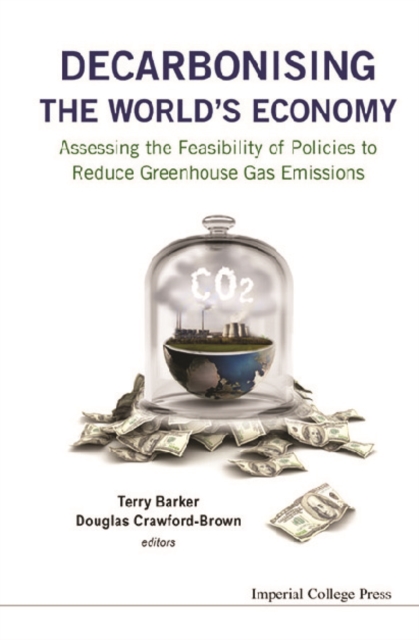
Too often amongst policy makers and thought leaders an assumption is made that we must make a choice between tackling climate change and having a strong economy; tackling climate change and allowing poorer nations to develop; tackling climate change and having a secure energy system.
Southeast Asia is one of the most diverse regions in the world - hosting a wide range of languages, ethnicities, religions, economies, ecosystems and political systems.
The impacts of climate change on human societies, and the roles those societies themselves play in altering their environments, appear in headlines more and more as concern over modern global climate change intensifies.
Transdisciplinary Journeys in the Anthropocene offers a new perspective on international environmental scholarship, focusing on the emotional and affective connections between human and nonhuman lives to reveal fresh connections between global issues of climate change, species extinction and colonisation.
Responding to the issues and challenges of teaching and learning about climate change from a science education-based perspective, this book is designed to serve as an aid for educators as they strive to incorporate the topic into their classes.
Climate change has been a key factor in the rise and fall of societies and states from prehistory to the recent fighting in the Sudanese state of Darfur.
In recent years, 'environmental collapse' has become an important way of framing and imagining environmental change and destruction, referencing issues such as climate change, species extinction and deteriorating ecosystems.
Addressing the principles of sustainability, spatial planning, integration, governance and accessibility of transport, this book focuses on the problem of providing efficient and low energy transport systems which serve the needs of everybody.
This book focuses on probiotics and gut microbiota, as well as their roles in alleviating the toxicity of various environmental pollutants, presenting the latest research findings and explaining advanced research methods and tools.
This book provides an overview of the induction mechanism of imposex caused by organotin compounds in gastropods, as well as fundamental information on the physiology and biochemistry of reproduction in mollusks.
This book presents an overview and knowledgeable on water resources management in Balkan countries - Slovenia, North Macedonia, Serbia, Croatia, Greece, and Bulgaria.
This is the only book to offer an up-to-date overview of air pollution in East Asia and the effects of air pollutants such as ozone, acid deposition and aerosols on Asian crops and trees.
Das Buch stellt die gesamte Bandbreite des Mikroplastikproblems in unseren Gewässern vor, von der Entnahme von Wasserproben bis zu deren Analyse und Interpretation.
This book introduces the theory and applications of nanometer photocatalysis, and it briefly presents the concept of photocatalysts, photocatalytic reaction mechanisms and kinetics, and photocatalytic reactor design.
This book presents the necessary fundamental knowledge in the research, development, design, selection, and application of desiccant heating, ventilating, and air-conditioning systems.
Thisbook focuses on the recent results of the research project funded by aGrant-in-Aid for Scientific Research (S) of the Japan Society for the Promotionof Science (No.
The focus of this book is on the key water-related vulnerabilities to climate change in Africa, particularly in its most vulnerable areas, exploring potential management responses to such vulnerabilities.
Natural resources not only contribute to overall growth of the economy but also help reduce poverty by providing employment and food security to populations on the continent, and is thus the most inclusive growth sector of the economy of Asian countries.
Bioremediation is the use of microorganisms' metabolism to degrade waste contaminants (sewage, domestic, and industrial effluents) into non-toxic or less toxic materials by natural biological processes.
This book examines why authoritarian governments are willing to address environmental problems that have an international impact, such as CO2 emissions, but are reluctant to address problems that have only a domestic impact.
This innovative and practical book offers pedagogical tools to show how drama can be used in educational settings to advance a relational, action-oriented, interdisciplinary, and creative climate education attuned to the social and emotional effects of the climate emergency.
This book offers an overview of the recent studies and advances in environmental catalysis by nanomaterials, considering both the fundamental and the technological aspects.
This book covers the full spectrum of water and environment conservation, offering management lessons, identifying the barriers to transformative change, and then presenting agendas and initiatives for sustainable global water and environment management.
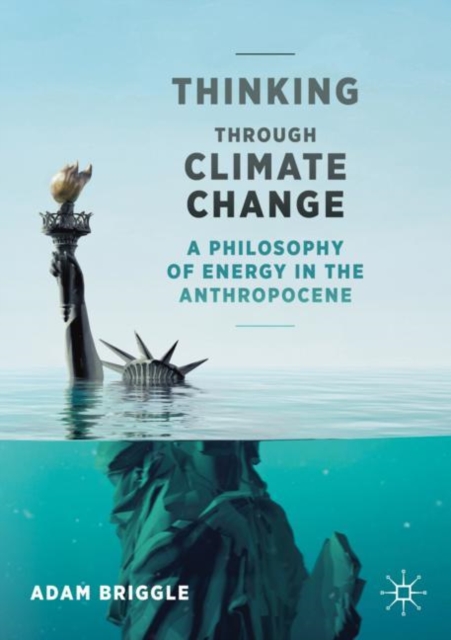
In this creative exploration of climate change and the big questions confronting our high-energy civilization, Adam Briggle connects the history of philosophy with current events to shed light on the Anthropocene (the age of humanity).
This book reviews recent research and applications of chitin and chitosan, as natural alternatives of fossil fuel products, in medicine and pharmacy, agriculture, food science and water treatment.
This book reviews recent research and applications of chitin and chitosan, as natural alternatives of fossil fuel products, in green chemistry, energy, biotechnology, bioprinting, medicine, water treatment, agriculture and food science.
Wastewater pollution is a major issue in the context of the future circular economy because all matter should be ultimately reused, calling for efficient depollution techniques.