The Congress "e;Arsenic in the Environment"e; offers an international, multi- and interdisciplinary discussion platform for research aimed towards a holistic solution to the problem posed by the environmental toxin arsenic, with considerable societal impact.
This book examines the challenge of negotiating and implementing new legal regimes addressing contemporary ocean challenges in the context of uncertain planetary futures.
Phytoplasma-associated diseases are a major limiting factor to quality and productivity of many ornamentals, horticultural and other economically important agriculture crops worldwide.
This book presents the select proceedings of the International Conference on Sustainable Infrastructure Development: Innovations and Advances (SIDIA 2020).
Pastoralism and Climate Change in East Africa provides systematic and robust empirical investigations on the impact of climate change on pastoral production systems, as well as participating in the ongoing debate over the efficacy of traditional pastoralism.
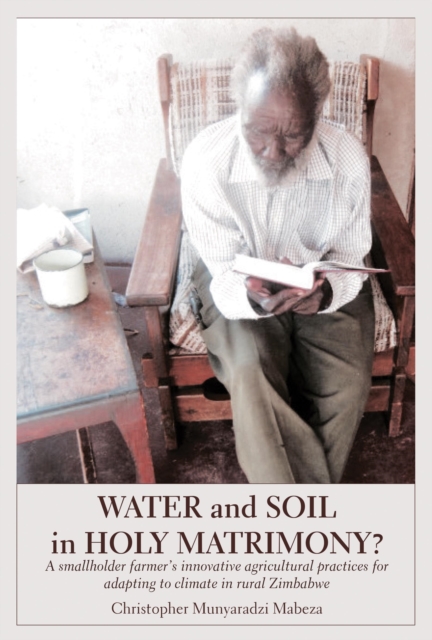
This book is a biography based on a qualitative ethnographic study of adaptation to climate by Mr Zephaniah Phiri Maseko, an award-winning smallholder farmer from Zvishavane, rural Zimbabwe.
A medida que la crisis climática se intensifica, científicos, activistas, abogados, investigadores y movimientos sociales ensayan respuestas literalmente contra reloj.
"Como consecuencia del crecimiento del consumo de combustibles fósiles, las emisiones de dióxido de carbono aumentaron y aumentarán exponencialmente, y al mismo ritmo seguirán sus concentraciones en la atmósfera.
Adaptation to Climate Change: ASEAN and Comparative Experiences presents a dynamic and comprehensive collection of works from legal scholars around the world that delves into a relatively new frontier on legal aspects of climate change adaptation with focus on the ASEAN region, both at the regional level as well as at the national level in some ASEAN countries - such as Malaysia, Philippines, and Thailand.
Hosting Earth is a timely and much-needed volume in the emerging literature of environmental philosophy, drawing upon art, science, and politics to explore alternatives to the traditional domination of nature by humans.
Featuring the theme, From Sources to Solution, this book is based on the research papers presented during the International Conference on Environmental Forensics 2013.
This book offers a selection of views from Chinese and European experts and scholars on the most pressing environmental challenges - air quality, global warming, climate change, energy security, urbanisation - faced by Europe and China in 2014.
In the opening session the Chairman of the Seminar underlined the important role of the permanent monitoring panels with respect to the 15 planetary emergencies.
Exposure to radon gas, which is present in the environment naturally, constitutes over half the radiation dose received by the general public annually.
This book contains updated, reviewed versions of some selected papers on "e;Sea-Level Changes and their Effects"e; presented at the International Ocean and Atmosphere Pacific Conference (OAP 95), held in Adelaide, South Australia, 23-27 October 1995.
Full Title: Water - Pollution, Biotechnology - Transgenic Plant Vaccine, Energy, Black Sea Pollution, AIDS - Mother-Infant HIV Transmission, Transmissible Spongiform Encephalopathy, Limits of Development - Megacities, Missile Proliferation and Defense - Information Security, Cosmic Objects, Desertification, Carbon Sequestration and Sustainability, Climatic Changes, Global Monitoring of Planet, Mathematics and Democracy, Science and Journalism, Permanent Monitoring Panel Reports, Water for Megacities Workshop, Black Sea Workshop, Transgenic Plants Workshop, Research Resources Workshop, Mother-Infant HIV Transmission Workshop, Sequestration and Desertification Workshop, Focus Africa Workshop
This book is a rebuttal of the common belief that grave environmental consequences are associated with the issues of global warming and nuclear hazards.
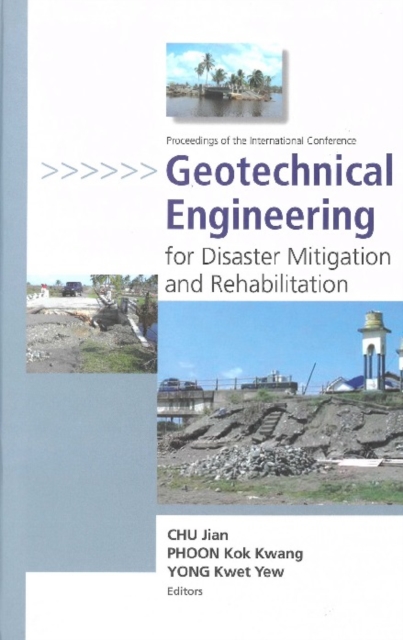
After the devastating disaster caused by the tsunami on 26 December 2004, disaster mitigation and rehabilitation have become some of the most pressing topics for discussion in geotechnical engineering and related professions.
As the dazzling economic and social changes in China have imposed substantial impact upon the quality of environmental governance, it is time to review the problems and progress in the politics of China's environmental protection.
Crucial Issues in Climate Change and the Kyoto Protocol: Asia and the World focuses on responses to climate change in the world's most populous region.
This unique volume brings together key writings from experts drawn from the first ten years of the Journal of Environmental Assessment Policy and Management (JEAPM), launched in 1999 as a forum for encouraging better linkages between environmental assessment and management tools.
This book covers the entire spectrum of health effects induced by chronic arsenic poisoning, which is prevalent in more than 30 countries due to the use of unclean underground water, a result of surface water pollution and shortage.