The word cleaning covers a wide range of activities from good housekeeping and janitorial duties to clinical process cleaning applications that form part of our everyday lives, most people are not aware of their existence, and yet without them, many of the services and products we take for granted would not be available.
The proceedings of the joint BMB 15 and ECSA 27 Symposium provides the reader with some of the advances in the study of biology, ecology, and physical and biochemical modelling of enclosed or semi-enclosed marine, brackish and estuarine systems (the Baltic Sea, the North Sea, the White Sea, the Black Sea, and the Ionian Sea).
GeoENV96, the First European Conference on Geostatistics for Environmental Applications held in Lisbon, was conceived to bring together researchers, mostly from, but not limited to Europe, working on environmental issues approached by geostatistical methods.
Our understanding of the quantitative aspects of free radical chemistry and the involvement of radicals in such areas as biology, medicine, the environment, etc.
This Special Issue of Water, Air and Soil Pollution offers contributions from the th 18 IUFRO workshop on Air Pollution Stress, Forest Responses to the Pollution st Climate of the 21 Century held in Edinburgh, Scotland, from September 21 to 23,1998.
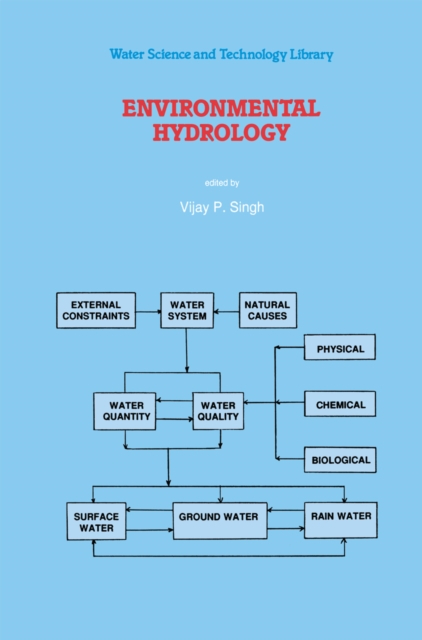
Environmental Hydrology presents a unified approach to the role of hydrology in environmental planning and management, emphasizing the consideration of the hydrological continuum in determining the fate and migration of chemicals as well as micro-organisms in the environment, both below the ground as well as on it.
Environmental informatics is a field of applied computer science that develops and uses the techniques of information processing for environmental protection, research and engineering.
This Special Issue of Water, Air, and Soil Pollution offers original contributions from BIOGEOMON, The Third International Symposium on Ecosystem Behavior, which was held on the campus ofVillanova University from June 21-25, 1997.
Bioprocess engineering has played a key role in biotechnology, contributing towards bringing the exciting new discoveries of molecular and cellular biology into the applied sphere, and in maintaining established processes, some centuries-old, efficient and essential for today's industry.
Over recent years there has been an increasing awareness of the risks of locating hazardous industries near heavily populated, environmentally sensitive areas.
As the coastal human population increases in the United States, there will likely be increasing environmental and socioeconomic pressures on our coastal and estuarine environments.
Much of Europe has been complaining recently of unseasonal weathe- disastrous floods in Eastern Europe, temperatures reaching over 40"e;C in Central Europe, no decent rain for months in parts of the Balkans, coupled with unusually long and severe frosts in winter.
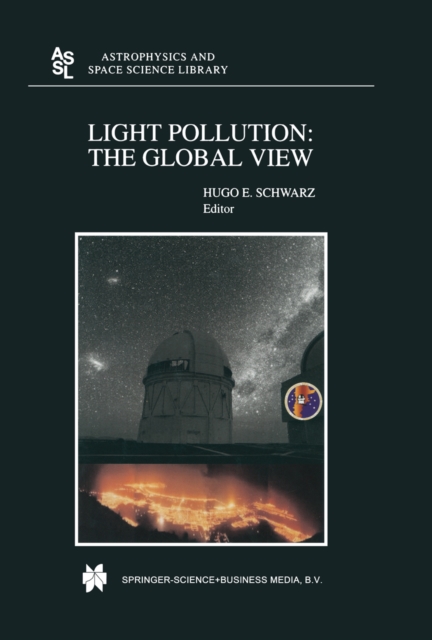
The effects of light pollution on flora, fauna -including humans and their widely varying night-time activities- are often subtle and need extensive field studies to be quantified in a sensible manner.
The complexity of issues requiring rational decision making grows and thus such decisions are becoming more and more difficult, despite advances in methodology and tools for decision support and in other areas of research.
In the present scenario, stresses induced due to global environmental change have indeed become a focal point of researches and study programmes worldwide.
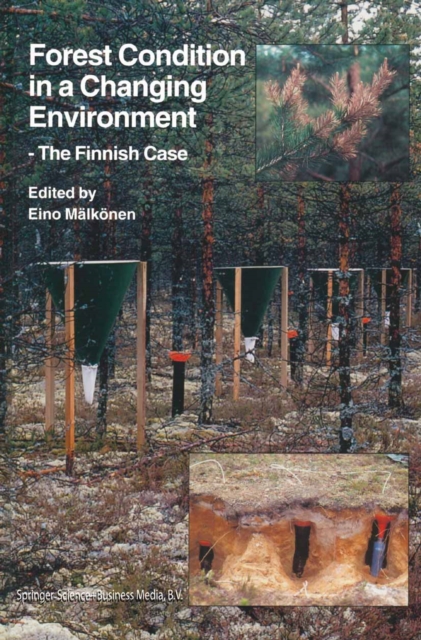
The threats posed by air pollution and climate change have resulted in considerable public debate about forest condition and growth during the past two decades.
In the climate change discussion, non-CO2 greenhouse gases (NCGGs) received official political recognition for the first time in 1997, when agreement was reached on the Kyoto Protocol.
Response to Marine Oil Pollution - Review and Assessment is the essential source book, now updated, for all involved in marine oil pollution consequences and response.
In the continuing fight against organic environmental xenobiotics, the initial success attributed to bioremediation has paled, in part due to the low availability of xenobiotics entrapped within a soil or sediment matrix.
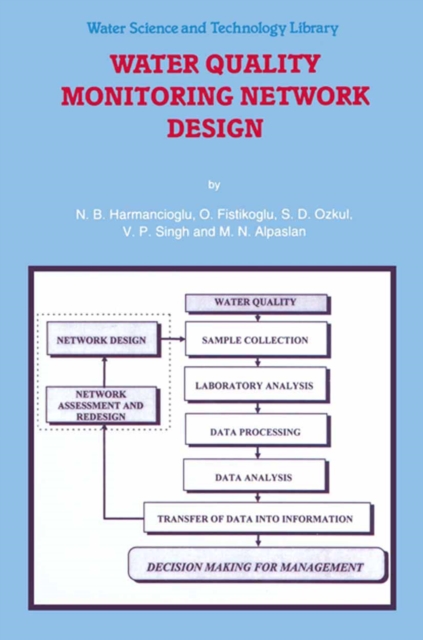
In recent years, the adequacy of collected water quality data and the performance of existing monitoring networks have been seriously evaluated for two basic reasons.
This book is the outgrowth of the COMETT II Course on Advanced Instru- mentation, Data Interpretation, and Control of Biotechnological Processes organized by the Katholieke Universiteit Leuven and the Universiteit Gent, and held at Gent, Belgium, October 1994.
The diverse nature of environmental problems mankind has encountered within the last decade has developed a new understanding of the nature of environmental processes.
This volume summarises the result of an interdisciplinary research programme entitled `Rehabilitation of the Atmosphere of the New States of Germany - Effects on Terrestrial Ecosystems'.
Environmental issues continue to burden governments and economies throughout the post-communist countries of Central and Eastern Europe and the newly independent states of the former Soviet Union.
In regions as densely populated as Western Europe, prediction of the ecological implications of pollutant transport are important in order to minimise damage in the case of accidents, and to evaluate the possible influence of existing or planned sources.
Happy he who could learn the causes of things (Virgil, Georgics 11) There is clearly a place for a book on the environmental aspects of trace elements in coal, especially with the increasing use of coal for power production.
Based on a unique industrial European membership, the European Oceanic Association, "e;non-profit Association has as its object the pooling of talents, resources and ex- perience in the marine field with the purpose of promoting in Europe a concentration of efforts to foster the study and exploration of the seas in the light of their industrial exploitation"e; (articZe 2 of the statutes).
The report examines the extent of environmental damage in the Community and in certain other European countries that may be attributable to acid pollutant emissions within Member States.
Environmental pollution is one of the main problems to confront humanity, with the heavy metals occupying a leading role among the most pernicious pollutants.