Following the Second World War, a massive land reclamation project to boost Japan s rice production capacity led to the transformation of the shallow lagoon of Hachirogata in Akita Prefecture into a seventeen-thousand-hectare expanse of farmland.
The concept of sustainability holds that the social, economic, and environmental factors within human communities must be viewed interactively and systematically.
"e;Sustainable Justice and the Community"e; is an attempt to locate justice in a workable and sustainable way within the community, introducing 'Sustainable Justice' as a key concept for the coming century.
Running more than 1,200 miles from headwaters in eastern New Mexico through the middle of Texas to the Gulf of Mexico, the Brazos River has frustrated developers for nearly two centuries.
Music and the Performing Arts in the Anthropocene offers a series of thought-provoking chapters about music and the performing arts viewed from current Anthropocene-aware perspectives.
How Nature Speaks illustrates the convergence of complexity theory in the biophysical and social sciences and the implications of the science of complexity for environmental politics and practice.
In Animate Planet Kath Weston shows how new intimacies between humans, animals, and their surroundings are emerging as people attempt to understand how the high-tech ecologically damaged world they have made is remaking them, one synthetic chemical, radioactive isotope, and megastorm at a time.
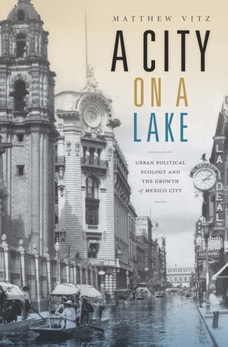
In A City on a Lake Matthew Vitz tracks the environmental and political history of Mexico City and explains its transformation from a forested, water-rich environment into a smog-infested megacity plagued by environmental problems and social inequality.
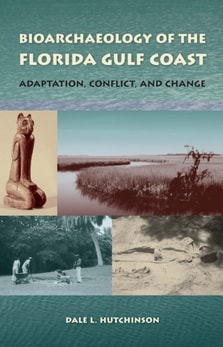
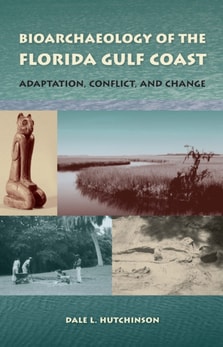
In Bioarchaeology of the Florida Gulf Coast, Dale Hutchinson explores the role of human adaptation along the Gulf Coast of Florida and the influence of coastal foraging on several indigenous Florida populations.
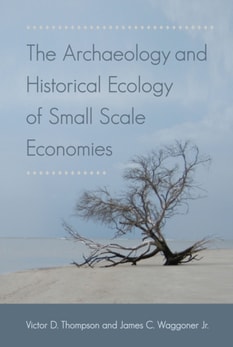
Most research into humans' impact on the environment has focused on large-scale societies; a corollary assumption has been that small scale economies are sustainable and in harmony with nature.
Most research into humans' impact on the environment has focused on large-scale societies; a corollary assumption has been that small scale economies are sustainable and in harmony with nature.
With rapid commercialization, a booming urban economy, and the relaxation of state migration policies, over 100 million peasants, known as China's "e;floating population,"e; have streamed into large cities seeking employment and a better life.
Environmental protection has not equally established itself as a permanent fixture in the political systems of all countries: to date, governments and entire societies have responded to environmental challenges in a variety of ways, and concrete environmental policy is still a highly national matter.
The twenty-first century is a period of great environmental and social transformation as climate change increasingly marks lives at levels that are personal, familial, communal, national, and global.
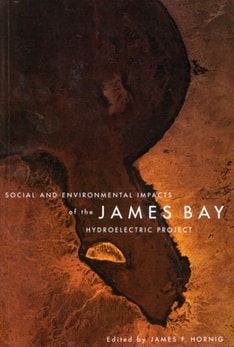
The first mega-scale hydro project to be built in the sub-Arctic, capable of generating as much electricity as fifteen nuclear power plants, its impact includes disruption of vast areas in an extremely fragile ecosystem as well as displacement of native peoples and the introduction of dangerous levels of mercury into their food supply.
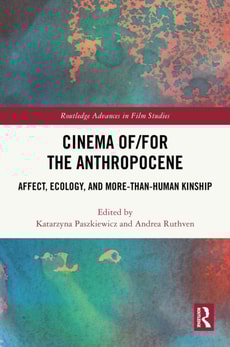
Cinema of/for the Anthropocene sheds new light on the question of how films can allow us to resituate ourselves within what is known today as the Anthropocene.
A truly vegan lifestyle is more than just the food you eat, it's the shoes on your feet, the clothes in your wardrobe, the contents of your cupboards and your make-up bag.
The Conservation of Violence explores the governance of protected forests in Zimbabwe, highlighting the structural and operational mechanism through which violent tactics are produced, employed, and sustained to promote nature conservation.
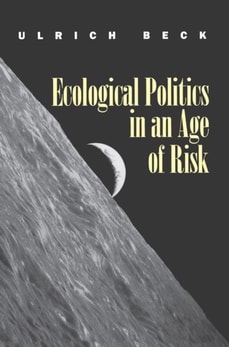
Ecological Politics in and Age of Risk by Ulrich Beck is an original analysis of ecological politics as one part of a renewed engagement with the domain of sub-politics.
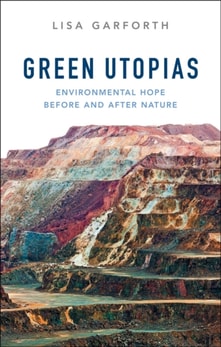
Environmentalism has relentlessly warned about the dire consequences of abusing and exploiting the planet's natural resources, imagining future wastelands of ecological depletion and social chaos.
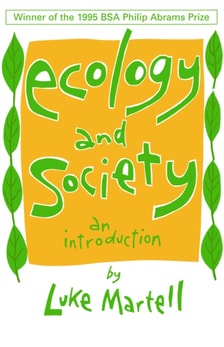
This book introduces green ideas to students of the social sciences, showing how society affects and is affected by nature and assessing the future of the green movement.
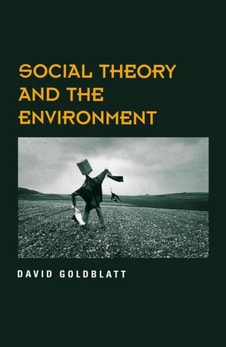
This book establishes whether contemporary social theory can help us understand the structural origins of environmental degradation and environmental politics.
In this book the author moves beyond the time of clocks and calendars in order to study time as embedded in social interactions, structures, practices and knowledge, in artefacts, in the body, and in the environment.
Environmental Crime in the United States provides an introduction to the laws that govern environmental crime, how these laws are implemented and enforced, and the impact they have had since their passing in the twentieth century and their continued applications.
Solving the global climate crisis through local partnerships and experimentationGlobal climate diplomacy-from the Kyoto Protocol to the Paris Agreement-is not working.