Ist die steuerliche Belastung der Autofahrer in der bestehenden Höhe berechtigt oder muß sie bei Anwendung des Verursacherprinzips erniedrigt oder gar weiter erhöht werden?
Das modulare Umweltmanagement (MUM) ist vor allem für die mittelständische Industrie ein ideales Verfahren zum sukzessiven Aufbau eines betrieblichen Umweltmanagements.
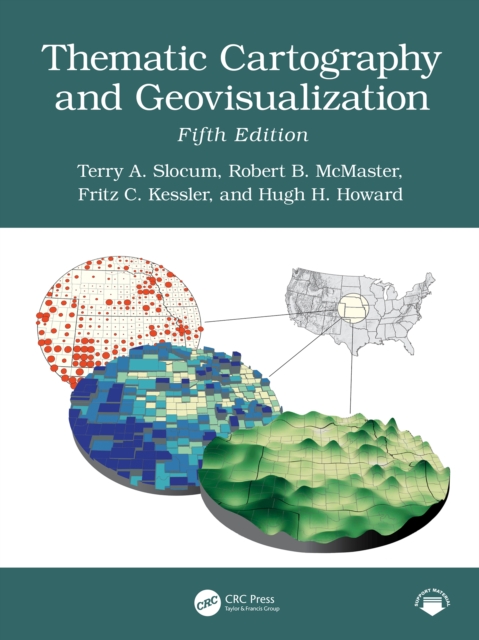
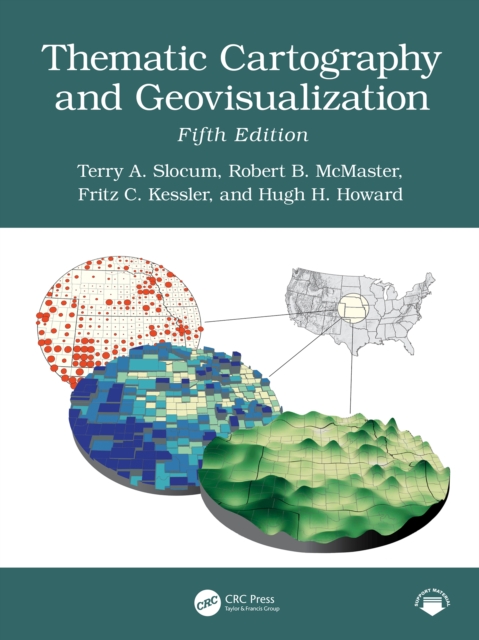
The fifth edition of this comprehensive and well-established book in cartography has been thoroughly updated and extensively restructured to incorporate new developments in recent years.
This compilation of papers captures the essence of the International Conference on Smart Systems for Sustainable Development using Advanced Computational Techniques (ICSSA 2025).
Scientists and managers alike need timely, cost-effective, and technically appropriate fire-related information to develop functional strategies for the diverse fire communities.
"e;River Dynamics and Integrated River Management"e; provides comprehensive information on rivers for integrated management, including natural processes, stresses resulting from human activities, and restoration of various parts of the river basin, including the watershed, mountain streams, alluvial rivers, estuaries, and natural and man-made lakes.
Sustainable and resilient critical infrastructure systems is an emerging paradigm in an evolving era of depleting assets in the midst of natural and man-made threats to provide a sustainable and high quality of life with optimized resources from social, economic, societal and environmental considerations.
A three-tier approach is presented: (i) fundamental dynamical concepts of climate processes, (ii) their mathematical formulation based on balance equations, and (iii) the necessary numerical techniques to solve these equations.
This statement in the most recent Human Development Report articulates a conv- tion that has increasingly gained ground in the water community over recent years: the key challenge in the water sector is not a lack of water, knowledge, nancial - sourcesortechnology.
The volume brings together contributions by both leading scholars and young academics with a particular experience in the urban potential of the territory in situations not necessarily linked to the dense metropolis, its compact form or to city sprawl.
One of The Observer's 'Thirty books to help us understand the world'Shortlisted for the Financial Times and McKinsey Business Book of the Year AwardRecycle.
Paying the Carbon Price analyzes the practice of freely allocating permits in Emissions Trading Schemes (ETSs) and demonstrates how many heavy polluters participating in ETSs are not yet paying the full price of carbon.
This book provides a collection of contemporary researches focused on the challenges, impacts and precautionary measures to be taken to address invasive alien plant species in urban systems.
This book provides a collection of contemporary researches focused on the challenges, impacts and precautionary measures to be taken to address invasive alien plant species in urban systems.
Through cultural mapping and design methodologies, this book illuminates the role of architecture in preserving collective memory while adapting to contemporary needs.
One of a series of titles on the Futures of Asia, “Future of Cities in Asia” explores diverse facets of Asia's future city landscape during the transformative 2020s, offering insights into pivotal transformations and potential trajectories.
This book describes landfill sites, (designated areas for the disposal of waste materials), widely recognized as a substantial contributor to the deterioration of air quality due to the release of various pollutants into the atmosphere.
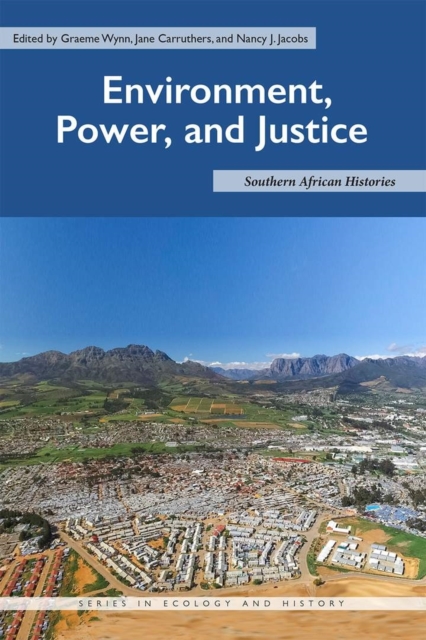
Spanning the colonial, postcolonial, and postapartheid eras, these historical and locally specific case studies analyze and engage vernacular, activist, and scholarly efforts to mitigate social-environmental inequity.
In this sweeping work of science and history, the renowned climate scientist and author of The New Climate War shows us the conditions on Earth that allowed humans not only to exist but thrive, and how they are imperiled if we veer off course.
The global climate system in seven easy lessonsan essential primer on the science that shapes our worldEarth's changing climate is the defining issue of our time.
The fifth edition of this comprehensive and well-established book in cartography has been thoroughly updated and extensively restructured to incorporate new developments in recent years.
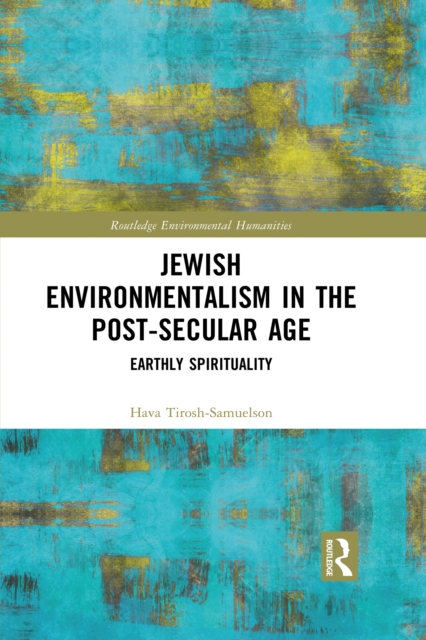
Presenting Jewish environmentalism as a case study of contemporary post-secularism, this book exemplifies the responses of world religions to the global ecological crisis and situates Jewish environmental spirituality historically, socially, theologically, and politically.
Dieses Buch erklärt, was die SDGs konkret sind und was sie leisten sollen: eine intakte Umwelt schaffen, soziale Gleichheit erreichen – bei gleichzeitigem ökonomischem Wohlstand.
Dieses Buch erklärt, was die SDGs konkret sind und was sie leisten sollen: eine intakte Umwelt schaffen, soziale Gleichheit erreichen – bei gleichzeitigem ökonomischem Wohlstand.
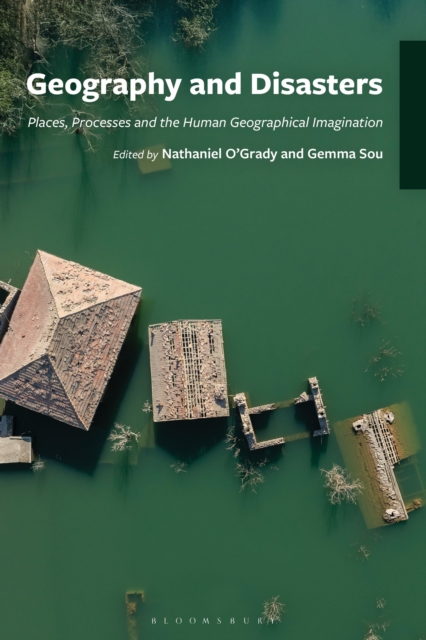
Drawing on global case studies, this is the first book to outline and elaborate on the ways that human geography has extended our understanding of disasters.
Distributed energy resources (DERs) such as solar panels, microgrids, and residential battery storage are reshaping electricity systems by enabling autonomous consumption and localised generation.
A practical guide to eco-friendly and sustainable gardening for the modern worldWhile we might feel that our little gardens are insignificant in the grand scheme of things, quite the opposite is true.
'Your world will be larger for reading this book' CHLOE DALTON author of Raising Hare'The most persistent feeling, and one that Martins conveys beautifully, is one of awe at the sheer diversity and inventiveness of the living world' GUARDIANWelcome to the hidden, squirming world of parasites - some of the most misunderstood, and most important, creatures with whom we share the Earth.
This volume offers an interdisciplinary, spatially grounded analysis of Northern Canada—centring the territories of Yukon, the Northwest Territories, and Nunavut, and the broader geography of Inuit Nunangat—to show how climate change, infrastructure, governance, and cultural continuity co-produce northern development outcomes.