This book is premised on the great expectation about small-scale fisheries globally as a means of providing food security and alleviating poverty among the millions of people in coastal and inland communities.
This book contains concrete integrated themes covering vulnerability of water resources, wastewater technologies, modeling techniques, and blue and green energy resources.
Regenerative Revolution offers a groundbreaking exploration of how conscious consumer choices, ecological responsibility, and advanced technologies are reshaping the future of sustainability.
Through the introduction of BioDialectics, a conceptual approach intended to extend the ethical considerations of sustainable design, this book analyses how the field engages with and adapts ideas from environmental ethics.
Polycyclic aromatic hydrocarbons (PAHs) are emerging contaminants of global concern due to their carcinogenic/mutagenic nature, ubiquitous occurrence, long range transport, bioaccumulative characteristics, involvement in food chain and food web as well as toxicity in almost all segments of the environment.
Polycyclic aromatic hydrocarbons (PAHs) are emerging contaminants of global concern due to their carcinogenic/mutagenic nature, ubiquitous occurrence, long range transport, bioaccumulative characteristics, involvement in food chain and food web as well as toxicity in almost all segments of the environment.
This book contrasts Puerto Rico’s eco-political history with its narrative and symbolic routes of disaster, trauma, and resilience, noting points of convergence and divergence.
This book contrasts Puerto Rico’s eco-political history with its narrative and symbolic routes of disaster, trauma, and resilience, noting points of convergence and divergence.
In an era marked by global uncertainties and pressing challenges, this scholarly monograph offers insights into the future of European cities based on over a decade of research.
This book examines how integrating water quality and water quantity is essential for confronting today’s most urgent challenges, including climate change, population growth, land-use change, and pollution.
The book describes how microscopic particles in the air—born of combustion, dust storms, agriculture, and urban life—travel from the atmosphere into soils, water, plants, and food chains, reshaping ecosystems and human health.
This book offers a roadmap for designing and managing agile organisations that can thrive in the tech-driven, turbulent landscape of 21st-century despite the ongoing permacrisis.
This book offers contemporary insights into the intersection of sustainable development, leadership, innovation, and organizational performance within Vietnam.
This book offers contemporary insights into the intersection of sustainable development, leadership, innovation, and organizational performance within Vietnam.
This book offers a groundbreaking exploration of neglected and underutilized species (NUS) as vital tools for building resilient and sustainable agricultural systems in the face of climate change.
This book offers a groundbreaking exploration of neglected and underutilized species (NUS) as vital tools for building resilient and sustainable agricultural systems in the face of climate change.
This book contains concrete integrated themes covering vulnerability of water resources, wastewater technologies, modeling techniques, and blue and green energy resources.
The second edition of Environment and Society: Concepts for a Just Transformation delivers a major, timely update to one of the field’s most respected concept driven environmental social science texts.
Reune una serie de investigaciones que examinan las complejas relaciones entre los pueblos indigenas de Mexico y las transformaciones socioambientales derivadas del extractivismo, las politicas publicas y los modelos contemporaneos de desarrollo.
In an era of escalating disaster risks and increasingly complex governance challenges, social organizations have become indispensable actors in disaster response and recovery.
In an era marked by global uncertainties and pressing challenges, this scholarly monograph offers insights into the future of European cities based on over a decade of research.
In an era of escalating disaster risks and increasingly complex governance challenges, social organizations have become indispensable actors in disaster response and recovery.
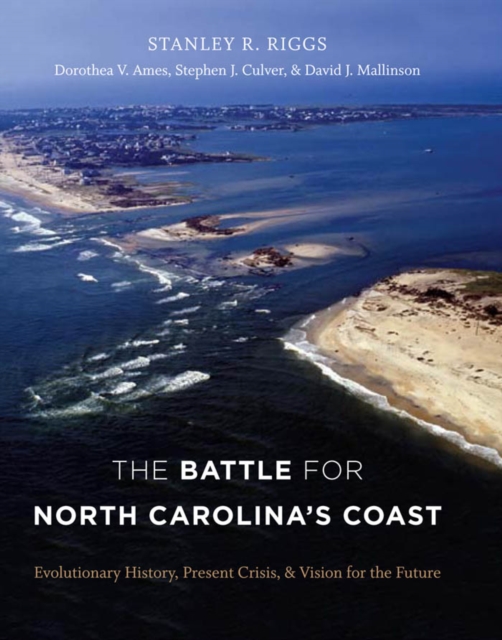
The North Carolina barrier islands, a 325-mile-long string of narrow sand islands that forms the coast of North Carolina, are one of the most beloved areas to live and visit in the United States.
The book describes how microscopic particles in the air—born of combustion, dust storms, agriculture, and urban life—travel from the atmosphere into soils, water, plants, and food chains, reshaping ecosystems and human health.