Diving deep into the world of corporate marketing, this incisive and eye-opening work shows how, in the hands of the corporation, business has become manipulative, divisive and disastrously at odds with the needs of the natural world.
This text challenges students to think critically about global issues that affect the business environment and provides them with a wealth of pedagogical features that help cement learning.
This book combines research on technology-driven and social-driven innovation in tourism destinations and the multifaceted concept of sustainability, providing an integrative understanding of the nexus between smartness and sustainability within destinations.
Often highlighted for being a microcosm within the greater global context, Icelandic businesses and institutions provide the perfect opportunity to advance knowledge of corporate governance and business ethics amidst once-in-a-lifetime events such as the 2008 Financial Crisis and the COVID-19 pandemic.
Often highlighted for being a microcosm within the greater global context, Icelandic businesses and institutions provide the perfect opportunity to advance knowledge of corporate governance and business ethics amidst once-in-a-lifetime events such as the 2008 Financial Crisis and the COVID-19 pandemic.
Informed by the scholarly and practical viewpoints of a myriad of internationally recognised experts, this engaging and timely volume poses a set of pertinent questions that cover critical and contemporary sustainability issues in hospitality and tourism and proposes actionable solutions.
The UN Sustainable Development Goals, an increasing interest in Environmental, Social, and Governance factors, the climate crisis, stakeholder pressure, the lessons of corporate scandals, and the COVID-19 pandemic have triggered a massive change in how companies approach finance and accounting practices.
The UN Sustainable Development Goals, an increasing interest in Environmental, Social, and Governance factors, the climate crisis, stakeholder pressure, the lessons of corporate scandals, and the COVID-19 pandemic have triggered a massive change in how companies approach finance and accounting practices.
There is no questioning the enthusiasm that welcomed impact investing as an alternative approach to making investments: Take account of both financial returns and the social and environmental impacts.
Averting Climate Catastrophe Together addresses the necessity of meeting the Paris Agreement temperature target and explores what framework could enable climate action in an effective, efficient and equitable manner that is consistent with that goal.
Fashion, a realm often associated with trends and whims, is undergoing a transformation-one that goes beyond aesthetics to embrace sustainability as a guiding principle.
This text challenges students to think critically about global issues that affect the business environment and provides them with a wealth of pedagogical features that help cement learning.
Bringing together a diverse collection of authors to examine the concept of One Health - the interlinking of the economy and the health of humans, other living beings, and nature - Piero Formica investigates how transformative enterprises and advanced technologies can improve the health of the planet and its people.
Bringing together a diverse collection of authors to examine the concept of One Health - the interlinking of the economy and the health of humans, other living beings, and nature - Piero Formica investigates how transformative enterprises and advanced technologies can improve the health of the planet and its people.
This book provides a comprehensive, up-to-date overview of the different environmental strategies adopted in the football world to foster sustainability.
At a time when the human impact on the environment is more devastating than ever, business initiatives frame the quest to "e;green"e; capitalism as the key to humanity's long-term survival.
This comprehensively updated third edition explores the nature and role of environmental management and offers an introduction to this rapidly expanding and changing field.
Der dramatische Wandel der Geschäftswelt und die stetig steigenden Herausforderungen für Führungskräfte hinterlassen deutliche Bremsspuren in der Geschäftsentwicklung deutscher Unternehmen.
As Information Technology continues to evolve as a key strategic enabler, many establishments feel the need to think more holistically about how IT can support corporate sustainability efforts.
Luxury Marketing, Sustainability and Technology explores how new technologies, sustainability, and relationship marketing impact and change the future of luxury brand management.
Luxury Marketing, Sustainability and Technology explores how new technologies, sustainability, and relationship marketing impact and change the future of luxury brand management.
Since the democratisation of the clothing industry in the early 19th century, buyers have become increasingly disconnected from the creative and human aspects of the production of clothing.
Since the democratisation of the clothing industry in the early 19th century, buyers have become increasingly disconnected from the creative and human aspects of the production of clothing.
The book presents a new type of leadership focused on sustainable human development and organizational sustainability, which is based on the self-realization of the person of the leader, which means the satisfaction of their needs, according to the scale of Abraham Maslow, through integral human development in all aspects of life.
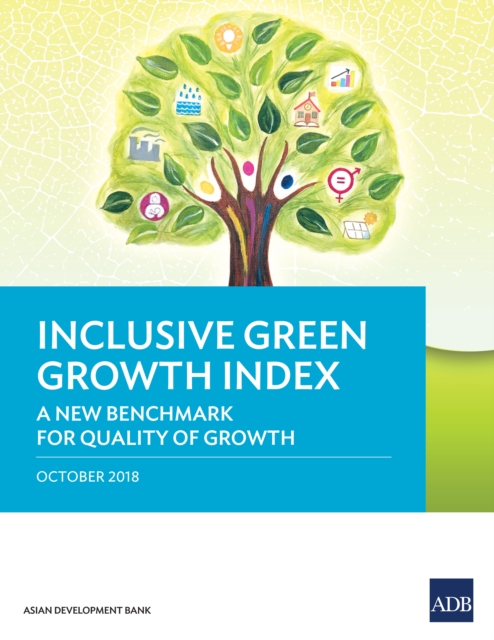
This publication launches the Inclusive Green Growth Index, a new comprehensive metric that captures the key dimensions of economic growth, social equity, and environmental sustainability.
With current environmental, social and financial challenges facing society and the economy, there has been a rapid growth in interest in the role of social and sustainable enterprise.
While change in the aviation sector is hardly a new phenomenon, going forward the rate of change will accelerate due to the emergence, convergence, and intersection of powerful internal and external forces.
Mit dem europäischen Green Deal stellt die EU-Kommission eine Antwort auf die vom Klimawandel ausgehende Gefahr für die Menschheit und die Ökosysteme der Erde vor.
This book takes an interdisciplinary approach to corporate social responsibility (CSR), examining economic sciences and managements to show the complexity of the contemporary perception and development of CSR in Poland.