This book takes an interdisciplinary approach to corporate social responsibility (CSR), examining economic sciences and managements to show the complexity of the contemporary perception and development of CSR in Poland.
This book explores the concepts of sustainability and governance in relation to the governance of corporations - hence the ubiquity of the term corporate governance - and other bodies.
This book is the first work to conduct the emergency logistics optimization problem under the epidemic environment (whether natural or man-made), which provides a new perspective for the application of optimization theory.
This new edition is completely revamped and reorganized to reflect the change in standards and regulations and to include all new topics related to organizational sustainability and risk management.
Increasing evidence of environmental deterioration in emerging markets, climate change, and consequences of environmental waste have compelled not only businesses but also consumers to reduce the environmental burden, mitigate waste and preserve resources for future generations.
Provision of infrastructure development continues to be a great concern in emerging economies, particularly in ensuring sustainable growth through business continuity, and human development.
This book presents the current causes and effects of implementing sustainable supply chain management (SSCM) as well as green supply chain management (GSCM) strategies in the automotive industry.
This book brings together a diverse collection of case studies, perspectives, and research to explore how craft breweries have interacted with cities and neighborhoods in meaningful ways.
Going under the hood of retail strategy, this book provides in-depth coverage of how retailers can leverage the latest in data analytics and technology to improve profitability and customer value through pricing.
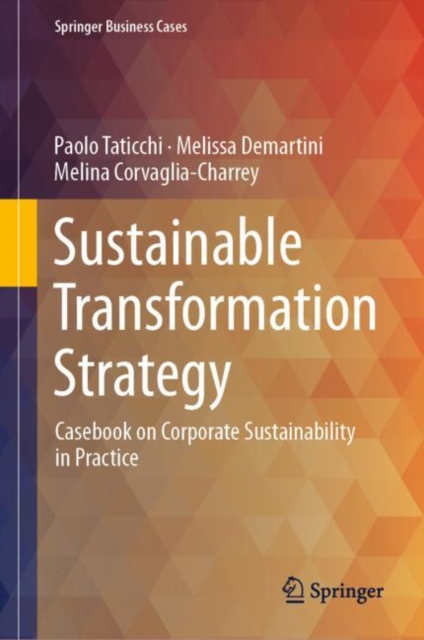
This casebook demonstrates how companies can design and execute corporate sustainability strategies into their overall business strategy to achieve sustainable transformation.
The book presents a new type of leadership focused on sustainable human development and organizational sustainability, which is based on the self-realization of the person of the leader, which means the satisfaction of their needs, according to the scale of Abraham Maslow, through integral human development in all aspects of life.
Gen Z, Tourism, and Sustainable Consumption is the first book to provide a comprehensive account of Generation Z in relation to sustainable consumption practices and travel cultures.
This book features the second volume of the proceedings of the 9th International Conference of the International Association of Cultural and Digital Tourism (IACuDiT).
Sustainable Business: Key Issues is the first comprehensive introductory-level textbook to address the interface between environmental challenges and business solutions to provide an overview of the basic concepts of sustainability, sustainable business, and business ethics.
Triple bottom line (TBL or 3BL) was coined as a wide and inspiring approach for businesses aimed at understanding how to create, track, and manage economic, social, and environmental values added.
This book analyses the effect of biological risk on business and management by considering case studies from Malaysia, Lebanon, and G20 countries during the COVID-19 pandemic.
This book analyses the effect of biological risk on business and management by considering case studies from Malaysia, Lebanon, and G20 countries during the COVID-19 pandemic.
This casebook demonstrates how companies can design and execute corporate sustainability strategies into their overall business strategy to achieve sustainable transformation.
If we can carry in our pockets more computing power than the Apollo program needed to put a man on the moon, why can't we solve problems like climate change, famine, or poverty?
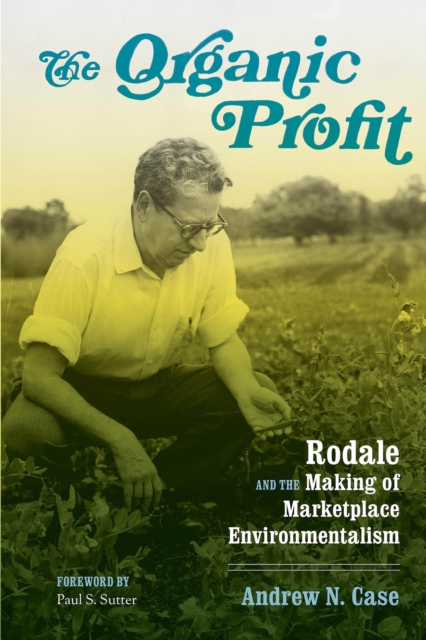
From green-lifestyle mavens who endorse products on social media to natural health activists sponsored by organic food companies, the marketplace for advice about how to live life naturally is better stocked than ever.
As the first book in the field of leadership studies to approach sustainability as a multi-faceted leadership challenge, Leadership for Environmental Sustainability will help to set the terms of the discussion on this topic among students, scholars, and practitioners of leadership for years to come.