The book offers a theoretical and practical analysis of the contemporary approach to art, culture and innovation, with special emphasis on the relationship between culture, innovation and the economy, in the context of green transition, as an indispensable sustainability factor.
This edited book assesses the impacts of various extreme weather events on human health and development from a global perspective, and includes several case studies in various geographical regions around the globe.
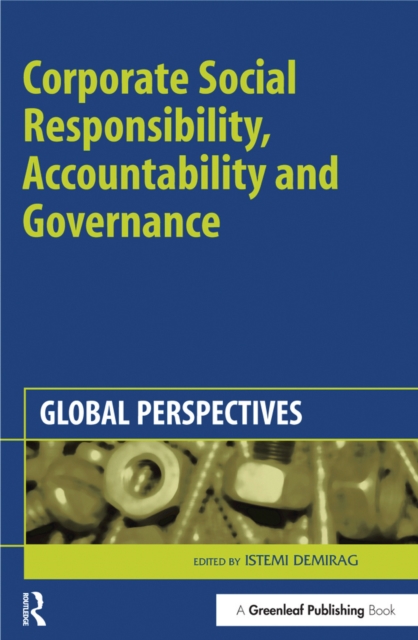
The "e;business case"e; for corporate social responsibility, which suggests that socially and environmentally aware companies can expect to reap financial rewards, is seemingly gaining widespread acceptance within the business community.
Sustainable Business: Key Issues is the first comprehensive introductory-level textbook to address the interface between environmental challenges and business solutions to provide an overview of the basic concepts of sustainability, sustainable business, and business ethics.
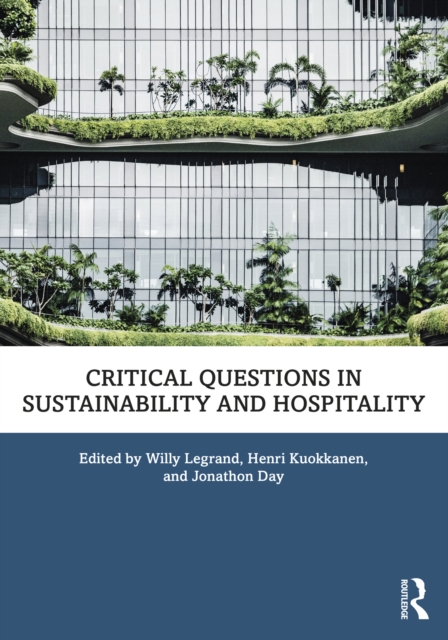
Informed by the scholarly and practical viewpoints of a myriad of internationally recognised experts, this engaging and timely volume poses a set of pertinent questions that cover critical and contemporary sustainability issues in hospitality and tourism and proposes actionable solutions.
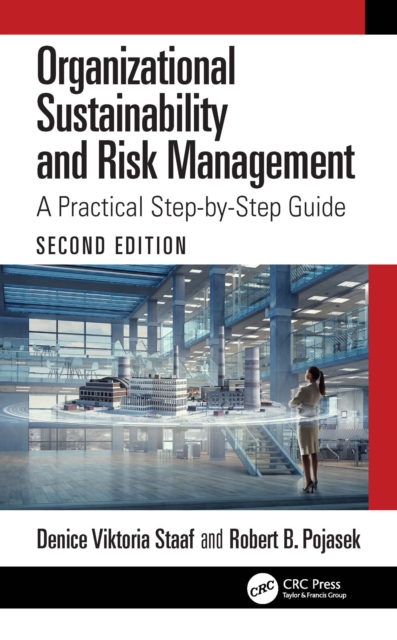
This new edition is completely revamped and reorganized to reflect the change in standards and regulations and to include all new topics related to organizational sustainability and risk management.
This book covers state-of-the-art technologies, principles, methods and industrial applications of electronic waste (e-waste) and waste PCB (WPCB) recycling.
This book provides a comprehensive, up-to-date overview of the different environmental strategies adopted in the football world to foster sustainability.
This book presents the changing face of social responsibility, showing how it has grown to encompass governance, becoming a vital part of various aspects of human endeavor.
The concept of environmental, social and governance (ESG) is rapidly emerging as the new global industry standard and an important benchmarking tool for socially responsible investments.
The concept of environmental, social and governance (ESG) is rapidly emerging as the new global industry standard and an important benchmarking tool for socially responsible investments.
Green Innovation in Central and Eastern Europe aims to explore the crucial role of green innovation in guiding organisations towards sustainable development amidst contemporary environmental challenges.
Drawing on contributions from nineteen prominent scholars, the book reflects on the quest for sustainable development as a source of competitive advantage for organizations and as a global imperative for society.
Under the pressure of climate and social changes, agriculture is called to play a fundamental role in the world food challenge of the next few decades.
A multifaceted ecological and socio-cultural crisis confronts us, and the irresponsible and unsustainable operations and actions encouraging this predicament are bound up with contemporary societal, economic, organisational, and managerial practices.
Sustainable project management is a new school of management thought and a growing trend yet there is a scarcity of research on the linkage between individual PM methodologies and sustainability in projects.
Understanding how to build and manage a sustainability business plan has become a business imperative as investors demand, regulators require, and stakeholders increasingly expect companies to report their financial economic sustainability performance (ESP) and non-financial environmental, social, and governance (ESG) sustainability information.
Large Systems Change (LSC) is a field of study and action that is characterized by its focus on transformational pathways towards a participative, flourishing future through inter- and trans-disciplinary approaches that value engagement with practitioners and those aspiring for such futures.
Sustainability Disclosure examines the evolution of sustainability disclosure resulting from the implementation of mandatory reporting legislation within the European Union using the evidence from the Non-Financial Reporting Directive (NFRD) and Corporate Sustainability Reporting Directive (CSRD).
The Emerald Handbook of Sustainable Energy Transition and Social Justice fosters a profound understanding of research and discourse on energy transition across the Global South and deconstructs the current thinking by presenting alternative viewpoints that enhance the understanding and engagement of communities in the Global South in the process of achieving sustainable development.
Innovation Ecosystems and Sustainable Technologies: Enhancing Competitiveness and Sustainability draws connections between innovation ecosystems and sustainable development to seek ways of improving economic, environmental and social wellbeing based on improvements to the innovation ecosystems.
As global sustainability expectations intensify, digital technologies (DTs) are becoming essential tools for efficiently and effectively managing, measuring, and communicating sustainability performance and impact.
Enterprises in rural regions must now act in a globalized world and face global challenges, such as climate change, resource scarcities and social inequalities or the sustainability preferences of consumers.
As public awareness of social and environmental issues grew, more consumers began to support firms committed to developing and operating environmentally sustainable and socially responsible supply chains.