This book explores opportunities and limitations with regard to transferring knowledge and tools from the corporate world to manage monasteries or other types of religious institutions.
The author of this book asserts that an absence of ethical leadership and unethical practices were the reasons for major global business scandals such as Enron, Satyam, Lehman Brothers, and WorldCom.
Contrary to the notion that leaders contribute to positive behaviour within organisations, this book reflects growing interest in the 'dark side' of leadership: the unethical and immoral personalities that can reside in positions of power.
This edited collection brings together experts from various disciplines to engage critically with diversity theory, diversity politics, and their practical application.
With spirituality being brought to the fore of management and organisation studies, this timely collection takes a closer look at the relationship between religion and work in India.
This book uses the building blocks of modern capital market theory, including behavioural finance, as the point of departure for an analysis of hidden ethical content in the contemporary research into capital markets.
This book analyses state-of-the-art techniques in business process management as drivers of advanced entrepreneurship, financial management, supply chain management, and sustainability management.
This book addresses the growing interest among policymakers, practitioners and academics in the evolution and the future implications of social, environmental and sustainability accounting.
This book examines the development and adoption of corporate social responsibility (CSR) in Polish businesses and social and environmental organizations, and analyzes the corresponding impact at the strategic and operational level in these fields.
Public mistrust of those in authority and failings of public organisations frame disputes over attribution of responsibility between individuals and systems.
This book gathers original, empirical and conceptual papers that address the complex challenges of conducting responsible research in the business and management professions.
This book explores the current state of Corporate Social Responsibility (CSR) from an international perspective, the goal being to share ideas and visions for a sustainable future and to provide useful guidelines for academics, practitioners and policymakers in the context of the 2030 "e;Agenda for Sustainable Development"e; released by the United Nations.
This book explains how the traditional paradigm of private and public organizations is changing as a result of the multiple factors that are affecting the way in which goods and services are produced, and for whom they are produced.
This volume of Eurasian Studies in Business and Economics includes selected papers from the 24th Eurasia Business and Economics Society (EBES) Conference, held in Bangkok.
Bringing together international authors, this edited collection addresses the need for greater inclusivity within organizational policy and practice, in order to tackle both visible and invisible inequalities amongst employees.
This book demonstrates how principles of a Humanistic Management paradigm are practiced in a variety of industries and regions by businesses of different ownership structures and sizes.
This original book explores how the principles of circularity, considered a law of nature but neglected within the materialistic orientation of the industrial age, are becoming attractive again in business and society.
This book provides a rich collection of essays discussing and showcasing the transformation of businesses around the world towards sustainability and responsibility.
This book presents the latest evidence on, and new approaches to, the development of Corporate Social Responsibility in emerging and established economies.
This book addresses key aspects of corporate social responsibility (CSR) and explores them from a variety of perspectives in a case study on the Marange diamond mines in Zimbabwe.
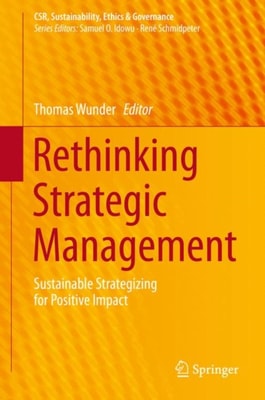
This book offers innovative ideas and frameworks for sustainable strategizing to advance business by scaling-up its positive impact, which is so urgently needed at this time in the 21st century.
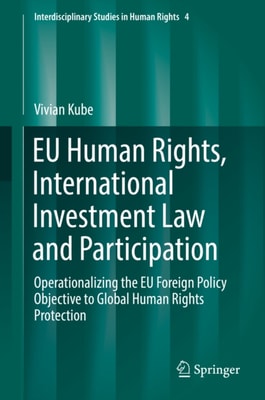
This book demonstrates how human rights obligations of the EU foreign constitution can be operationalized in the realm of international economic regulation.
This book illustrates how CSR can be used as a tool to improve corporate governance in organizations and improve the relationship between business and society.
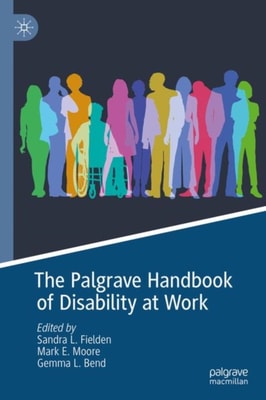
This scholarly handbook covers all aspects of people with disabilities entering the workplace, including the legal aspects, transitions, types, and levels of employments, the impact of different disabilities, and the consideration of the intersection of disability with other identities such as gender and ethnicity.
Edwin Hartman offers an account of his intellectual journey from Aristotle to organization theory to business ethics to an Aristotelian approach to business ethics.