This book investigates the preferences of young job seekers for different aspects of corporate social responsibility (CSR) in comparison to other non-CSR related employer attributes.
Gamification is the application of game-design elements and game principles to non-game contexts, and has been used to solve problems by applying characteristics of games.
This book presents scheduling with a medium- and short-term focus, which makes it possible to capitalize on fleeting market opportunities while simultaneously working to reconcile economic and environmental priorities.
Organisational buying is the purchase of goods and/ or services, by one or more individuals acting on behalf of the buyer firm, after a formal or informal consideration of purchase alternatives, and, the integration or use of those goods and/ or services to address one or more buyer firm problems or issues.
This book focuses on the need of leaders in professional and personal realms to understand the importance of innovative thinking to safeguard sustainability and enhance satisfaction and motivation among stakeholders in organizations.
This book examines and analyzes the challenges programmes for Corporate Social Responsibility (CSR) and sustainable development are facing in global management practice.
This book covers topics such as digitalization of production, operations, logistics and supply chains leading to new requirements for human capabilities and collaboration.
The phrase "e;greening of the workplace"e; refers to the range of resources used by an organization to ensure its management and industrial processes are conducive to the adoption of workplace pro-environmental behaviors by its employees, irrespective of their position, the nature of their work or their rank within the organization.
This book aims to move beyond the concepts of 'bureaucracy', 'hierarchical control' and 'performance' that classic organizational and managerial studies often focus upon.
This book helps readers understand the main issues, challenges, strategies, and solution methods in Aggregate Planning (AP), an important part of Supply Chain Management.
This book tackles the ethical problems of the "e;Fourth Industrial Revolution"e; (4IR) and offers readers an overview of the ethical challenges connected to Artificial Intelligence (AI), encryption and the finance industry.
This book addresses one of the most urgent issues in contemporary American law-namely, the logic and limits of extending free exercise rights to corporate entities.
Today, it has become strikingly obvious that companies no longer operate in an environment where only risk return and volatility describe the business environment.
This book demonstrates how principles of a Humanistic Management paradigm are practiced in a variety of industries and regions by businesses of different ownership structures and sizes.
This book presents the Metaeconomics Framework and Dual Interest Theory, which weave the empathy-based moral and ethical dimension back into key economic questions.
Understanding and improving how organizations work and are managed is the object of management research and practice, and this topic is of longstanding interest in the academia and in society at large.
In this book, Jacob Dahl Rendtorff investigates moral blindness in business and public administration based on Hannah Arendt's concept of banality of evil in her famous report on the Nazi-criminal Adolf Eichmann trail in Jerusalem in 1961.
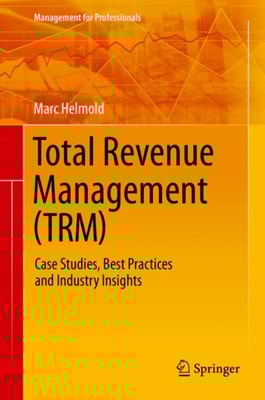
This book explores total revenue management (TRM), an emerging concept in revenue management that incorporates existing principles and tools of revenue management across all profit streams.
This book explores how and why the transposition of EU directives in the new and contentious policy area 'Business and Human Rights' differs between member states.
This edited collection addresses several forms of moral leadership within the context of kenosis, bringing together both secular and biblical perspectives on the role of morality and self-sacrifice in effective leadership theory and practice.
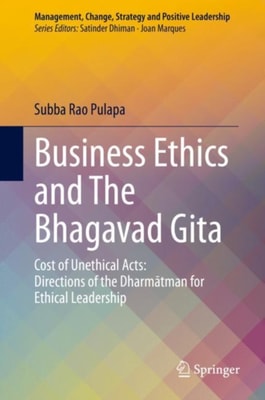
The author of this book asserts that an absence of ethical leadership and unethical practices were the reasons for major global business scandals such as Enron, Satyam, Lehman Brothers, and WorldCom.
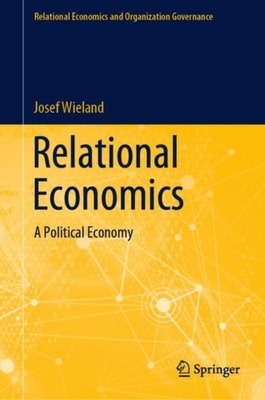
This book introduces the research agenda of relational economics as a political economy for the governance of local and global economic transactions in modern societies.
This proceedings volume provides a multifaceted perspective on current challenges and opportunities that organizations face in their efforts to develop and grow in an ever more complex environment.
This book illustrates how CSR can be used as a tool to improve corporate governance in organizations and improve the relationship between business and society.