Social entrepreneurship is on the rise and social enterprises are solving some of the most critical and enduring social problems by using innovative, pragmatic and sustainable business models.
Money, Banking, and the Business Cycle provides a comprehensive framework for analyzing these mechanisms, and offers a robust prescription for reducing financial instability over the long-term.
Almost 400 years ago philosophers John Locke and David Hume implicitly defined communication as a tool for the transmission of pure ideas, stating that the ideas themselves are what matter, not the way in which they are expressed and exchanged.
Offers a vivid description of the ongoing transformation of the web into something that is widely recognized and that will have an enormous impact on how people work and live their lives in the future.
Proposes that video communications tools are a form of infrastructure that enhance the creation of new knowledge which transcends space and time in business activities.
Knowledge Management and Information Systems Strategy for Growing Organizations examines the role that information systems play in helping SMEs use knowledge to achieve strategic organizational goals.
Providing the most up-to-date tools and techniques for pricing interest rate and credit products for the new financial world, this book discusses pricing and hedging, funding and regulation, and interpretation, as an essential resource for quantitatively minded practitioners and researchers in finance.
Understand the fundamentals of SAP supply chain management and intelligence with the new Business Network for Logistics (BN4L) & Global Track and Trace (GTT) systems for SAP customers.
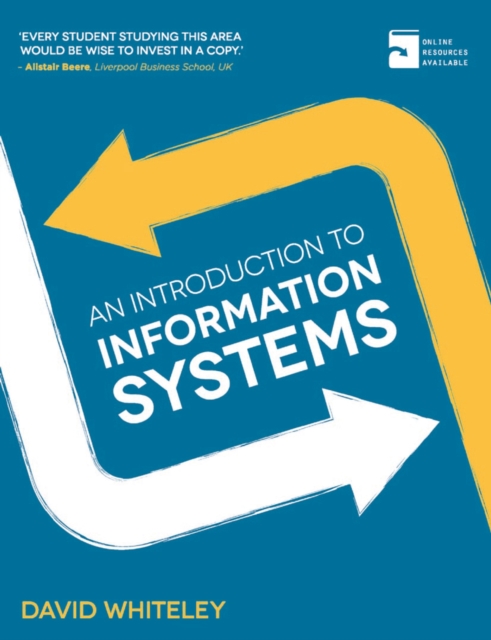
Aimed at final year undergraduates and masters students undertaking research projects in information systems, this text offers a blend of practical guidelines and conceptual insight that will help students to complete high quality projects.
In recognition of Professor Ikujiro Nonaka's contribution to the field of Knowledge Management this book, forming part of The Nonaka Series on Knowledge and Innovation from Palgrave Macmillan, deals with a variety of aspects of the Knowledge Management (KM) theory and the knowledge-based view of the firm.
Provides readers with a comprehensive overview of how to achieve entrepreneurial excellence in the knowledge economy and offers them ICBS - a methodology for strategy check-up of organizations in the knowledge economy context.
A guide on how Predictive Analytics is applied and widely used by organizations such as banks, insurance providers, supermarkets and governments to drive the decisions they make about their customers, demonstrating who to target with a promotional offer, who to give a credit card to and the premium someone should pay for home insurance.
Provides an updated view of knowledge management strategies of knowledge-intensive business services (KIBS) by focusing on how those firms manage innovation in their value chains and at the territorial level.
In an increasingly complex and interconnected world, the authors make a case rich in theory and narrative for a new reflexive approach to real life situations.
Business information systems and business information technology are integral aspects of modern business, and managers in these areas are now expected to have knowledge of human and managerial issues, as well as technical ones.
Business information systems and business information technology are integral aspects of modern business, and managers in these areas are now expected to have knowledge of human and managerial issues, as well as technical ones.
'Delivering Business Value from IT' is focused on the evaluation issue in IT and how IT evaluation can proceed across the life-cycle of any IT investment and be linked positively to improving business performance.
'Delivering Business Value from IT' is focused on the evaluation issue in IT and how IT evaluation can proceed across the life-cycle of any IT investment and be linked positively to improving business performance.
The adoption of Information Technology (IT) and Information Systems (IS) represents significant financial investments, with alternative perspectives to the evaluation domain coming from both the public and private sectors.
The adoption of Information Technology (IT) and Information Systems (IS) represents significant financial investments, with alternative perspectives to the evaluation domain coming from both the public and private sectors.
This book introduces readers to a wide range of knowledge management (KM) tools, techniques and terminology for enhancing innovation, communication and dedication among individuals and workgroups.
This book introduces readers to a wide range of knowledge management (KM) tools, techniques and terminology for enhancing innovation, communication and dedication among individuals and workgroups.
The authors focus on the following topics:Information Systems*Contribution of IS/IT to organisations*Systems concepts and attributes*Planning, reviewing and controlling with IS*Serving the end user - spreadsheets, databases, e-mail and DTP*Software application for HR and other areas*Legislation and SecurityFinance*Sources and application of funds*Accounting documentation - cash statements, profit and loss accounts, balance sheets*Interpretation of accounts - management ratios*Costing and budgetingStatistics*Sources and uses of statistics*Presentation of statistics*Interpretation - measures of average, measures of distribution, correlation, time series, index numbers, significance tests*Use of current software for computation of statistics
The authors focus on the following topics:Information Systems*Contribution of IS/IT to organisations*Systems concepts and attributes*Planning, reviewing and controlling with IS*Serving the end user - spreadsheets, databases, e-mail and DTP*Software application for HR and other areas*Legislation and SecurityFinance*Sources and application of funds*Accounting documentation - cash statements, profit and loss accounts, balance sheets*Interpretation of accounts - management ratios*Costing and budgetingStatistics*Sources and uses of statistics*Presentation of statistics*Interpretation - measures of average, measures of distribution, correlation, time series, index numbers, significance tests*Use of current software for computation of statistics
'Reinventing the Information Technology Department' is both anecdotal and informal but deals with a subject which is of vital interest to Chief Information Officers and IT Managers, addressing questions such as:* How does the IT department keep pace with business change?