The disciplines of computer science and operations research (OR) have been linked since their origins, each contributing to the dramatic advances of the other.
Throughout the development of mathematical programming researchers have paid great attention to problems that are described by a single objective that can only be achieved subject to satisfying a set of restrictions or constraints.
This volume, Systems and Management Science by Extremal Methods, is the second in a series dedicated to honoring and extending the work of Abraham Charnes.
This book is based on a number of systems concepts, of which the following are emphasized here: oThe interacting systems of society and the environment are dynamic and evolution- ary oEvolution of these systems carries them through stages of differential stability and instability, continuity and discontinuity oAssociated with evolution and instability is structural change that is essentially irre- versible oThe present is a stage of world transformation that may not have been equaled for decades or even centuries oPolicies and decisions must match the times, in the present case the stage of world transformation The time 11:59:59 PM, approximately, on December 31, 2000 has an impor- tant symbolic meaning.
In Linear Programming: A Modern Integrated Analysis, both boundary (simplex) and interior point methods are derived from the complementary slackness theorem and, unlike most books, the duality theorem is derived from Farkas's Lemma, which is proved as a convex separation theorem.
Goal Programming Applications in Accounting 74 Goal Programming Applications in Agriculture 76 Goal Programming Applications in Economics 78 Goal Programming Applications in Engineering 79 Goal Programming Applications in Finance 80 Goal Programming Applications in Government 83 Goal Programming Applications in an International Context 88 Goal Programming Applications in Management 90 Goal Programming Applications in Marketing 97 Summary 98 CHAPTER 5.
The emergence of high-performance computers and sophisticated software tech- nology has led to significant advances in the development and application of operations research.
The field of discrete event systems has emerged to provide a formal treatment of many of the man-made systems such as manufacturing systems, communica- tion networks.
Fuzzy Set Theory and Advanced Mathematical Applications contains contributions by many of the leading experts in the field, including coverage of the mathematical foundations of the theory, decision making and systems science, and recent developments in fuzzy neural control.
Equilibrium is a concept used in operations research and economics to understand the interplay of factors and problems arising from competitive systems in the economic world.
This book suggests that business research, in the collection, analysis, and communication of evidence, will benefit from explicit acceptance of research as argumentation.
Design Models for Hierarchical Organizations: Computation, Information, and Decentralization provides state-of-the-art research on organizational design models, and in particular on mathematical models.
Computations with Markov Chains presents the edited and reviewed proceedings of the Second International Workshop on the Numerical Solution of Markov Chains, held January 16--18, 1995, in Raleigh, North Carolina.
Resource-Based and Evolutionary Theories of the Firm: Towards a Synthesis explores the intersection of evolutionary theories of the firm with an emergent body of research in the field of strategic management that has been broadly referred to as the `resource-based view of the firm'.
Models, Methods, Concepts and Applications of the Analytic Hierarchy Process is a volume dedicated to selected applications of the Analytic Hierarchy Process (AHP) focused on three themes: economics, the social sciences, and the linking of measurement with human values.
Multiple criteria decision-making research has developed rapidly and has become a main area of research for dealing with complex decision problems which require the consideration of multiple objectives or criteria.
Finding exact solutions to many combinatorial optimization problems in busi- ness, engineering, and science still poses a real challenge, despite the impact of recent advances in mathematical programming and computer technology.
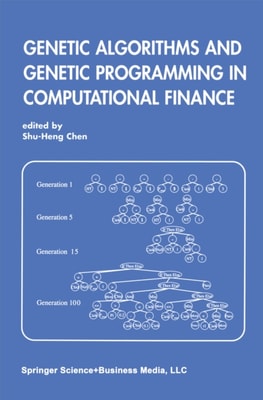
Since the introduction of genetic algorithms in the 1970s, an enormous number of articles together with several significant monographs and books have been published on this methodology.
The field of multiple criteria decision analysis (MCDA), also termed multiple criteria decision aid, or multiple criteria decision making (MCDM), has developed rapidly over the past quarter century and in the process a number of divergent schools of thought have emerged.
Constraint Programming is a problem-solving paradigm that establishes a clear distinction between two pivotal aspects of a problem: (1) a precise definition of the constraints that define the problem to be solved and (2) the algorithms and heuristics enabling the selection of decisions to solve the problem.
Convexity of sets in linear spaces, and concavity and convexity of functions, lie at the root of beautiful theoretical results that are at the same time extremely useful in the analysis and solution of optimization problems, including problems of either single objective or multiple objectives.
Mathematical Programming and Financial Objectives for Scheduling Projects focuses on decision problems where the performance is measured in terms of money.
1 DATA ENVELOPMENT ANALYSIS Data Envelopment Analysis (DEA) was initially developed as a method for assessing the comparative efficiencies of organisational units such as the branches of a bank, schools, hospital departments or restaurants.
The principle aim of this book, entitled "e;Operations ResearchlManagement Science at Work"e;, is to provide a summary snapshot of recent research in and applications of Operations Research (OR)/ Management Science (MS) in the Asia-pacific region.
Intelligent Support Systems for Marketing Decisions examines new product development, market penetration strategies, and other marketing decisions utilizing a confluence of methods, including Decision Support Systems (DSS), Artificial Intelligence in Marketing and Multicriteria Analysis.
Operational Logistics: The Art and Science of Sustaining Military Operations explores military logistics in terms of the theoretical foundations of operational logistics (OpLog) and its applications.
The developments within the computationally and numerically oriented ar- eas of Operations Research, Finance, Statistics and Economics have been sig- nificant over the past few decades.
Optimal control and differential games continue to attract strong interest from researchers interested in dynamical problems and models in management science.
Analysis and Modeling of Manufacturing Systems is a set of papers on some of the newest research and applications of mathematical and computational techniques to manufacturing systems and supply chains.
Control charts are widely used in industry to monitor processes that are far from Zero-Defect (ZD), and their use in a near Zero-Defect manufacturing environment poses many problems.
Technology Commercialization: DEA and Related Analytical Methods for Evaluating The Use and Implementation of Technical Innovation examines both general Research & Development commercialization and targeted new product innovation.
Dynamic Portfolio Strategies: Quantitative Methods and Empirical Rules for Incomplete Information investigates optimal investment problems for stochastic financial market models.
Experimental Economics: Financial Markets, Auctions, And Decision Making is based on research presented at the 20th Arne Ryde Symposium on Experimental Economics, held on November 9-11 at Lund University.