An Introduction to Efficiency and Productivity Analysis is designed as a primer for anyone seeking an authoritative introduction to efficiency and productivity analysis.
Information Technology (IT) - the field that links computer and communications equipment and software - is transforming the way modern business is done.
Group Technology and Cellular Manufacturing (GT/CM) have been widely-researched areas in the past 15 years and much progress has been made in all branches of GT/CM.
Fuzzy Sets in Decision Analysis, Operations Research and Statistics includes chapters on fuzzy preference modeling, multiple criteria analysis, ranking and sorting methods, group decision-making and fuzzy game theory.
Cost Structure and the Measurement of Economic Performance is designed to provide a comprehensive guide for students, researchers or consultants who wish to model, construct, interpret, and use economic performance measures.
Due to growing concern about the competitiveness of industry in the international marketplace and the efficiency ofgovernment enterprises, widespread initiatives are currently underway to enhance thecompetitive posture offirms and to streamline government operations.
Uncertain Decisions: Bridging Theory and Experiments presents advanced directions of thinking on decision theory - in particular the more recent contributions on non-expected utility theory, fuzzy decision theory and case-based theory.
Object-Oriented Computer Simulation of Discrete-Event Systems offers a comprehensive presentation of a wide repertoire of computer simulation techniques available to the modelers of dynamic systems.
At a practical level, mathematical programming under multiple objectives has emerged as a powerful tool to assist in the process of searching for decisions which best satisfy a multitude of conflicting objectives, and there are a number of distinct methodologies for multicriteria decision-making problems that exist.
Computational Optimization: A Tribute to Olvi Mangasarian serves as an excellent reference, providing insight into some of the most challenging research issues in the field.
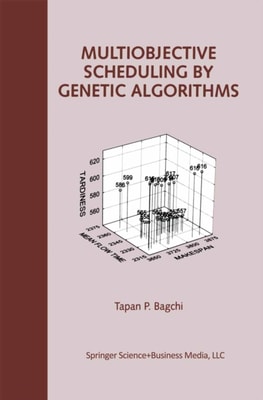
Multiobjective Scheduling by Genetic Algorithms describes methods for developing multiobjective solutions to common production scheduling equations modeling in the literature as flowshops, job shops and open shops.
This book provides a new point of view on the field of financial engineering, through the application of multicriteria intelligent decision aiding systems.
In cooperative games, one generally assumes that the agents know exactly the joint (monetary) gains that can be achieved by any possible coalition of cooperating agents.
In the global information society, innovation is a highly pervasive process that influences all facets of human life: cultural, economic, political, and institutional.
Creating Value in Financial Services is a compilation of state-of-the-art views of leading academics and practitioners on how financial service firms can succeed in today's competitive environment.
Motivation Stochastic Linear Programming with recourse represents one of the more widely applicable models for incorporating uncertainty within in which the SLP optimization models.
Dynamic Systems (DEDS) are almost endless: military C31 Ilogistic systems, the emergency ward of a metropolitan hospital, back offices of large insurance and brokerage fums, service and spare part operations of multinational fums .
Arc Routing: Theory, Solutions and Applications is about arc traversal and the wide variety of arc routing problems, which has had its foundations in the modern graph theory work of Leonhard Euler.
Planning, operating, and policy making in the electric utility and natural gas sectors involves important trade-offs among economic, social, and environmental criteria.
Enterprise Modeling: Improving Global Industrial Competitiveness gives an overview of the current state-of-the-art in enterprise modeling and its application.
Multicriterion Decision in Management: Principles and Practice is the first multicriterion analysis book devoted exclusively to discrete multicriterion decision making.
Advances in Quantitative Asset Management contains selected articles which, for the most part, were presented at the `Forecasting Financial Markets' Conference.
The goal of Inventory Management will be to explain the dynamics of inventory management's principles, concepts, and techniques as they relate to the entire supply chain (customer demand, distribution, and product transformation processes).
Computing Tools for Modeling, Optimization and Simulation reflects the need for preserving the marriage between operations research and computing in order to create more efficient and powerful software tools in the years ahead.