Learning, Unlearning and Re-learning Curves (Volume IV of the Working Guides to Estimating & Forecasting series) focuses in on Learning Curves, and the various tried and tested models of Wright, Crawford, DeJong, Towill-Bevis and others.
Best Fit Lines and Curves, and Some Mathe-Magical Transformations (Volume III of the Working Guides to Estimating & Forecasting series) concentrates on techniques for finding the Best Fit Line or Curve to some historical data allowing us to interpolate or extrapolate the implied relationship that will underpin our prediction.
Probability, Statistics and Other Frightening Stuff (Volume II of the Working Guides to Estimating & Forecasting series) considers many of the commonly used Descriptive Statistics in the world of estimating and forecasting.
Probability, Statistics and Other Frightening Stuff (Volume II of the Working Guides to Estimating & Forecasting series) considers many of the commonly used Descriptive Statistics in the world of estimating and forecasting.
Principles, Process and Practice of Professional Number Juggling (Volume 1 of the Working Guides to Estimating & Forecasting series) sets the scene of TRACEability and good estimate practice that is followed in the other volumes in this series of five working guides.
Risk, Opportunity, Uncertainty and Other Random Models (Volume V in the Working Guides to Estimating and Forecasting series) goes part way to debunking the myth that research and development cost are somewhat random, as under certain conditions they can be observed to follow a pattern of behaviour referred to as a Norden-Rayleigh Curve, which unfortunately has to be truncated to stop the myth from becoming a reality!
In the fluid world of changing business environments and variables affecting projects, a style of project management that primarily relies on maintaining the Iron Triangle, that tenuous mix of schedule, scope, and budgets, is no longer the sole path to success.
In the fluid world of changing business environments and variables affecting projects, a style of project management that primarily relies on maintaining the Iron Triangle, that tenuous mix of schedule, scope, and budgets, is no longer the sole path to success.
This book provides techniques for offshore center managers and head office managers to motivate and manage globally distributed teams, which are spread across the offshore center and the head office, and thereby achieve higher productivity.
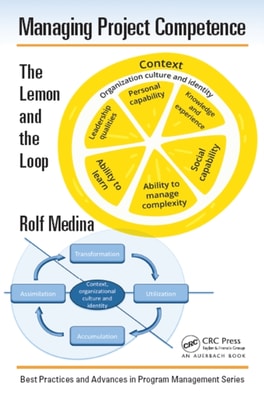
For companies to be successful, the management of an organization needs to understand how competence evolves and how it can be utilized and linked to the organization's goals.
The innovation infrastructure and master plan described in this book offers a detailed and comprehensive approach to one of the most difficult and challenging problems facing entrepreneurs involved in innovation at any scale enterprise: the problem of how to govern your organization's innovation initiatives in the middle of turbulent change.
This tenth edition of David Chappell's bestselling guide has been revised to take into account changes made in 2016 to payment provisions, loss and/or expense, insurance and many other smaller but significant changes, and includes a section on performance bonds and guarantees.
This tenth edition of David Chappell's bestselling guide has been revised to take into account changes made in 2016 to payment provisions, loss and/or expense, insurance and many other smaller but significant changes, and includes a section on performance bonds and guarantees.
"e;Building Back Better"e; (BBB) has been a popular slogan in disaster recovery efforts around the world, including the 2004 Indian Ocean Tsunami, the 2009 Samoan Tsunami, the 2010 Haiti Earthquake and the 2011 Great East Japan Earthquake.
"e;Building Back Better"e; (BBB) has been a popular slogan in disaster recovery efforts around the world, including the 2004 Indian Ocean Tsunami, the 2009 Samoan Tsunami, the 2010 Haiti Earthquake and the 2011 Great East Japan Earthquake.
In recent decades, we have witnessed an increasing use of projects and similar temporary modes of organising in the public sector of nations in Europe and around the world.
In recent decades, we have witnessed an increasing use of projects and similar temporary modes of organising in the public sector of nations in Europe and around the world.
Aiming to bridge the gap between the quantitative viewpoint of management science and the practical, day-to-day needs of project cost management, this text offers coverage of an integrated cost management programme.
Aiming to bridge the gap between the quantitative viewpoint of management science and the practical, day-to-day needs of project cost management, this text offers coverage of an integrated cost management programme.
"e;"e;This well-organized reference presents complete and explicit instructions on exactly what to do to manage multiple small projects -- using limited resources -- in any industry.
"e;"e;This well-organized reference presents complete and explicit instructions on exactly what to do to manage multiple small projects -- using limited resources -- in any industry.
Proper cost accounting and financial management are essential elements of any successful construction job, and therefore make up essential skills for construction project managers and project engineers.
Proper cost accounting and financial management are essential elements of any successful construction job, and therefore make up essential skills for construction project managers and project engineers.
Projects are inherently risky, since they involve some level of uncertainty, doing something new in the target environment, but the percentage of projects seen as a success is still disappointingly low, especially for IT projects.