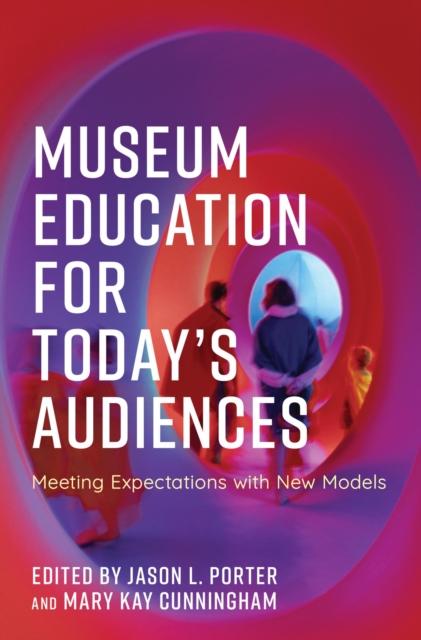
Today's museum educators are tackling urgent social issues, addressing historic inequalities of museum collections, innovating for accessibility, leveraging technology for new in-person and virtual learning experiences, and cultivating partnerships with schools, businesses, elders, scientists, and other social services to build relationships and be of service to their communities.
New Directions for University Museums is intended to help university museum leaders to help them plan strategically in the context of the issues and needs of the 2020s by examining trends affecting them and directions in response to those forces.
New Directions for University Museums is intended to help university museum leaders to help them plan strategically in the context of the issues and needs of the 2020s by examining trends affecting them and directions in response to those forces.
Activating the Art Museum: Designing Experiences for the Health Professions, the first book on this subject, offers an argument for collaboration between educators in art museums and healthcare professionals.
Museum Finance: Issues, Challenges, and Successes looks at why museum finance is inherently challenging and how difficult it is to balance the need to generate adequate funding while providing accessible, meaningful mission-based services.
As museums are currently shaping their tools for fostering empathy as an intentional outcome of museum experiences, the idea of empathy-building is reshaping them as socially relevant institutions that increasingly value diversity, accessibility, and equality.
Activating the Art Museum: Designing Experiences for the Health Professions, the first book on this subject, offers an argument for collaboration between educators in art museums and healthcare professionals.
A Visual Dictionary of Decorative and Domestic Arts provides a common and unambiguous vocabulary for the parts of handcrafted decorative, domestic, and artistic items.
Curatorial Intervention: History and Current Practice, is a critical analysis of the dynamic roles curators play in shaping, mediating and, at times, redefining the artist-audience exchange.
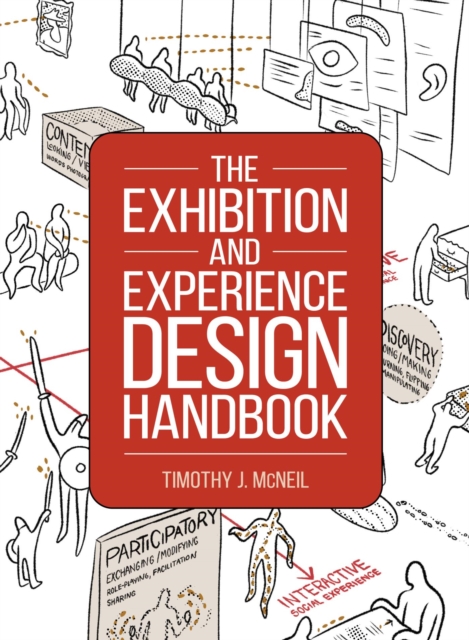
Today's multi-modal, participatory exhibitions and attractions are bound by a desire to convey information, excite the viewer and create social and narrative experiences.
More Justice, More Peace: When Peacemakers Are Advocates gives voice to the conundrum of how mediators and other impartial third-party intervenors can revisit their roles in turbulent times.
Bringing Teachers to the History Museum: A Guide to Facilitating Teacher Professional Development surveys best practices and the latest research on how to plan, implement and evaluate teacher professional development at historic sites and museums.
The Art of Access: A Practical Guide for Museum Accessibility is a one-stop guide to the incremental ways your museum can build a comprehensive approach to accessibility that can be easily integrated into the fabric of your museum.
Museums everywhere have the potential to serve as agents of change-bringing people together, contributing to local communities, and changing people's lives.
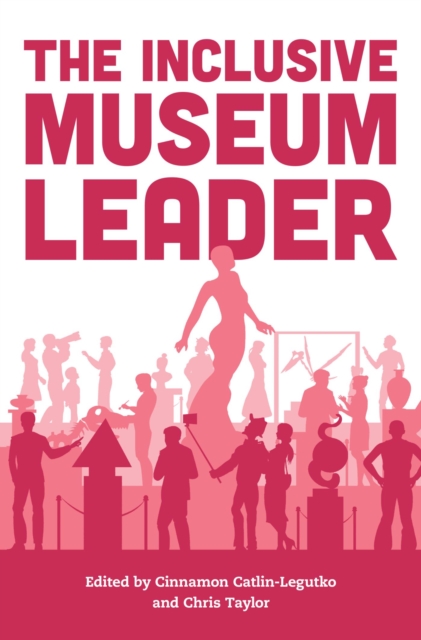
"e;Inclusion"e; is a word, a concept, a value, a set of practices, but what should it mean for museum staff and leaders as they envision new ways of being a museum in an emergent future?
The Heart of a Leader: Fifty-Two Emotional Intelligence Insights to Advance Your Career uncovers insider secrets on leadership for go-getters who aren't satisfied with status quo careers.
Families are a critical audience for art museums and museums use many different strategies for reaching families, such as special family days and festivals, workshops, special tours, family backpacks and gallery guides, in-gallery materials or demonstration carts, and specific family galleries.
During the course of an interactive museum tour an educator will be able to elicit a range of responses, conversation, and new discoveries that engage the broadest spectrum of museum learners.
Equal parts autobiography, cautionary tale, and actionable recommendations, this book is as candid and vulnerable as the author insists all seekers of justice be when they embark on a full-scale DEAI initiative anchored in anti-oppression.
Museum Finance: Issues, Challenges, and Successes looks at why museum finance is inherently challenging and how difficult it is to balance the need to generate adequate funding while providing accessible, meaningful mission-based services.
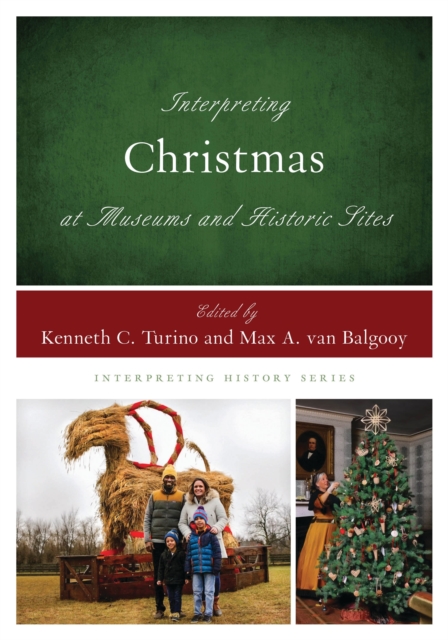
Interpreting Christmas at Museums and Historic Sites offers a wide range of perspectives on Christmas and practical guidance for planning, research, interpretation, and programming by board members, staff, and volunteers involved in the management, research, and interpretation at house museums, historic sites, history museums, and historical societies across the United States.
In dem mehrbändigen Werk zur „Produktionstheorie“ sollen erstmalig die heute aus der Praxis geborenen Produktionsmodelle und -verfahren mathematisch begründet hergeleitet und so auch der Produktionswirtschaft eine wissenschaftliche Grundlage gegeben werden.
In dem mehrbändigen Werk zur „Produktionstheorie“ sollen erstmalig die heute aus der Praxis geborenen Produktionsmodelle und -verfahren mathematisch begründet hergeleitet und so auch der Produktionswirtschaft eine wissenschaftliche Grundlage gegeben werden.
Moderne praxis-, ziel- und ergebnisorientierte Steuerungsinstrumente, die für eine erfolgreiche und qualitätsgesicherte Projektabwicklung erforderlich sind, werden in dieser Auflage umfassend dargestellt.
Industrielle Dienstleistungen haben für produzierende Unternehmen eine enorme Relevanz: Sie tragen dazu bei, sich wirkungsvoll dem weltweiten Preisdruck durch Differenzierung zu entziehen.
In diesem Buch werden bemerkenswerte, aus der betrieblichen Praxis abgeleitete Lösungen des Toyota Produktionssystems (TPS) und des Materialflusses vorgestellt.
Moderne praxis-, ziel- und ergebnisorientierte Steuerungsinstrumente, die für eine erfolgreiche und qualitätsgesicherte Projektabwicklung erforderlich sind, werden in dieser Auflage umfassend dargestellt.
Hohe Flexibilität gegenüber inhomogenen Kundenbedürfnissen, Kosteneffizienz und eine punktgenaue Lieferfähigkeit gelten als entscheidende Faktoren im globalen Wettbewerb.