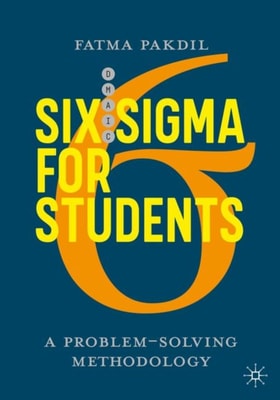
This textbook covers the fundamental mechanisms of the Six Sigma philosophy, while showing how this approach is used in solving problems that affect the variability and quality of processes and outcomes in business settings.
This book provides a detailed understanding of optimization methods as they are implemented in a variety of manufacturing, fabrication and machining processes.
This book demonstrates the theoretical value and practical significance of systems science and its logic of thinking by presenting a rigorously developed foundation-a tool for intuitive reasoning, which is supported by both theory and empirical evidence, as well as practical applications in business decision making.
Disjunctive Programming is a technique and a discipline initiated by the author in the early 1970's, which has become a central tool for solving nonconvex optimization problems like pure or mixed integer programs, through convexification (cutting plane) procedures combined with enumeration.
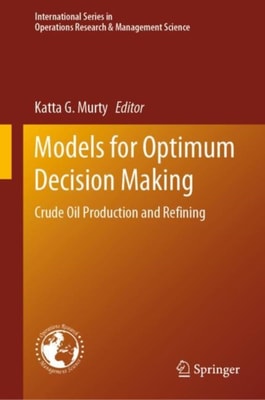
This book considers the problem of determining how many barrels of crude oil an oil-producing and exporting country should produce annually for export-along with several other important problems that decision-makers in the crude oil industry face-and discusses procedures for finding optimum solutions for them.
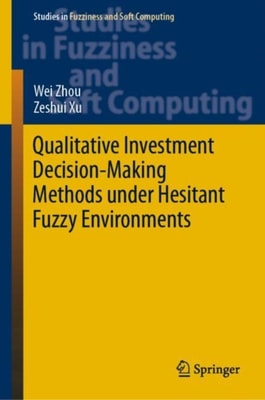
This edited book presents the state-of-the-art of applying fuzzy logic to managerial decision-making processes in areas such as fuzzy-based portfolio management, recommender systems, performance assessment and risk analysis, among others.
This book presents a diversity of innovative and impactful research in the field of industrial and systems engineering (ISE) led by women investigators.
This book closely examines the concept and theory of 'future' from a multidisciplinary perspective, focusing on the practice of forecasting, especially in its interaction with complexity.
This book introduces the basic concepts of fuzzy collaborative forecasting and clustering, including its methodology, system architecture, and applications.
Neural Approximations for Optimal Control and Decision provides a comprehensive methodology for the approximate solution of functional optimization problems using neural networks and other nonlinear approximators where the use of traditional optimal control tools is prohibited by complicating factors like non-Gaussian noise, strong nonlinearities, large dimension of state and control vectors, etc.
This handbook gathers state-of-the-art research on optimization problems in power distribution systems, covering classical problems as well as the challenges introduced by distributed power generation and smart grid resources.
The main purpose of the book is to give a rigorous introduction to the most important and useful solution methods of various types of stochastic control problems for jump diffusions and their applications.
The book shows how simulation's long history and close ties to industry since the third industrial revolution have led to its growing importance in Industry 4.
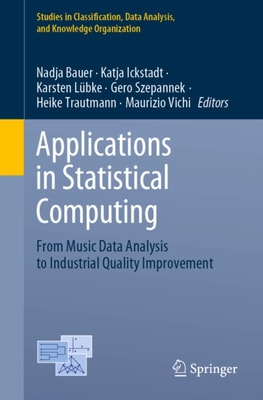
This book gathers a selection of peer-reviewed papers presented at the International Conference on Operations Research (OR 2019), which was held at Technische Universitat Dresden, Germany, on September 4-6, 2019, and was jointly organized by the German Operations Research Society (GOR) the Austrian Operations Research Society (OGOR), and the Swiss Operational Research Society (SOR/ASRO).
The book provides a broad introduction to both the theory and the application of optimization with a special emphasis on the elegance, importance, and usefulness of the parametric self-dual simplex method.
Based on many years of applied research, modeling and educating future decision makers, the authors have selected the critical set of mathematical modeling skills for decision analysis to include in this book.
This book features a selection of contributions that were presented at the Modeling and Optimization: Theory and Applications Conference (MOPTA) held at Lehigh University in B ethlehem, Pennsylvania, USA between August 16-18, 2017.
This book provides comprehensive coverage of the latest research on multiple criteria research analysis (MCDA) and related areas, gathering a collection of high-quality chapters prepared by leading scholars in the field.
This book constitutes the proceedings of the 6th International Conference on Decision Support Systems Technologies, ICDSST 2020, organised in Zaragoza, Spain, in May 2020.
Use of quantitative data, especially in financial markets, may provide rapid results due to the ease-of-use and availability of fast computational software, but this book advises caution and helps to understand and avoid potential pitfalls.
This book presents various multi-criteria analysis methods for sustainability-oriented analysis and decision-making for energy systems, under various different conditions and scenarios.
This book constitutes the proceedings of the Joint 2018 National Conferences of the Australian Society for Operations Research (ASOR) and the Defence Operations Research Symposium (DORS).
This book tackles the perplexing problem of how to capture the qualitative differences that exist in entrepreneurship at any given point in time or across time, by presenting a novel qualitative index: Entrepreneurship Quality Index (EQI).
This book provides a thorough review of tested qualitative methods often used in organization studies, and outlines the challenges and essential requirements of designing a qualitative research project.
This book contributes a basic framework for and specific insights into interdisciplinary connections between production, logistics, and traffic subsystems.