How could hybrid organizations and leaders improve effectiveness in order to increase the chances of success for their business organizations in East Asia?
Every business discipline has a unique vantage point on value creation and destruction, and while specialists have devised solutions, leaders rarely use them because of the inherent complexity in trying to understand which parts fit together to help them achieve goals.
The concept of dynamic capabilities, especially in terms of organizational knowledge processes, has become the predominant paradigm for the explanation of competitive advantages.
An insightful look at how touch, taste, smell, sound, and appearance effect how customers relate to products on a sensory level, and how small sensory changes can make a huge impact.
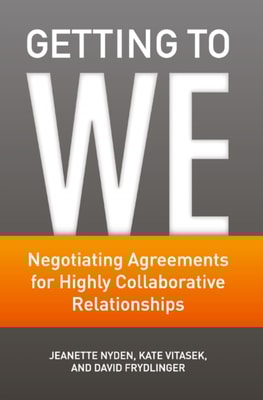
Drawing on best practices and real examples from companies who are achieving record results, Getting to We flips conventional negotiation on its head, shifting the perspective from a tug of war between parties to a collaborative partnership where both sides effectively pull against a business problem.
As a game of economics, investing involves the basic principles of economics that help investors identify financial goals and constraints, and come up with the right asset and portfolio allocation.
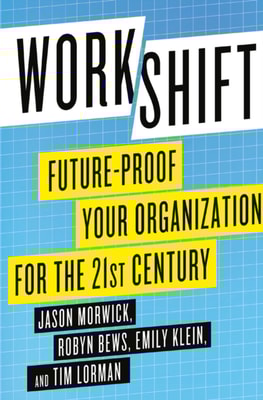
Workshift is a blueprint for organizations transitioning into the virtual workplace, where employees are always connected, and work is no longer a destination.
Second Stage Entrepreneurship shows the aspiring entrepreneur how to create significant growth as their company scales its way to the top through the development of organizational structure; from setting up an effective company culture; to structuring an effective sales team; to helping create stand out customer interactions.
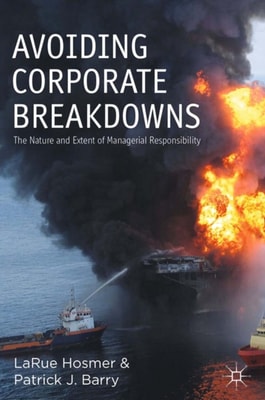
Avoiding Corporate Breakdowns focuses on prescribing a preventative strategy for managerial actors who face economic, social and environmental disasters.
Illustrates how decision-making in organizations has to go beyond economic criteria and the individual level, due to the impossibility of making decisions that do not affect other human beings.
Family Business Conflict Archetypes, Frames, Roles, and Tactics are discussed in this book with a view toward educating readers to the common conflict cycles that family businesses encounter.
The new edition of this successful textbook provides a comprehensive introduction to simulation, foregrounding the topic as an applied problem-solving tool.
Offers deal-makers techniques to access mutually beneficial solutions that cannot make their way to the bargaining table without a cooperative strategy that enables the parties to together with mutual benefit and success.
A complement to the successful The Global Negotiator: Making, Managing, and Mending Deals Around the World in the Twenty-First Century (Palgrave, 2003), Salacuse's new work is a comprehensive and easy-to-understand look at negotiation in everyday life.
Combining creative biblical interpretation, Christian moral reflection, and business expertise, Finding Meaning in Business is a thoughtful and thought-provoking look at how business leaders, professionals, and students can integrate a sense of calling into their careers and into the business world as a whole.
Too many decisions are taken too slowly or not at all because of the dithering behavior of our leaders, often leading to failure of the project, or worse, the organization.
This book develops a groundbreaking, novel approach to examining ethical consumer behaviour from the perspective of evolutionary theory, illustrating the deeply rooted potentials and limits within society for reducing environmental harm.
Providing the most up-to-date tools and techniques for pricing interest rate and credit products for the new financial world, this book discusses pricing and hedging, funding and regulation, and interpretation, as an essential resource for quantitatively minded practitioners and researchers in finance.
Almost every company creates a marketing plan each year, and many spend hundreds of employee hours researching, preparing and presenting their tomes to senior executives.
A unique, non-traditional, Organizational Behavioral-oriented book that is geared toward flexible leadership, and that offers a series of funny, yet thought-provoking, motivating, growth-oriented jokes and humor anecdotes that will help readers tap into their internal locus of control.
Herbert Scarf is a distinguished economist and has made a number of extraordinarily significant contributions to economics, game theory and operations research.
Takes readers through an in-depth examination of many leading industrialized nations and identifies both the drivers that propel corporations towards convergence and the major impediments that stand in the way of convergence.
Using the Enel case, this volume unpacks the effective implementation of an ambidextrous perspective on adaptation and change, providing some key lessons for managers and scholars.
Although the title of this volume and its major focus will be on one major aspect of global sustainability - climate change - this volume continues with the overall framing of the series: global sustainability is a multi-faceted, global, multi-generational, economic, social, environmental, and cultural phenomenon and challenge to our species.
Taylor leads readers through creativity and how it relates to leadership followed by the five stages of theory behind the idea: 1) preparation, 2) time-off (or incubation), 3) the spark, 4) selection, and 5) elaboration.
This highly practical book explains how executive teams in global companies can work together to successfully drive change, enable fast growth or restructure the business.