In this time of acute financial pressure on public budgets, there is an increasing interest worldwide in alternative ways for governments to raise money, and how public authorities can develop the capacity to administer revenues efficiently and effectively.
This is a handbook for the cultural entrepreneur, offering some of the best examples on practice, franchises, research, innovation and business opportunities in the cultural sector.
This is a handbook for the cultural entrepreneur, offering some of the best examples on practice, franchises, research, innovation and business opportunities in the cultural sector.
Designed for professionals and aspiring professionals in public policy, public health, and related programs, Public Health Leadership illustrates the complexity of contemporary issues at the intersection of public health and healthcare and the compelling need to engage numerous public and private stakeholders to effectively advance population health.
Designed for professionals and aspiring professionals in public policy, public health, and related programs, Public Health Leadership illustrates the complexity of contemporary issues at the intersection of public health and healthcare and the compelling need to engage numerous public and private stakeholders to effectively advance population health.
The planning and design of healthcare facilities has evolved over the previous decades from "e;function follows design"e; to "e;design follows function.
The planning and design of healthcare facilities has evolved over the previous decades from "e;function follows design"e; to "e;design follows function.
Despite its frequency and its potential severity, preventable medical harm is still prominent in American hospitals and continues to put an alarming amount of lives at risk, being the third leading cause of death in the United States.
Despite its frequency and its potential severity, preventable medical harm is still prominent in American hospitals and continues to put an alarming amount of lives at risk, being the third leading cause of death in the United States.
Health services are often fragmented along organizational lines with limited communication among the public health-related programs or organizations, such as mental health, social services, and public health services.
Health services are often fragmented along organizational lines with limited communication among the public health-related programs or organizations, such as mental health, social services, and public health services.
This pioneering work addresses a key issue that confronts all industrialised nations: How do we organise healthcare services in accordance with fundamental human rights, whilst competing with scientific and technological advances, powerful commercial interests and widespread public ignorance?
Healthcare Technology Management: A Systematic Approach offers a comprehensive description of a method for providing safe and cost effective healthcare technology management (HTM).
'In these pages you will find a rich mixture of the best in leadership and organisation development practice and theory, based on a lifetime of studying and applying the principles of why some healthcare organisations succeed and why some fail.
Our nation's capacity to care is becoming increasingly stressed as an aging and increasingly unhealthy population collides with a relative reduction in the numbers of clinicians and ever-tightening financial resources.
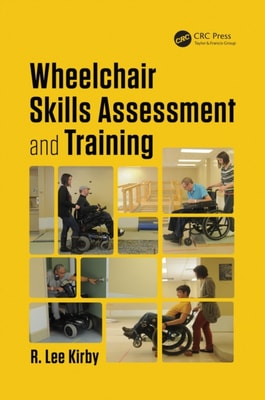
This book provides a wide spectrum of readers with comprehensive but easily understandable protocols for the assessment and training of wheelchair skills.
This book reveals and describes the leadership and culture change required to remove waste from healthcare processes and eliminate the root cause of soaring costs, poor quality and safety, and limited access.
Based on the author's years of experience working with Toyota's master teachers and with companies in the midst of great change, this book follows the story established in the Shingo Prize-winning book, Andy & Me: Crisis & Transformation on the Lean Journey.
This book is written through the lens of patients, caregivers, healthcare representatives and families, highlighting new models of interaction between providers and patients and what people would like in their healthcae experience.
This book gives examples from healthcare institutions that are using IT automation and innovation to drive change and provides guidance on the strategic direction of HIT over the next five years.
This volume, focusing on low back pain, is part of a survey of health care needs for specific conditions, published on behalf of the Department of Health.
In this introductory text, the author presents the law relating to child care and the reforms introduced by the Children Act 1989, assessing its impact on child care practice and procedures.
Both the demographics and lack of resources in the health and well-being industry are increasingly forcing us to find alternative solutions for individualized health and social care.
'Successful medical leaders are usually, but not always, experienced and credible clinicians with good people skills, who look beyond the boundaries of their own specialty or institution, who are positive and perseverant and who are prepared to take reasonable risks to achieve their goals.
Recent changes to the health service including new structures and ways of working at both local and national levels are having major influences on the working lives of every health visitor and community nurse and on their professional opportunities.