The biopharmaceutical industry as we know it today is going through a massive upheaval as a result of the uncertainty of healthcare reform and increasing regulatory pricing pressure.
Although much has been achieved in care coordination and accountable care, healthcare leaders need additional, game-changing innovations to deal with constraints in clinical resources, care capacity, and cost that have not yet been fully addressed.
With healthcare making the transition from volume-based reimbursement programs to value-based approaches, understanding performance measurement is vital to optimize payment and quality outcomes.
Mastery of quality health care and patient safety begins as soon as we open the hospital doors for the first time and start acquiring practical experience.
Most business readers have heard of the Lean principles developed for factories a set of tools and ideas that have enabled companies to dramatically boost quality by reducing waste and errors producing more while using less.
The Definitive Guide to Complying with the HIPAA/HITECH Privacy and Security Rules is a comprehensive manual to ensuring compliance with the implementation standards of the Privacy and Security Rules of HIPAA and provides recommendations based on other related regulations and industry best practices.
Economic evaluation has become an essential component of clinical trial design to show that new treatments and technologies offer value to payers in various healthcare systems.
Through healthcare reform, payment modifications, transparency, and a renewed focus on value, the healthcare industry is changing its organizational structure from one of a multitude of individual entities to one of a system-of-care model.
Proven to increase efficiencies in the manufacturing sector, Standard Work has become a key element in reducing process waste, ensuring patient safety, and improving healthcare services.
The Economics of Health and Health Care is the market-leading health economics textbook, providing comprehensive coverage of all the key topics, and balancing economic theory, empirical evidence, and public policy.
The third edition of this highly regarded book provides a concise and accessible introduction to the principles and elements of policy design in contemporary governance.
Decision Support System for Diabetes Healthcare: Advancements and Applications is a comprehensive guide to the cutting-edge technology transforming diabetes management.
This book is intended to help decision-makers use, assess and appraise the evidence that underpins decisions about the use of therapeutic interventions.
This essential guide provides a lifeline to authoritative, reliable information on medical management, giving you all the skills you need whether managing a junior colleague as a lead doctor, or running multidisciplinary consortia in the NHS or private sectors.
The fifth edition of this classic text is the definitive, clinically orientated guide to a critical area within healthcare practice, full of sound, practical advice for all those involved in the control of infection in a variety of settings.
As healthcare challenges such as human aging and traffic accidents continue to increase exponentially, the biomedical sector faces a significant obstacle in arranging patient-specific biomedical products.
The advent of Generative AI has democratized access to AI, prompting nearly everyone in healthcare organizations - from frontline workers to business leaders - to ask pressing questions: How can I be better equipped to support AI adoption meaningfully?
In this new edition of Uneasy Partnership, Geoffrey Hale examines the interdependent relationship between Canadian governments and businesses, considering governments' multiple roles in the economy and their implications for the business environment.
In this new edition of Uneasy Partnership, Geoffrey Hale examines the interdependent relationship between Canadian governments and businesses, considering governments' multiple roles in the economy and their implications for the business environment.
In no industry is the concept of quality more essential than it is in healthcare, which is why the lean quality principles learned through the example of the Toyota Production System are so applicable.
Utilizing the 3Ms of Process Improvement in Healthcare supplies step-by-step guidance on how to use the 3Ms of change leadership to improve healthcare processes.
A valuable reference for those involved in the field of ambulatory patient care, Improving Quality in Outpatient Services offers time-tested instruction on how to create a world-class outpatient program.
This workbook reflects a number of important regulatory changes that have occurred in the past 13 years, as well as the new landscape of healthcare reform.
For decades, the manufacturing industry has employed the Toyota Production System , the most powerful production method in the world , to reduce waste, improve quality, reduce defects and increase worker productivity.
Drawing on the expertise of decision-making professionals, leaders, and managers in health care organizations, Hospitals & Health Care Organizations: Management Strategies, Operational Techniques, Tools, Templates, and Case Studies addresses decreasing revenues, increasing costs, and growing consumer expectations in today's increasingly competi
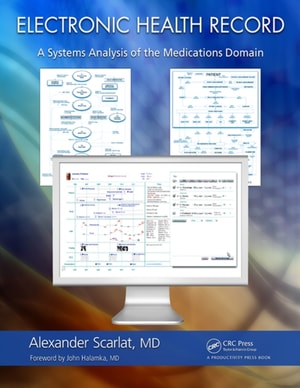
An accessible primer, Electronic Health Record: A Systems Analysis of the Medications Domain introduces the tools and methodology of Structured Systems Analysis as well as the nuances of the Medications domain.
With unintended harm during hospital care costing billions of dollars to the world economy, not to mention millions of deaths each year, it's no wonder the issue is equally front and center in the minds of healthcare providers and the public.
Traditionally, the study of financial decision making in law enforcement and criminal justice entities has been approached from the perspective of tax revenues and budgeting that focus only on the past and present.
The third book in the Healthcare Payment Systems series, Prospective Payment Systems examines the various types of prospective payment systems (PPS) used by healthcare providers and third-party payers.
The fourth book in the Healthcare Payment System series, Cost-Based, Charge-Based, and Contractual Payment Systems compares cost-based systems, charge-based payment approaches, and contractually-based payment processes with fee-schedule payment systems and prospective payment systems.