"e;Schragenheim, Camp and Surace, three leaders of TOC community, are tackling one of value destroyers of corporations-the misuse and abuse of traditional cost accounting.
About the BookThe book provides details of applying intelligent mining techniques for extracting and pre-processing medical data from various sources, for application-based healthcare research.
Health policy in the United States has been shaped by the political, socioeconomic, and ideological environment, with important roles played by public and private actors, as well as institutional and individual entities, in designing the contemporary American healthcare system.
Health policy in the United States has been shaped by the political, socioeconomic, and ideological environment, with important roles played by public and private actors, as well as institutional and individual entities, in designing the contemporary American healthcare system.
Public value theory has advanced over the past 30 years, but there is a need to extend its boundary outwards into new contexts and update its discourse to reflect new social challenges.
Coping with complexities is an everyday reality for private, public and third sectors that face intricate, overlapping, obscuring and ever-changing challenges.
Public value theory has advanced over the past 30 years, but there is a need to extend its boundary outwards into new contexts and update its discourse to reflect new social challenges.
Coping with complexities is an everyday reality for private, public and third sectors that face intricate, overlapping, obscuring and ever-changing challenges.
This handbook addresses how smart operations, management, and healthcare can be used to detect and analyze supply chain problems, business problems, and diseases.
This book explores the hospital via organisational ethnography (OE), an approach that involves a mix of fieldwork methods designed to analyse the hospital which also includes participatory observation, qualitative interviews and shadowing.
University branding has increased substantially, due to demands on universities to enrol greater numbers of students, rising tuition fees, the proliferation of courses, the growing 'internationalization' of universities, financial pressures, and reliance on income from foreign students.
This book explores the hospital via organisational ethnography (OE), an approach that involves a mix of fieldwork methods designed to analyse the hospital which also includes participatory observation, qualitative interviews and shadowing.
University branding has increased substantially, due to demands on universities to enrol greater numbers of students, rising tuition fees, the proliferation of courses, the growing 'internationalization' of universities, financial pressures, and reliance on income from foreign students.
The third edition of HIT or Miss: Lessons Learned from Health Information Technology Projects presents and dissects a wide variety of HIT failures so that the reader can understand in each case what went wrong and why and how to avoid such problems, without focusing on the involvement of specific people, organizations, or vendors.
The third edition of HIT or Miss: Lessons Learned from Health Information Technology Projects presents and dissects a wide variety of HIT failures so that the reader can understand in each case what went wrong and why and how to avoid such problems, without focusing on the involvement of specific people, organizations, or vendors.
Patient-centered care is a way of thinking and doing things that considers patients partners in the development of a healthcare plan designed to meet their specific needs.
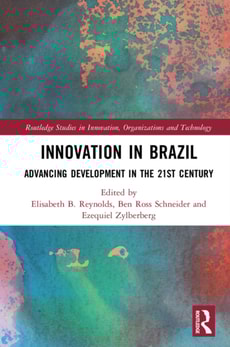
Since the early 2000s, state-led and innovation-focused strategies have characterized the approach to development pursued in countries around the world, such as China, India, and South Korea.
Patient-centered care is a way of thinking and doing things that considers patients partners in the development of a healthcare plan designed to meet their specific needs.
Increasing disruption, diminishing returns, and demanding customers require business leaders to create more value, remain relevant, and stay ahead of competition.
Increasing disruption, diminishing returns, and demanding customers require business leaders to create more value, remain relevant, and stay ahead of competition.
Since the early 2000s, state-led and innovation-focused strategies have characterized the approach to development pursued in countries around the world, such as China, India, and South Korea.
In recent years, nonprofit and voluntary organisations have faced challenges and unanticipated pressures as a result of increased competition for funding, technological advancements, the need to comply with government regulations, and increased social and community expectations regarding greater accountability and transparency.