Although research on business model innovation is flourishing internationally, many important questions on the 'how', 'what', and 'when' of this process remain largely unanswered, particularly in regard to the role of top management.
Although research on business model innovation is flourishing internationally, many important questions on the 'how', 'what', and 'when' of this process remain largely unanswered, particularly in regard to the role of top management.
In an era of digital transformation, disruptive innovation, transient competitive advantage, and industry convergence, mergers and acquisitions have become more complex than ever.
In an era of digital transformation, disruptive innovation, transient competitive advantage, and industry convergence, mergers and acquisitions have become more complex than ever.
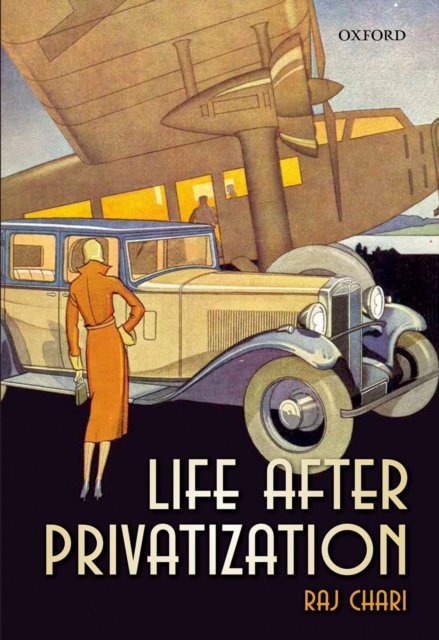
A dramatic change of ownership, regulation, and organisation of essential public services, such as electricity, gas, and telecommunications, has taken place in Europe in less than 20 years.
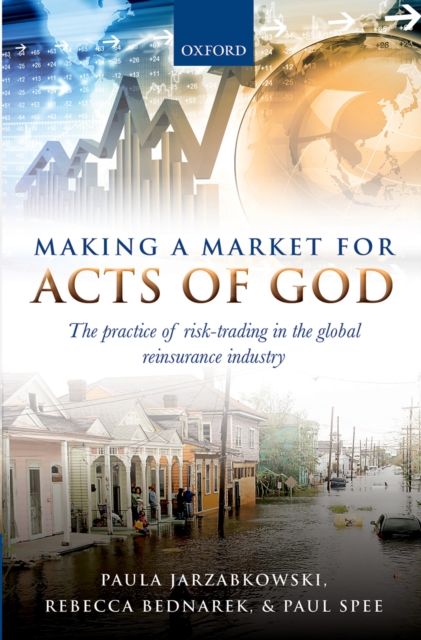
Reinsurance is a financial market that trades in the risk of unpredictable and devastating disasters - such as Hurricane Katrina, the Tohoku earthquake and tsunami, and the terrorist attacks on the World Trade Centre.
Life After Privatization offers a refreshing and original theoretical conceptualization of what happened to stateowned enterprises after they were privatized from the late 1970s onwards.
With its inception at the end of the nineteenth century as a means of consolidation and reorganization, mergers and acquisitions (M&A) have since become quasi-institutionalized as one of the primary strategic options for organizations, as they seek to secure their position in an ever more competitive and globalizing market place.
With its inception at the end of the nineteenth century as a means of consolidation and reorganization, mergers and acquisitions (M&A) have since become quasi-institutionalized as one of the primary strategic options for organizations, as they seek to secure their position in an ever more competitive and globalizing market place.
Each chapter of this book takes as its starting point a myth, a legend, a story or a fable, and explores its contemporary relevance for a world of globalization, organizations and, consumerism.
In this book Haridimos Tsoukas, one of the most imaginative organization theorists of our time, examines the nature of knowledge in organizations, and how individuals and scholars approach the concept of knowledge.
Some of the key questions in employment relations, comparative business, and globalization revolve around the extent to which businesses embody a national business system, and what happens when these employment models are exported to other national settings.
Understanding Industrial and Corporate Change contains pioneering work on technological, organizational, and institutional change from leading theorists and practitioners such as Joseph Stiglitz, Oliver Williamson, Masahiko Aoki, Alfred D.
Since the mid-1990s risk management has undergone a dramatic expansion in its reach and significance, being transformed from an aspect of management control to become a benchmark of good governance for banks, hospitals, schools, charities and many other organizations.
Twenty-first century capitalism has been marked by an increasing international economic independence, and considerable differences between dominant economic systems of coordination and control.
Business Strategy is becoming increasingly 'pluralist', drawing on the insights of different disciplines, and business practice in different parts of the world.
'Critical Management Studies', or 'CMS', describes a diverse group of work that has adopted a critical or questioning approach to the traditional concerns of Management Studies, and the growing interest in CMS has produced a vibrant and exciting body of research.
In this much anticipated sequel to the legal bestseller, The Future of Law, Susskind lays down a challenge to all lawyers to ask themselves, with their hands on their hearts, what elements of their current workload could be undertaken differently - more quickly, cheaply, efficiently, or to a higher quality - using alternative methods of working.
The business of reinsurance developed at the fringe of financial services and, for most of its existence, went largely unnoticed outside the expert community.
In this book Haridimos Tsoukas, one of the most imaginative organization theorists of our time, examines the nature of knowledge in organizations, and how individuals and scholars approach the concept of knowledge.