This book will help any leadership team use their talents to nimbly respond to shifting demands and create a better future for their business and their communities by transitioning from traditional management structures to a system of leadership behaviors.
In recent decades most of the international effort given over to studying and improving the safety of patient care has been focused in acute hospital settings.
Two recent developments from globalization have fundamentally altered the nature of work organizations: the workforce has become increasingly diverse in national and cultural origins, and work assignments are increasingly performed by teams consisting of members located in different countries.
"Advances in Mergers and Acquisitions" brings together a series of articles on this topic from academics around the world with the expressed purpose of enhancing our knowledge of the entire M&A process, from strategic analysis to integration.
The competence-based perspective on strategy and management emerged in the 1990s as a new approach to developing strategy and management theory and practice.
The global shortage of effective business leaders makes urgent the search for new insights about the nature of global leadership and the best means of developing such leaders.
QFINANCE: The Ultimate Resource (4th edition) offers both practical and thought-provoking articles for the finance practitioner, written by leading experts from the markets and academia.
What makes the "e;Advances in Mergers and Acquisitions"e; series stand out is its focus on all three characteristics that make up this research field - studies from scholars in different countries, with different research questions, relying on different theoretical perspectives.
The study of emotions in organizations is unlocking new and exciting insights into why employees behave as they do in groups, organizations and in different cultural contexts.
"e;Multi-Level Issues in Organizational Behavior and Leadership"e; is Volume 8 of "e;Research in Multi-Level Issues"e;, an annual series that provides an outlet for the discussion of multi-level problems and solutions across a variety of fields of study.
Financial Management in Museums considers sustainable and innovative solutions to current museum financial challenges by analyzing the many changes and pressures affecting the museum field.
Many people dream of buying a house in the country or near the coast, with outbuildings that can be converted into holiday lets; or of taking over an existing holiday cottage business.
With more and more women with young children returning to work, hundreds of thousands of children in England and Wales are being cared for by childminders.
In this comprehensive guide, Jill Sutherland offers practical and realistic advice, designed to take would be sandwich bar owners from idea, to opening.
This is an entertaining but highly practical guide from the successful "e;Coffee Boys"e; authors that will enable you to open a coffee bar or sandwich bar that actually lasts and makes money.
Choosing your career, changing your job, and getting selected by the organization that's right for you are amongst the most important decisions of your life.
This book arises out of the second Anglo-German Law Conference in Oxford,held under the auspices of the Oxford Law Faculty and with the support of two leading law firms.
This book contains a series of studies of the regulation under English law of the range of business organisational structures available to entrepreneurs.
2025 Independent Publisher Book Awards Silver Medalist in Finance, Investment, and EconomicsAn illuminating and inspiring introduction to an undercovered topic.
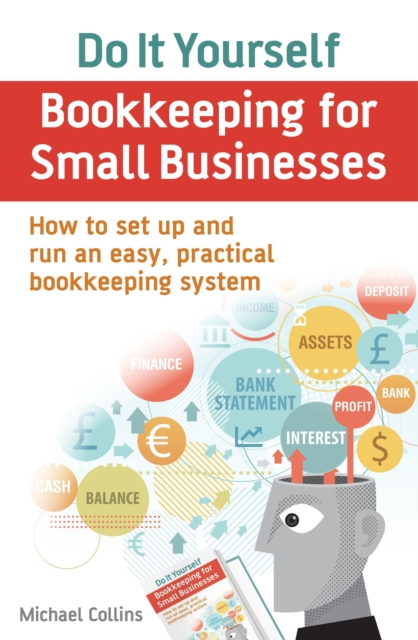
This book describes a practical and easy to implement bookkeeping system, that anyone will be able to use without previous knowledge of finance, accounting or book-keeping.