This book provides a comprehensive analysis of both national and regional trade facilitation capacities, issues, challenges and lessons, with a special interest in sustainably advancing West Africa's regional trade facilitation agenda.
Long term asset owners and managers, while seeking high risk-adjusted returns and efficiently allocating scarce financial capital to the highest value economic activities, have the essential and formidable role of ensuring the sustainability of return.
This book provides an overview of recent advances in Integrated Community-Managed Development (ICMD) as an innovative strategy for the community-based development of local institutions in order to achieve lasting poverty reduction and empowerment.
Firmly rooted in the International Political Economy (IPE) tradition, this book addresses the negative consequences of globalisation, what is termed here the 'dark side of globalisation'.
Using a heterodox perspective, this book discusses the real possibilities of Argentina, Brazil and Mexico ever achieving economic development through industrialization.
This book assesses Chinese acquisitions in developed countries, evaluates the drivers and opportunities and, above all, explores the major operational challenges.
This book explores how better governance can help Africa to achieve structural transformation (understood to be the reallocation of factors of production across and within sectors to better support inclusive development), which history has shown to be key to sustained, inclusive growth.
This book examines the impact of multinational enterprises (MNEs) on local economies, and presents selected case studies of MNEs operating in low income countries.
This proceedings volume presents the latest trends in innovative business development theory and practice from a global, interdisciplinary perspective.
"e;Lopes brings his rigour, insight, and experience to this timely new book, presenting a compelling rethink of traditional development models in Africa and the need to seize on transformational change to build a sustainable future for the continent.
As investment in new ventures across the African continent grows, and enterprises multiply in a wide variety of sectors, the next wave of challenges and opportunities has become apparent to those with the experience and vision to understand them.
Many countries in the Middle East and North Africa continue to face major economic and political challenges, including volatile economic growth, low economic diversification, high unemployment levels, and, in some cases, pervasive authoritarian regimes.
Achieving a new integration of Africa into the world economy in the neoliberal era prompts discussion of the success and failure of economic policies undertaken so far in African countries; And how to address the factors that currently hamper Africa's development in a globalized economy.
Contributions collected here discuss the experiences of the citizens of Angola, Cape Verde, Guinea-Bissau, Mozambique and Sao Tome and Principe, and suggest some answers to the challenges they face.
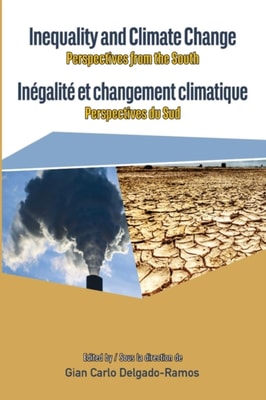
This book is the outcome of a South-South conference jointly organized by the Asian Political and International Studies Association (APISA), the Latin American Council of Social Sciences (CLACSO) and the Council for the Development of Social Science Research in Africa (CODESRIA) in Dakar, Senegal, May 2012.
This book brings together contributions on the challenges of the environment, agriculture and cross-border migrations in Africa; key areas that have become critical for the continent,s development.
This book examines how the existence of overlapping regional institutions has presented a daunting challenge to the workings of various Regional Economic Communities (RECs) on the African continent.
Development has been on Africa,s agenda for a long time but progress has been both varied and limited, partly due to the diverse levelsof the discussions ont he challenges and the interventions for tackling them.
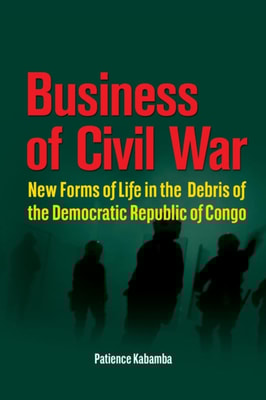
Within the context of the absence of effective state sovereignty and the presence of numerous armed struggles for power, Nande traders have managed to build and protect self-sustaining, prosperous, transnational economic enterprises in eastern Congo.
An analysis of natural resources in the Central African Republic has shown that the country has a strong national potential and a diversified ecosystem.
This book on Professor Samir Amin retraces his family origins, intellectual itinerary, political struggles as well as his experience in economic policy formulation in Egypt, Mali and many other countries.
Re-thinking African Economies for Development is delivered in the particularly historic context of the fiftieth independence anniversary of most African countries.
The case for privatization, whether defined in a broad or narrow sense, has been forcefully made by its advocates against the backdrop of the much advertised poor performances of state-owned enterprises (SOEs) and theoretical arguments relating to the efficiency of private firms over public enterprises.
Reforming the African Public Sector: Retrospect and Prospectsis an in-depth and wide-ranging review of the available literature on African public sector reforms.
Algeria Facing Globalisation is a contribution by intellectuals (researchers, trade-unionists, members of associative movements) to the intellectual and material crisis which Algeria has gone through since the 1980s.
Sundaram notes that over three decades of economic stagnation, contraction and increased poverty have taken a huge toll on Africa's economic, social and political fabric; and pro-active efforts are urgently required in order to build new capacities and c
This empirically grounded study provides a critical reflection on the land question in Africa, research on which tends to be tangential, conceptually loose and generally inadequate.