How poor countries can ignite economic growth without waiting for global action or the creation of ideal local conditionsContrary to conventional wisdom, countries that ignite a process of rapid economic growth almost always do so while lacking what experts say are the essential preconditions for development, such as good infrastructure and institutions.
From Nobel Prizewinning economist Joel Mokyr, a revealing look at why Enlightenment culture sparked the Industrial RevolutionDuring the late eighteenth century, innovations in Europe triggered the Industrial Revolution and the sustained economic progress that spread across the globe.
How individuals and the government are changing life in China's polluted citiesOver the past thirty years, even as China's economy has grown by leaps and bounds, the environmental quality of its urban centers has precipitously declined due to heavy industrial output and coal consumption.
A revealing look at the common causes of failures in randomized control experiments during field reseach-and how to avoid themAll across the social sciences, from development economics to political science departments, researchers are going into the field to collect data and learn about the world.
Brazil is the world's sixth-largest economy, and for the first three-quarters of the twentieth century was one of the fastest-growing countries in the world.
Justin Yifu Lin's groundbreaking account of how developing countries can help themselves-now fully updatedHow can developing countries grow their economies?
How to better manage systemic risks-from cyber attacks and pandemics to financial crises and climate change-in a globalized worldThe Butterfly Defect addresses the widening gap between the new systemic risks generated by globalization and their effective management.
Power to the People examines the varied but interconnected relationships between energy consumption and economic development in Europe over the last five centuries.
Why India's problems won't be solved by rapid economic growth aloneWhen India became independent in 1947 after two centuries of colonial rule, it immediately adopted a firmly democratic political system, with multiple parties, freedom of speech, and extensive political rights.
A comprehensive guide to running randomized impact evaluations of social programs in developing countriesThis book provides a comprehensive yet accessible guide to running randomized impact evaluations of social programs.
A Nobel Prize-winning economist tells the remarkable story of how the world has grown healthier, wealthier, but also more unequal over the past two and half centuriesThe world is a better place than it used to be.
Why law is critical to innovation and economic growthSustained growth depends on innovation, whether it's cutting-edge software from Silicon Valley, an improved assembly line in Sichuan, or a new export market for Swaziland's leather.
From Nobel Prizewinning economist Daron Acemoglu, an incisive introduction to economic growthIntroduction to Modern Economic Growth is a groundbreaking text from one of today's leading economists.
The wave of neoliberal economic reforms in the developing world since the 1980s has been regarded as the result of both severe economic crises and policy pressures from global financial institutions such as the International Monetary Fund (IMF).
An essential reference to all facets of the world economyIncreasing economic globalization has made understanding the world economy more important than ever.
First published in 1987 and in English in 1989, Gabon provides an essential introduction to the geography, history, sociology, economics and politics of Gabon in considerable detail.
The overall context of this book is set by the decline of the globalization paradigm's ability to grasp the complexity and uncertainty of the current era.
Time Frames provides a reconnaissance on the conservation rules and current protection policies of more than 100 countries, with particular attention to the emerging nations and twentieth-century architecture.
Time Frames provides a reconnaissance on the conservation rules and current protection policies of more than 100 countries, with particular attention to the emerging nations and twentieth-century architecture.
This book assesses the causes and consequences of environmental change in East Africa, asking whether local African communities are sufficiently resilient to cope with the ecological and social challenges that confront them.
This book assesses the causes and consequences of environmental change in East Africa, asking whether local African communities are sufficiently resilient to cope with the ecological and social challenges that confront them.
Kazakhstan is rich in natural resources including coal, oil, natural gas and uranium and has significant renewable potential from wind, solar, hydro and biomass.
Kazakhstan is rich in natural resources including coal, oil, natural gas and uranium and has significant renewable potential from wind, solar, hydro and biomass.
The mainstream agri-food system in Thailand has been shaped to aid capital accumulation by domestic and transnational hegemonic forces, and is currently sustained through hegemonic agri-food production-distribution, governance structures and ideational order.
From a country plagued with chronic food shortage, the Green Revolution turned India into a food-grain self-sufficient nation within the decade of 1968-1978.
From a country plagued with chronic food shortage, the Green Revolution turned India into a food-grain self-sufficient nation within the decade of 1968-1978.
The mainstream agri-food system in Thailand has been shaped to aid capital accumulation by domestic and transnational hegemonic forces, and is currently sustained through hegemonic agri-food production-distribution, governance structures and ideational order.
Infrastructure drives economic growth and sustainable development by facilitating productivity, attracting foreign investment, promoting industrialisation, reducing poverty, improving standards of living, and enhancing human development.
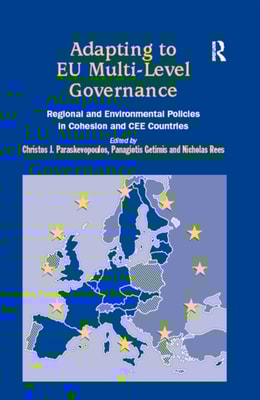
The main theme of this book is the adaptation process of the new EU member states from Central-Eastern Europe (Hungary and Poland) to the multi-level system of governance in public policy, particularly in the regional and environmental policy areas.
The main theme of this book is the adaptation process of the new EU member states from Central-Eastern Europe (Hungary and Poland) to the multi-level system of governance in public policy, particularly in the regional and environmental policy areas.
Entrepreneurship is a key element in the development of market based economies and one of the potential drivers of change in countries that are in the process of transformation to market based systems.
Entrepreneurship is a key element in the development of market based economies and one of the potential drivers of change in countries that are in the process of transformation to market based systems.