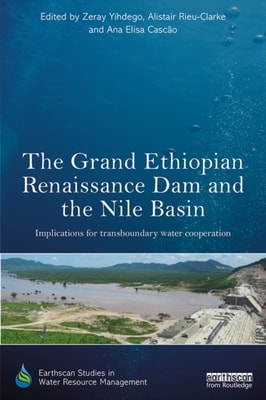
The Grand Ethiopian Renaissance Dam (GERD) will not only be Africa's largest dam, but it is also essential for future cooperation and development in the Nile River Basin and East African region.
The Grand Ethiopian Renaissance Dam (GERD) will not only be Africa's largest dam, but it is also essential for future cooperation and development in the Nile River Basin and East African region.
On a planet where urbanization is rapidly expanding, nowhere is the growth more pronounced than in cities of the global South, and in particular, Africa.
On a planet where urbanization is rapidly expanding, nowhere is the growth more pronounced than in cities of the global South, and in particular, Africa.
The Italian Cooperative Sector is amongst the largest in the world comprising over 60,000 cooperatives from all sectors of the economy directly employing 1.
The Italian Cooperative Sector is amongst the largest in the world comprising over 60,000 cooperatives from all sectors of the economy directly employing 1.
Data governance is the cornerstone of digital economy growth, particularly in Asia, where both the digital economy and the policy space are fast expanding.
In this book, first published in 1990, Judith Rees considers the spatial distribution of resource availability, development and consumption, and the distribution of resource-generated wealth and welfare.
In this book, first published in 1990, Judith Rees considers the spatial distribution of resource availability, development and consumption, and the distribution of resource-generated wealth and welfare.
Over the last few decades, emerging markets have increased their share in world GDP and have come to play a prominent and growing role in global business.
Over the last few decades, emerging markets have increased their share in world GDP and have come to play a prominent and growing role in global business.
This study, originally published in 1990, seeks to address several important policy questions associated with the ongoing depletion of forested wetlands.
This study, originally published in 1990, seeks to address several important policy questions associated with the ongoing depletion of forested wetlands.
The aim of this book, first published in 1977, is to use the tools developed by modern microeconomics to provide a framework for the analysis of policies towards the allocation of land and the control of activities using land.
The aim of this book, first published in 1977, is to use the tools developed by modern microeconomics to provide a framework for the analysis of policies towards the allocation of land and the control of activities using land.
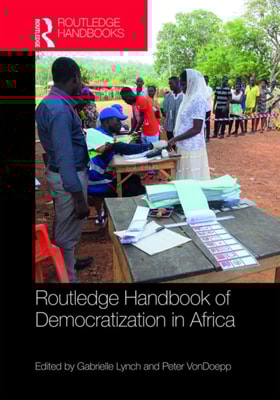
This volume explores the issues and debates surrounding the ongoing processes of democratization in sub-Saharan Africa, illuminating the central dynamics characterizing Africa's democratic experiments, and considering the connections between democratization and economic, social, and cultural developments on the continent.
This volume explores the issues and debates surrounding the ongoing processes of democratization in sub-Saharan Africa, illuminating the central dynamics characterizing Africa's democratic experiments, and considering the connections between democratization and economic, social, and cultural developments on the continent.
The Business of Greening, first published in 2000, debates the relationship between business and greening, and the future form this relationship could take.
The Business of Greening, first published in 2000, debates the relationship between business and greening, and the future form this relationship could take.
Revenues from commodities are extremely important for Latin America and the Caribbean, yet there is very little literature on the structure of these industries and on the various ways in which the state obtains commodity revenues.
Revenues from commodities are extremely important for Latin America and the Caribbean, yet there is very little literature on the structure of these industries and on the various ways in which the state obtains commodity revenues.
Learning and Forgetting in Development NGOs draws on a range of theoretical approaches and empirical evidence to explore how development organisations learn or fail to learn from experience.
Learning and Forgetting in Development NGOs draws on a range of theoretical approaches and empirical evidence to explore how development organisations learn or fail to learn from experience.
This study, first published in 1979, continues by examining the question of whether a competitive economy can efficiently allocate a stock of non-renewable natural resources through time.